

Generator Set Buying Secrets: 5 Hidden Substitutions and Rating Traps
A generator quotation can show the right brand and a convincing power figure while leaving the most important details undefined. The procurement risks to watch are an engine with the wrong emissions approval, a remanufactured engine sold as new, an unapproved alternator design change, aluminum windings supplied against a copper specification, and misleading power ratings. The strongest protection is a documented match between the purchase specification, the actual component serial numbers and the completed generator’s test results.
This guide explains what can change behind a similar-looking enclosure, which substitutions are legitimate when agreed, and what industrial buyers should check before shipment. A lower price alone is not evidence of deception. An unexplained mismatch between what you ordered and what is delivered is the issue.
1. Replacing the Specified Emissions-Compliant Engine
Suppose a quotation promises a European emissions-compliant engine, but the delivered set contains a China II engine with a similar displacement and output. Matching horsepower does not establish equivalent emissions approval. The buyer may receive a machine that cannot meet the project’s import, installation or operating requirements.
First clarify what “Euro V” means in the quotation
Euro V is road-vehicle terminology; EU Stage V is the relevant designation for engines within the European non-road mobile machinery framework. They are not interchangeable labels. Regulation (EU) 2016/1628 defines that framework and excludes engines for stationary machinery from its scope. This does not exempt stationary generators from other applicable emissions or permitting requirements. The destination, equipment classification, engine category and intended use determine the approval route.
Do not accept “European standard,” “export engine” or a generic CE document as a substitute for the specific engine approval required by your project. A China II declaration, by itself, does not establish EU Stage V compliance.
What to request before approving the engine
- The exact engine manufacturer, model, configuration and emissions family or approval identifier.
- Clear photographs of the actual engine identification and emissions labels, linked to its serial number.
- The applicable approval documents and a written explanation of their relevance to the destination and duty.
- A list of the emissions-control equipment included in that approved configuration, where applicable.
Have the engine manufacturer or authorized representative confirm the paperwork against the delivered configuration. An ordinary electrical load-bank test does not prove emissions compliance. Resolve any discrepancy before accepting the unit, with local compliance advice where required.
2. Supplying a Remanufactured Engine as a Factory-New Engine
A new enclosure, a new alternator and fresh paint do not make the diesel engine new. An assembled generator can contain components of different ages and conditions, so the engine’s condition needs its own line in the purchase specification.
Remanufactured engines are not inherently poor products. For example, Cummins ReCon describes a controlled remanufacturing and validation process. The procurement problem is receiving a remanufactured, rebuilt or previously used engine when the price and contract specify factory-new equipment.
Separate four descriptions that sellers may blur
- Factory-new: newly manufactured, with any factory testing or commissioning hours explained.
- OEM-remanufactured: restored through the manufacturer’s defined remanufacturing process, with its own identification and warranty terms.
- Independently rebuilt: repaired or overhauled by another organization; the work scope and test evidence matter.
- Used or refurbished: previously operated equipment, potentially cleaned, serviced or cosmetically restored.
Ask for engine origin documentation, manufacturing or remanufacturing identification, serial-number confirmation and the actual warranty provider. For electronic engines, available ECM records can supplement the inspection, but a controller or hour-meter reading alone does not establish the engine’s complete history.
Paint overspray, disturbed fasteners or inconsistent date markings are reasons to investigate, not proof on their own. Request a documented explanation and an independent inspection where the evidence remains inconsistent. If a remanufactured engine is acceptable, agree its condition, price, testing and warranty openly before the order is finalized.

3. Changing the Alternator’s Excitation Design Without Approval
Is replacing a brushed alternator with a brushless one automatically a downgrade? No. Brushless excitation is a standard industrial arrangement. The meaningful question is whether the delivered alternator matches the agreed model, electrical performance and service requirements.
In a conventional brushed design, brushes and slip rings transfer excitation current to the rotating field. In a brushless design, an exciter and rotating rectifier supply the main rotor without that brush contact. STAMFORD’s excitation-system guidance explains the brushless arrangement and distinguishes different power sources for the automatic voltage regulator (AVR).
Brushless does not automatically mean PMG-excited. A brushless alternator can use different AVR supply arrangements. Replacing a specified PMG configuration with another excitation arrangement may affect the project’s load-starting or fault-performance requirements even though both machines are described as brushless.
Specify performance, not just a label
Record the alternator brand and full model, rated voltage, frequency, phase, kVA, power factor, AVR model and excitation arrangement. Include the required voltage regulation, motor-starting response and protection-coordination data where relevant. Ask for the manufacturer’s datasheet for that exact configuration.
Any change from brushed to brushless, or from brushless to brushed, should be assessed against those requirements and approved in writing. Neither word alone proves quality, winding material, efficiency or suitability. For background on the control components, see how the AVR affects generator voltage.
4. Replacing Specified Copper Windings with Aluminum
The electricity-producing machine in a generator set is the alternator. Its winding conductor is a separate specification from the diesel engine brand. A statement such as “copper generator” leaves too much room for disagreement about which windings are included.
Copper has higher electrical conductivity than aluminum. At the same conductor length and cross-sectional area, aluminum has greater resistance; a suitable aluminum design therefore needs different dimensional and thermal considerations. The Copper Information Center’s conductor comparison explains the material distinction. It does not follow that every properly designed aluminum-wound machine is defective.
The clear procurement failure is supplying aluminum or copper-clad aluminum where the agreed specification requires copper, without the buyer’s approval. Copper-clad aluminum has an aluminum core and should not be treated as solid copper simply because the outside looks copper-colored.
Build a material evidence trail
- State the required conductor material for the main stator, rotor and exciter windings as applicable, rather than using an undefined “all-copper” slogan.
- Obtain the alternator manufacturer’s written material declaration tied to the model and supplied configuration.
- Include factory traceability records or witnessed manufacturing checks where the order risk justifies them.
- Have qualified inspectors compare electrical test results with the manufacturer’s specifications, including the stated test temperature.
Weight, color and winding resistance can identify inconsistencies, but none alone conclusively identifies the conductor in a complete machine. Insulation-resistance testing assesses insulation condition, not copper content. Do not cut or scrape installed windings as an improvised inspection. If a material dispute requires sampling, agree a controlled inspection method with the manufacturer and an appropriate laboratory.
5. Inflating Power by Mixing Ratings, Units and Test Conditions
A number such as “200” is not a complete generator specification. Buyers need the electrical output unit, duty rating, voltage, frequency, power factor and site conditions attached to it. Three different shortcuts can make a quotation look more powerful than the delivered set.
Standby power presented as prime power
For the same generator model, the standby figure is often higher than the prime figure. A misleading offer may advertise that higher standby output as the capacity for regular prime-power service. Reversing or omitting the labels creates confusion in either direction; selling a lower prime figure as standby is not, by itself, the usual inflation mechanism.
Prime duty supports variable-load operation under its specified conditions; it is not automatically permission to run at full nameplate output continuously. Standby duty has its own operating limits. Cummins’ generator-rating guidance distinguishes these ratings and highlights site conditions and auxiliary losses. Use the actual manufacturer’s definitions and data, not a fixed 10% conversion. See also our prime versus standby power guide.
kVA presented as kW
Real electrical power is related to apparent power by kW = kVA × power factor. A set rated 125 kVA / 100 kW at 0.8 power factor is not a 125 kW generator. Both its kW and kVA limits apply. Connecting a higher-power-factor load does not authorize exceeding the set’s specified kW rating.
Engine mechanical power presented as usable electrical power
The engine supplies shaft power; the alternator converts that power into electricity with losses. Cooling and other auxiliaries may consume part of the available power, and site conditions can change the permissible output. Consequently, engine kW and generator electrical kW are not interchangeable.
There is no universal rule that a diesel engine “can only deliver 90% of its output.” A quoted 90% might be an assumed alternator efficiency or an allowance used in a preliminary calculation. It is not a universal engine limitation and is not the engine’s fuel-to-shaft efficiency.
Illustrative calculation: if 120 kW of mechanical power is actually available at the alternator shaft at the specified duty and site, and the alternator efficiency at that operating point is assumed to be 92%, gross electrical output would be 120 × 0.92 = 110.4 kW. If 2 kW of separately supplied electrical auxiliaries must then be deducted, net output would be 108.4 kW. These are example assumptions, not a product rating. Do not deduct fan or auxiliary losses again if they are already included in the input figure.
Ask the assembler to guarantee the completed set’s net electrical output at the agreed delivery point and site conditions. A sufficiently large engine alone does not establish alternator thermal capacity, motor-starting performance or complete-set capability.
A Pre-Shipment Acceptance Checklist That Connects the Evidence
Use one inspection schedule for the actual unit being shipped. Generic brochures and a video of another generator do not establish the configuration of your order.
| Check | Evidence to collect | Resolve before acceptance |
|---|---|---|
| Emissions | Actual labels, engine approval and configuration | Wrong standard, family or missing required equipment |
| Engine condition | Serial traceability, condition declaration and warranty | Undisclosed remanufacture, rebuild or previous service |
| Alternator design | Model, AVR, excitation and performance data | Unapproved configuration change |
| Windings | Material declaration and agreed inspection records | Unexplained material or test-result mismatch |
| Output | Complete-set rating and serial-linked load test | Duty, kW/kVA or site-output shortfall |
Agree what the load-bank test will actually demonstrate
Define the test procedure, load steps, duration, power factor and pass criteria before testing. Have qualified personnel record electrical kW, kVA, voltage, current, frequency and relevant engine temperatures and pressures using suitable calibrated instruments. Link the report to the generator, engine and alternator serial numbers.
A resistive test at unity power factor can demonstrate real-power delivery at its test conditions, but it does not by itself demonstrate full rated kVA operation at 0.8 power factor. Reactive-load or application-specific testing may be needed for the specified current, excitation and load-step performance. A brief peak reading does not establish sustained capacity, and no-load running is not a rated-output test.
Arrange safe witnessed testing with the supplier or an independent inspection organization. Electrical connections, protection testing and any opening of equipment belong to qualified personnel following isolation and safety procedures. Factory testing also does not replace site commissioning.
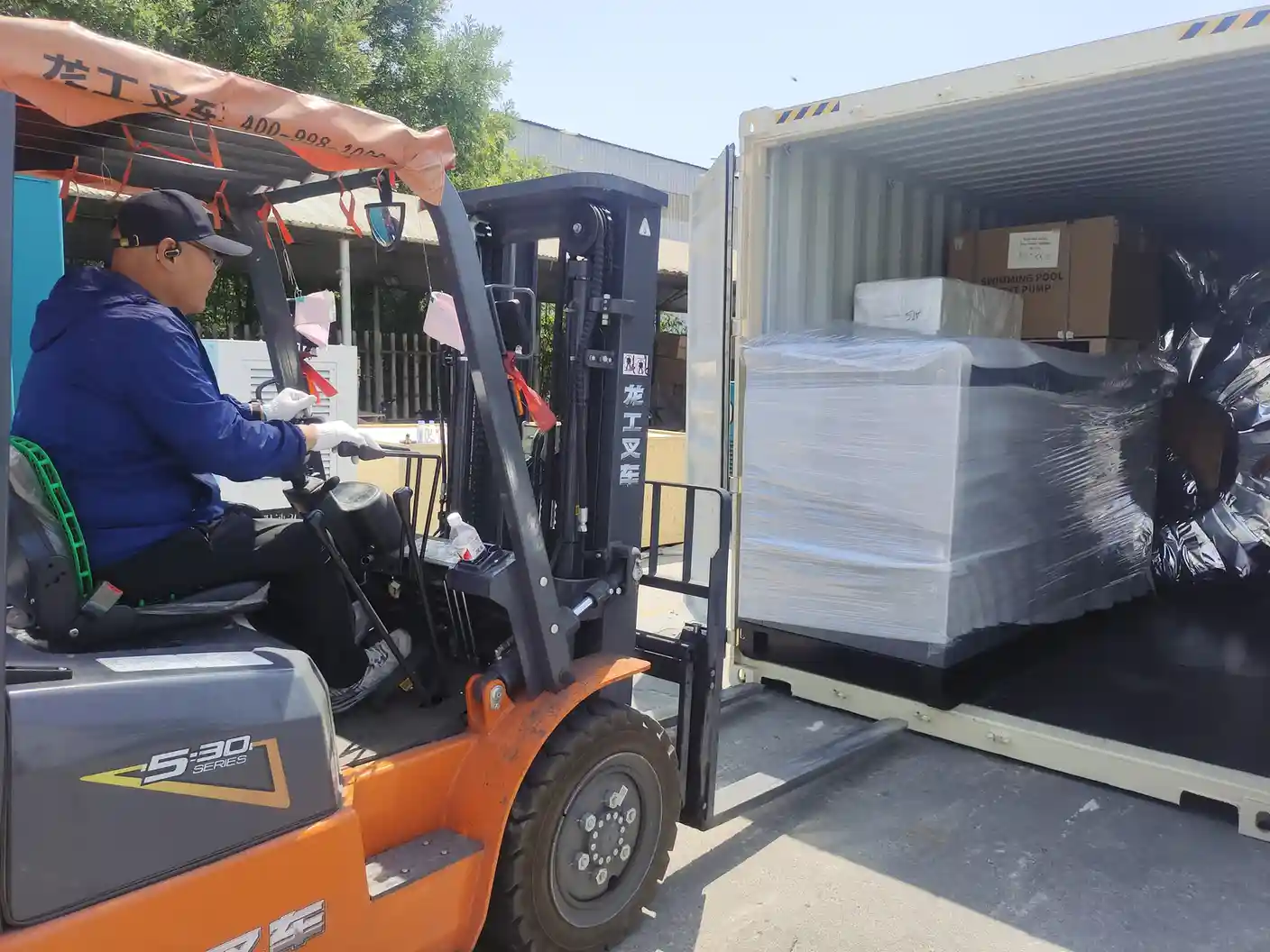
What to Put in Your RFQ and Purchase Specification
Instead of requesting only “a new 200 kW diesel generator,” give each bidder the same destination, installation type, electrical system, load profile, annual operating hours, altitude and ambient conditions. Then request a line-by-line response covering the engine, alternator, controls, cooling package, emissions, condition and guaranteed net output.
A useful technical no-substitution requirement is: Identify the exact supplied engine and alternator configuration, their condition, emissions approval, excitation system and specified winding materials. List every deviation from the agreed specification. Obtain the buyer’s written approval before substituting a component, material or rating. Incorporate suitable inspection hold points and acceptance arrangements into the final agreement with your commercial and legal advisers.
Also define who handles a mismatch: who arranges corrective work, repeat testing, transport and warranty support. Document the agreed remedy before shipment instead of relying on a verbal promise after the equipment arrives.
For the wider selection process, use our generator buying guide. When requesting a generator set quotation, send Zentramo your load schedule, destination, duty and required component specifications through the contact page, and ask for an itemized configuration and test scope. The best procurement outcome is not the largest number on the cheapest quotation: it is receiving the exact, documented machine your application requires.