
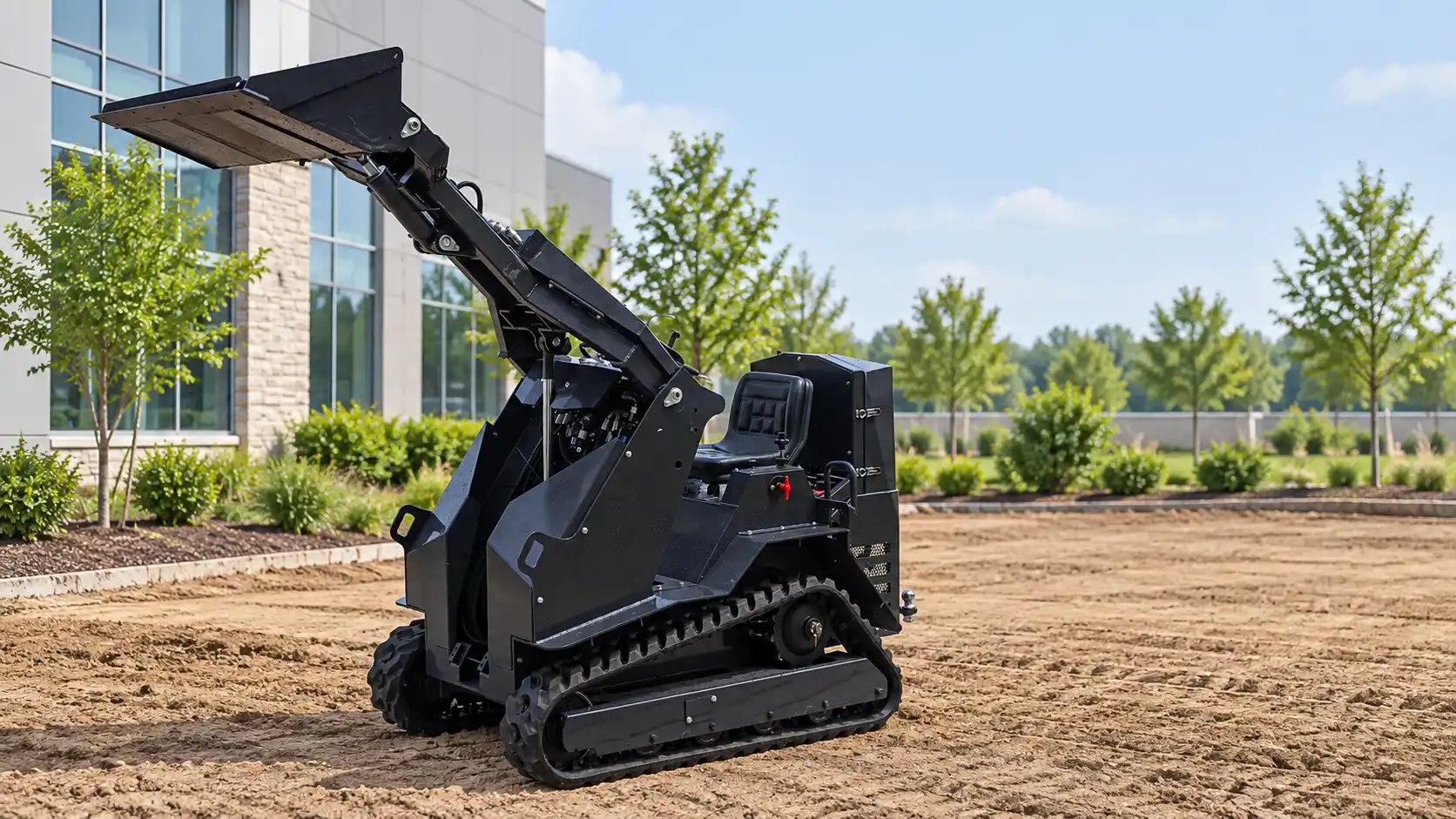
Skid Steer for Construction: Match the Machine to the Work
Move material, prepare grades, open trenches, handle pallets and clear debris with one compact loader platform—when the operating class, wheels or tracks, hydraulic circuit and attachment package are specified together.
300 kg and 500 kg seated classes Wheeled or tracked configurations Construction attachment packages Configuration confirmed before quotation
Direct answer
What Is a Skid Steer for Construction?
A construction skid steer is a compact loader and attachment carrier selected for site preparation, material handling, demolition support and confined-area work.
For an accurate quotation, start with the application, access limits and required attachment—not an unverified model number.
| Decision layer | What belongs here |
|---|---|
| Known from the buyer | Site access, ground conditions, lift height, material density, daily duty cycle and attachment list. |
| Configured for the project | Operating capacity, wheeled or tracked chassis, hydraulic flow, lift path, cab protection and quick-attach system. |
| Verified before order | Rated capacity, dimensions, stability limits, attachment match, inspection record and transport requirements. |
Start with the Repeated Construction Task
The right skid steer is not simply the machine with the largest number on the specification sheet. Begin with the task that controls the work cycle, then verify access, load, ground conditions and hydraulic demand.
Loading, Backfilling and Cleanup
A bucket handles soil, gravel and loose debris. Check material density, bucket width, loading height and the complete machine width before choosing the class.
Pallet and Material Handling
Pallet forks turn the loader into a compact material carrier. Confirm fork rating, load centre, attachment weight and the loader’s capacity with the fitted tool.
Trenching, Drilling and Utilities
Trenchers and augers support utility lines, drainage, fencing and footing preparation. Hydraulic flow, pressure, ground condition and tool size must match the selected carrier.
Demolition and Site Preparation
Breakers, grapples, sweepers and specialist buckets can support breaking, sorting, clearing and surface preparation. Tool weight, auxiliary circuit demand and site hazards determine the practical match.
Decision line: If the job changes every week, choose the machine around the heaviest recurring task and verify that the remaining tools stay inside its hydraulic and load envelope.
Construction-Ready Skid Steer Configurations
Hongrui’s existing range covers narrow seated loaders, higher rated-load seated loaders and compact stand-on configurations. Final engine, controls, attachments and destination requirements are confirmed in the written quotation.
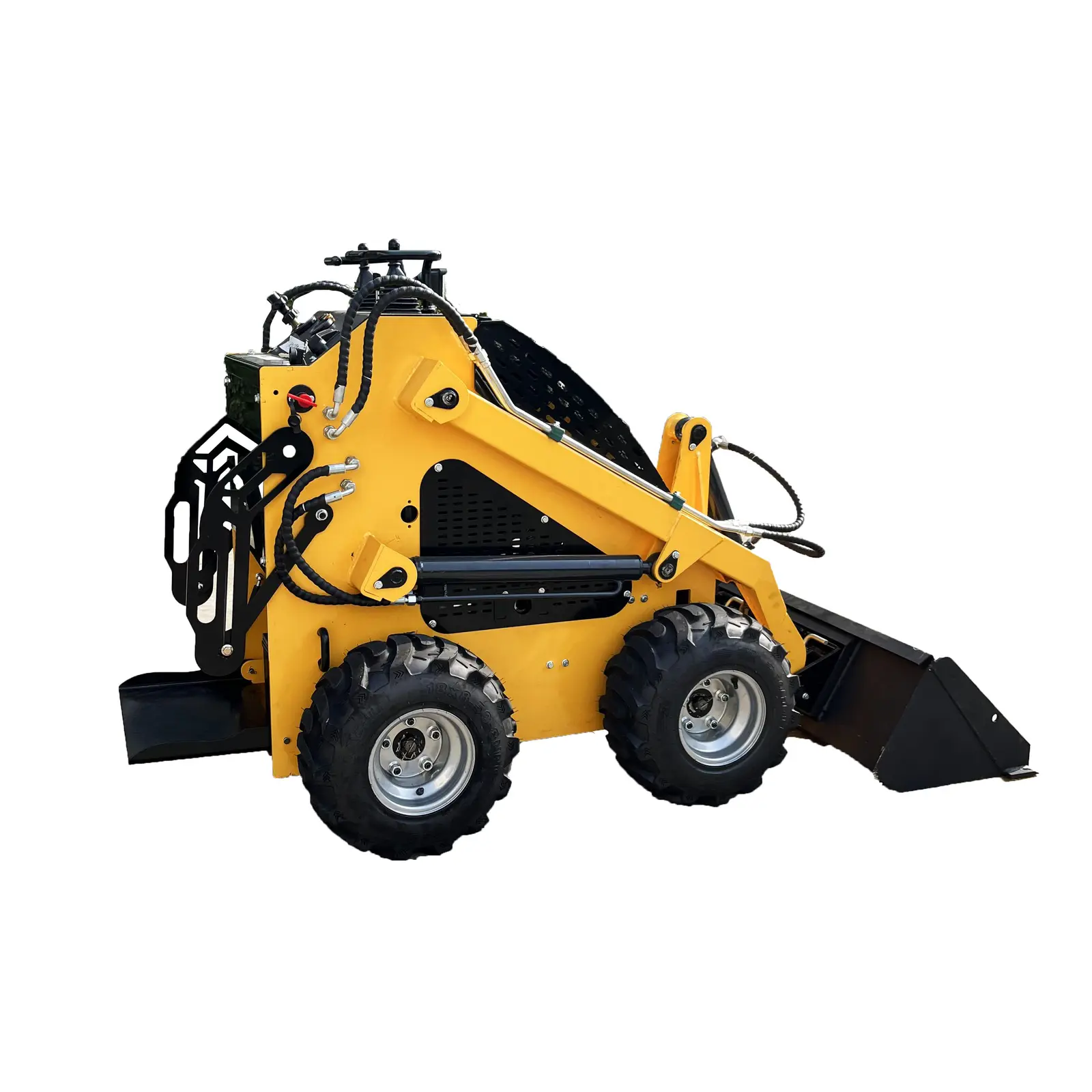
300 kg Seated Class
S300 / SL300 / S350 / SL350A narrow starting point for restricted access, light material movement, compact grading and repeated work around buildings. The body is approximately 850 mm wide and machine weight is approximately 920 kg. Wheeled and tracked configurations are available by model, with gasoline or diesel engine options.
Selection cue: Check the fitted bucket or attachment width—the complete working envelope can be wider than the machine body.
500 kg Seated Class
S500 / SL500 / JS500 / JSL500A higher rated-load direction for construction material handling and loading cycles that need more capacity while retaining a compact chassis. The body is approximately 1,100 mm wide and machine weight is approximately 1,020 kg. Wheeled and tracked diesel configurations are available by model.
Selection cue: Confirm load centre, attachment weight, loading height and transport weight for the exact configuration.
Stand-On Compact Configuration
S-200S / S-200SC / S-200SP / S-250PA useful operating layout when crews frequently step on and off, work through constrained routes or need a compact carrier for task-specific attachments. Wheel or track availability and hydraulic output depend on the selected model.
Selection cue: Confirm platform layout, control arrangement, auxiliary output and attachment circuit before ordering.
Wheeled or Tracked? Compare the Cost Behind the Choice
Purchase price alone does not show the operating cost of the undercarriage. Surface, travel pattern, turning, debris and maintenance practices influence wear and downtime.
| Decision factor | Wheeled skid steer | Tracked skid steer | Construction implication |
|---|---|---|---|
| Firm or paved routes | A practical starting point for frequent travel on firm surfaces | Can work on firm surfaces, but track wear and undercarriage care remain part of the calculation | Compare expected travel distance and turning frequency, not only digging time |
| Soft or uneven ground | Tire selection and ground condition affect traction | Wider ground contact is worth evaluating for soft or uneven unpaved areas | Ground pressure and recovery risk may influence productive time |
| Wear items | Tires, wheel condition and inflation where applicable | Tracks, rollers, tension and debris accumulation | Ask for the service items and inspection routine for the chosen configuration |
| Tight turning | Skid steering can accelerate tire wear or mark sensitive surfaces | Pivoting can disturb turf and increase track wear | Plan turning paths and operating technique around the actual surface |
| Transport | Use the complete selected-machine dimensions and weight | Include the complete undercarriage configuration in transport planning | Verify trailer capacity, loading method and site access before shipment |
Choose wheels when firm routes, mobility and simpler tire service drive the project. Evaluate tracks when traction and flotation on soft or uneven ground are more important. Neither option is automatically cheaper across every construction site.
Build the Attachment Package Around the Work Sequence
An attachment is suitable only when the mount, carrier capacity, attachment weight, hydraulic flow, pressure and controls all match.
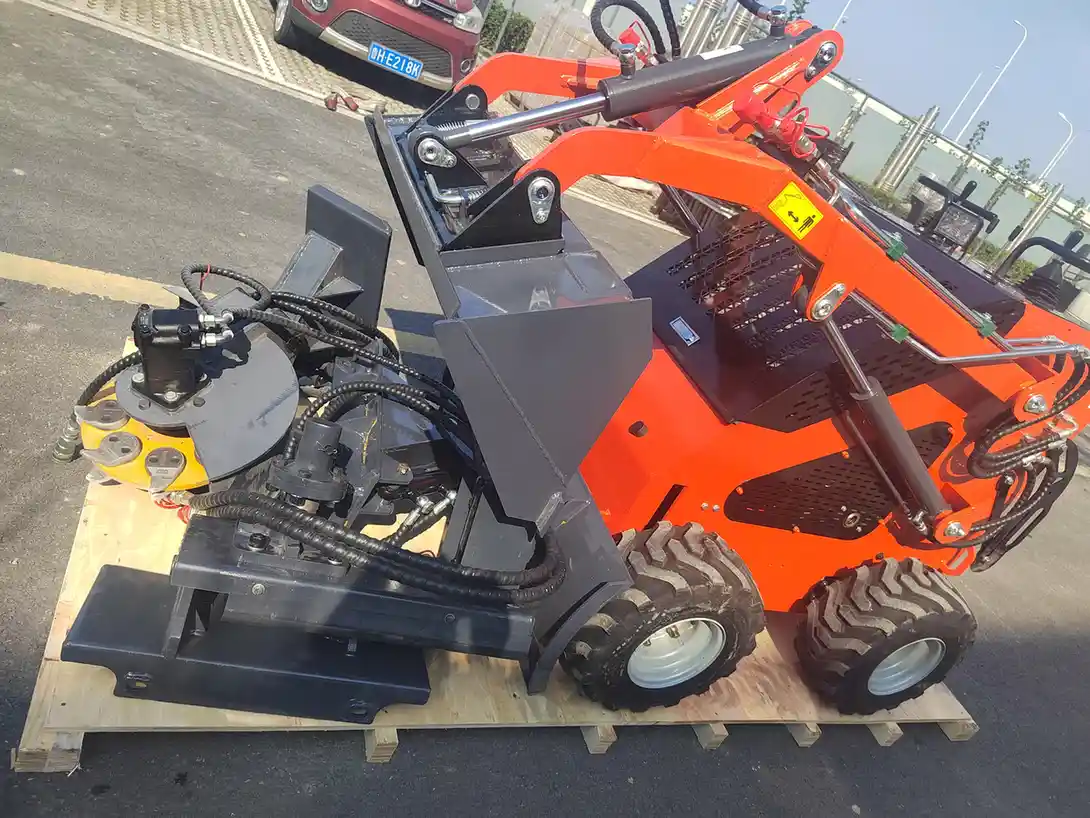
| Attachment | Common construction task | Confirm before quotation |
|---|---|---|
| Bucket | Loading, carrying, backfilling and grading | Material density, bucket width, rated loading configuration and loading height |
| Pallet forks | Moving palletized materials | Fork rating, load centre, attachment weight and capacity with the fitted tool |
| Auger | Fence posts, footings and drilling | Ground condition, bit diameter, hydraulic flow and torque requirement |
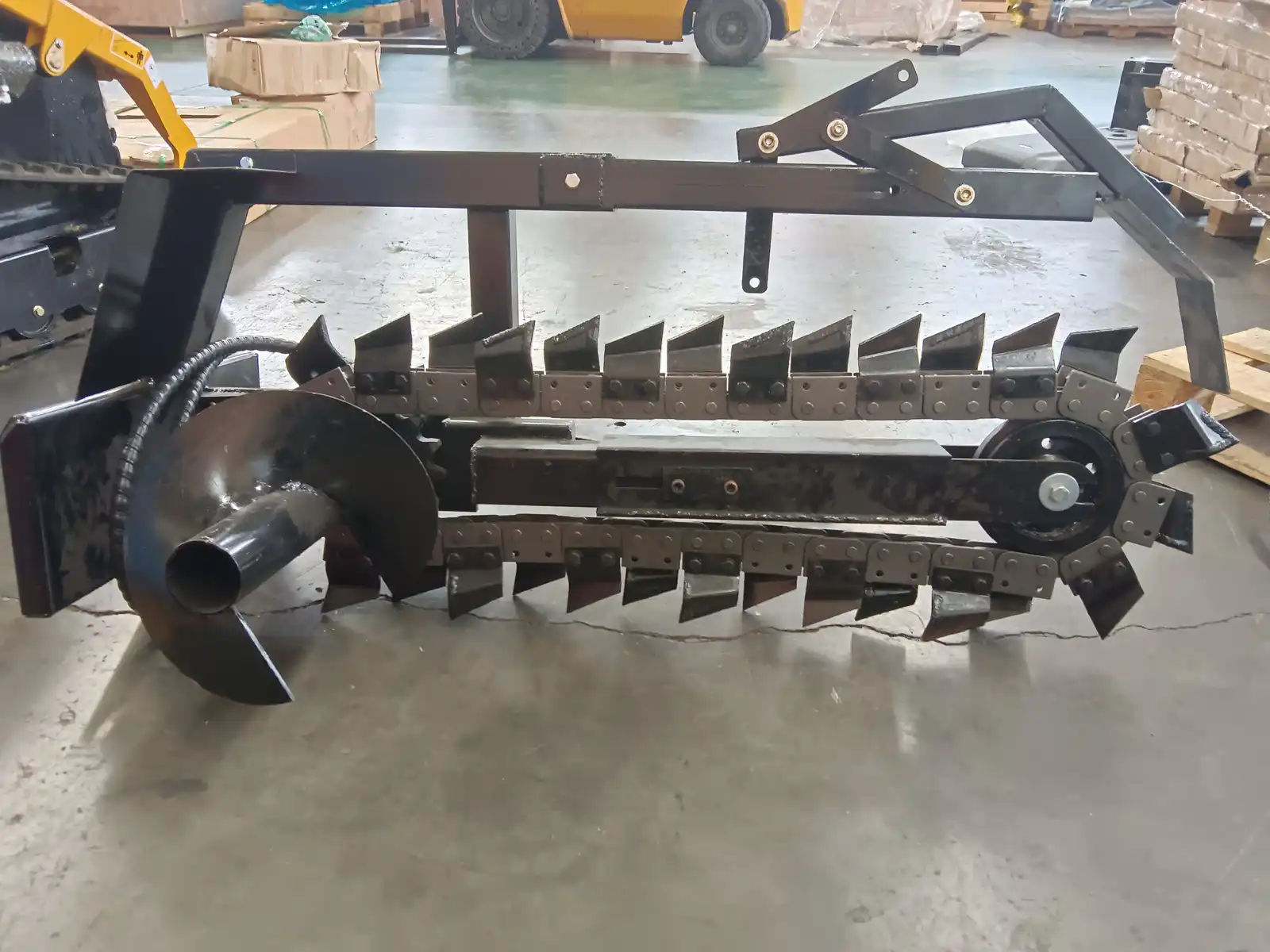
| Trencher | Utility lines, drainage and narrow excavation | Trench width and depth, chain type, soil condition, hydraulic flow and pressure |
| Grapple | Debris, brush and irregular material handling | Opening size, tool weight, balance and hydraulic connections |
| Sweeper | Site cleanup and access-route maintenance | Working width, surface condition, flow demand and debris handling |
| Breaker | Concrete or asphalt breaking | Carrier compatibility, tool weight, flow, pressure and safe operating procedure |
A Site-Preparation Workflow That Avoids Mismatched Equipment
Define the Work Cycle
Record the main task, material, target depth or loading height and expected daily repetition.
Measure the Access Envelope
Check gates, corridors, turning space, overhead clearance and the complete width with the selected tool.
Read the Ground
Note firm pavement, loose fill, mud, slopes, debris and sensitive finished surfaces before choosing wheels or tracks.
Match the Hydraulic Circuit
Compare attachment flow, pressure, connections, controls and return-line requirements with the exact loader configuration.
Confirm Transport and Support
Verify complete dimensions and weight, loading method, service access, routine wear items and the documents required for the destination.
Common Construction Buying Mistakes—and the Better Check
The loader fits through the gate, but the bucket or trencher does not.
Compare the complete machine-and-attachment envelope, including transport position and turning space.
The attachment mounts, but the auxiliary circuit cannot operate it correctly.
Confirm mounting interface, hydraulic flow, pressure, connectors and control requirements as one package.
A higher capacity class is selected without checking trailer and site limits.
Use the exact configured machine weight and dimensions for transport, loading and access planning.
Wheels or tracks are chosen from purchase price alone.
Compare surface, travel, turning, wear items, cleaning and expected downtime across the actual job mix.
The quotation lists a machine but not the exact engine, controls and attachments.
Require a written configuration schedule with model, undercarriage, engine, attachment list, hydraulic requirements and destination conditions.
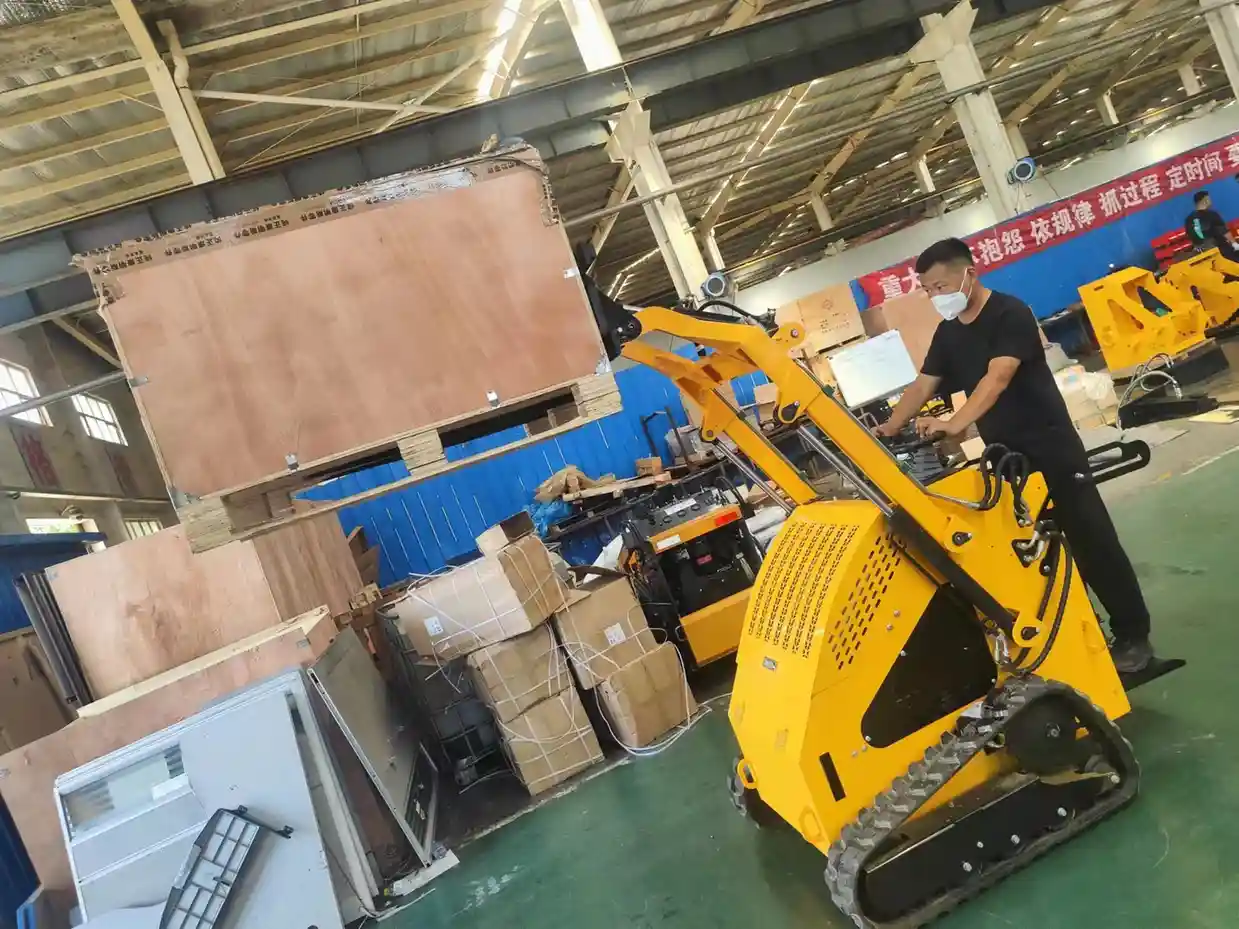
Confirm the Machine Before It Leaves the Workshop
A useful export quotation should identify the exact loader configuration rather than rely on a family name alone. Hongrui can review the selected model, wheel or track layout, engine option, controls, attachment package and available supporting documents before shipment arrangements are finalized.
Put These Items on the Configuration Sheet
- Model and rated-load class
- Wheeled or tracked undercarriage
- Engine configuration
- Control arrangement and auxiliary hydraulic requirements
- Attachment names, sizes and interfaces
- Complete dimensions and machine weight for transport planning
- Destination voltage or documentation requirements where applicable
- Routine maintenance items and parts identification
Pre-delivery function checks should be completed against the confirmed configuration. The buyer should retain the final quotation, model details and attachment list for commissioning, maintenance and later parts enquiries.
Construction Skid Steer Buyer Questions
What type of skid steer is best for a general construction site?
How do operating costs differ between wheeled and tracked compact loaders?
Which skid steer attachments are most useful for construction?
What attachments are essential for site preparation?
Should I choose radial or vertical lift for construction material handling?
What information should I send for a skid steer quotation?
Configure One Loader for the Work You Actually Repeat
Tell us what the loader must move, lift, cut, drill, sweep or break—and where it has to travel. We will use those constraints to discuss the model class, undercarriage, engine option and attachment package that belong on the same quotation.
Include the task, access limits, ground conditions, attachment list and destination for a more useful configuration discussion.
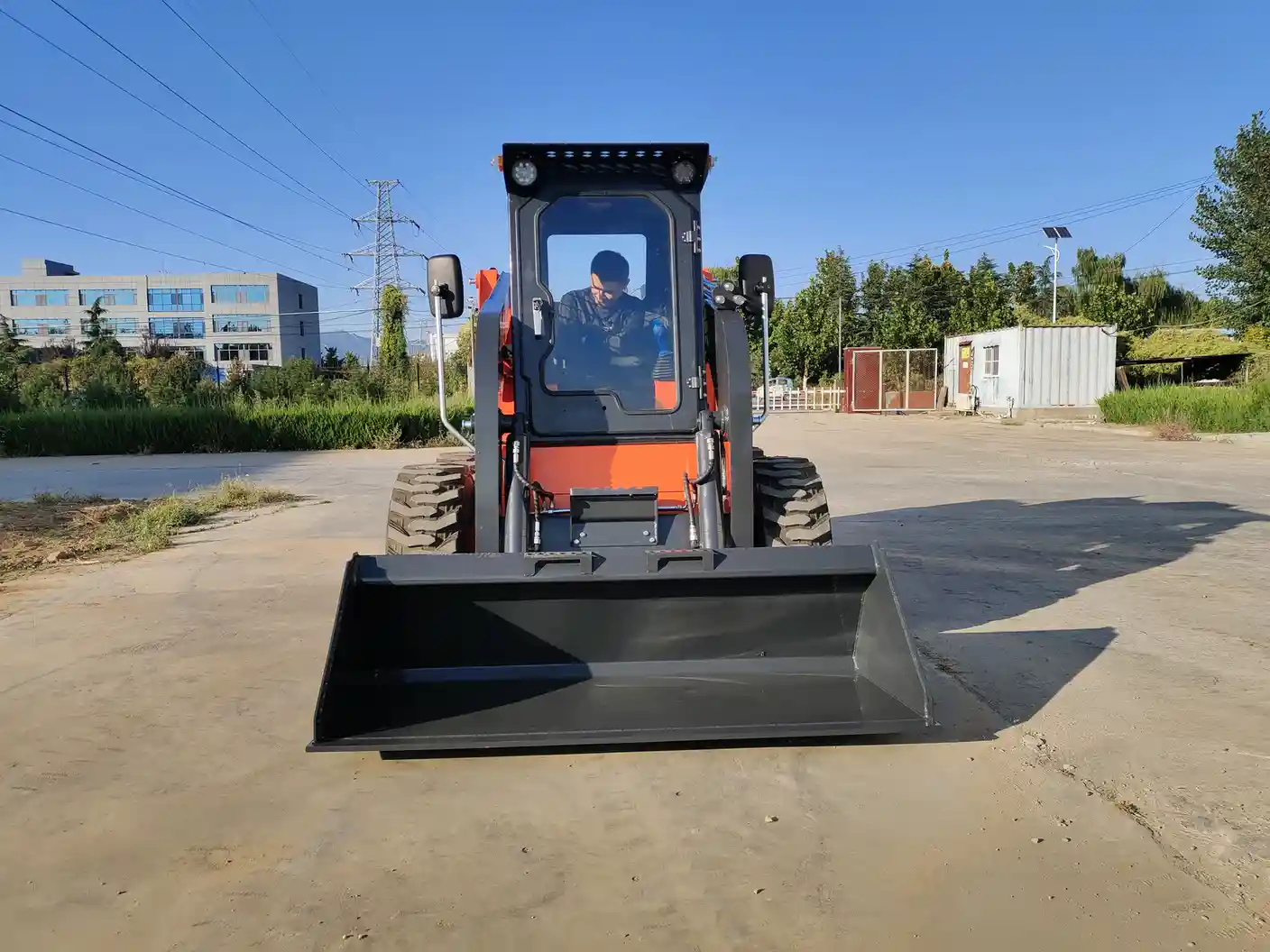
Evidence before commitment
Production, Inspection and Delivery Evidence
A professional offer should connect the proposed configuration to evidence that can be checked before dispatch. Availability and document scope are confirmed for the specific order.
Production record
Configuration review, assembly checkpoints and key component traceability where applicable.
Inspection & testing
Function checks, leak inspection and order-specific test items recorded before shipment.
Certificates & documents
Required compliance documents are verified against destination and project requirements before order.
Packing & shipping
Packing method, loading photos and dispatch documents can be included in the delivery file.
Buyer visit or pre-shipment acceptance
Factory visits, remote video inspection or third-party pre-shipment checks can be coordinated when agreed. Published claims are not substituted for order-specific acceptance evidence.