
Stand On Skid Steer Loaders Built for Fast, Controlled Work Cycles
Choose a compact operator-platform machine around the way your crew actually works—travel, load, place, inspect, step off and repeat. Compare wheeled and tracked Hongrui configurations, then confirm the platform, controls, attachment interface and hydraulic requirements before ordering.
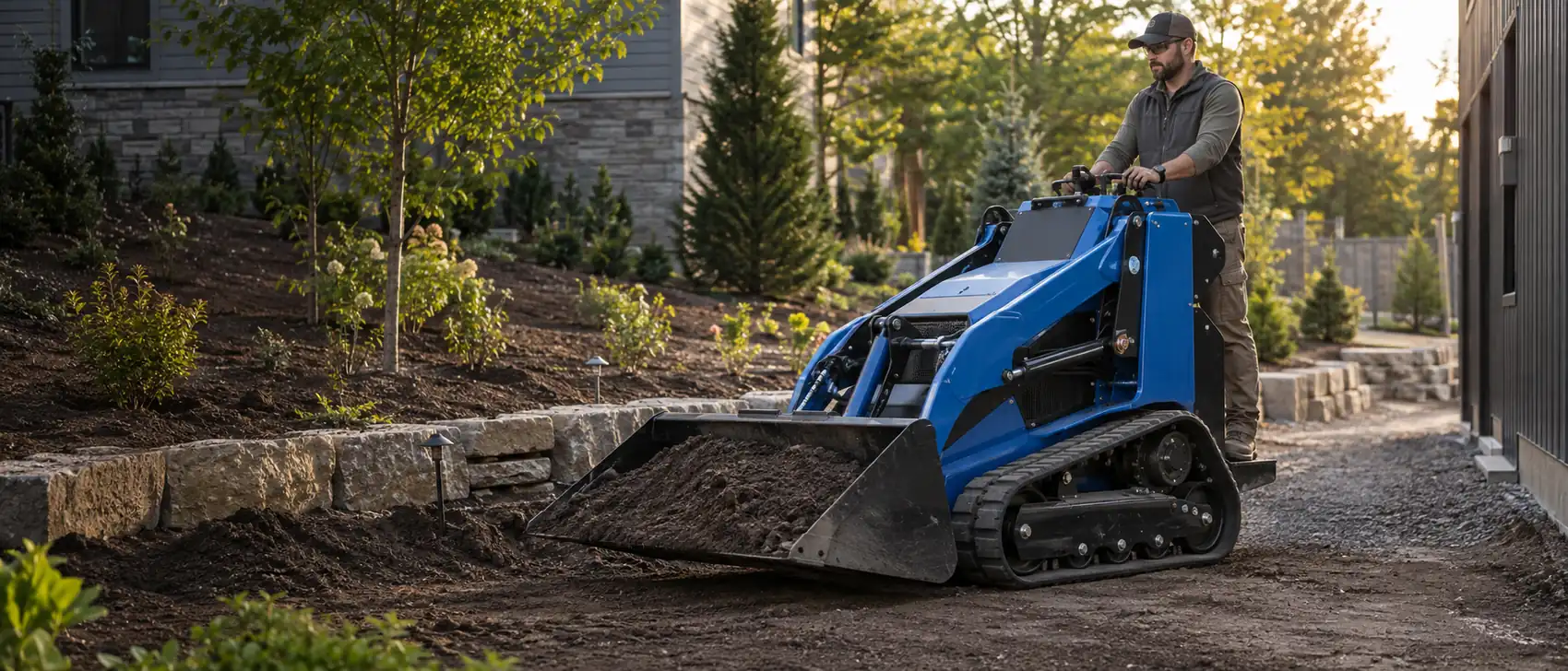
- Purpose-built stand-on platform
- Wheeled or tracked
- S-200 and S-250 directions
- Attachment-match support
Why Choose a Stand On Skid Steer Loader?
It can suit crews frequently alternating between machine and ground work. Elevated operating position can support close task visibility and quick entry/exit in yards, gates, landscaping and utility areas. Tradeoffs are weather exposure, vibration and site hazards, so platform condition, operator discipline and exact manual matter.
Approach & Operate
Inspect Grade
Reposition & Repeat
Optimal Work-Cycle Fit
- • Frequent on/off cycles
- • Close tool-edge view required
- • Tight access through gates or paths
- • One carrier with planned attachments
Critical Warning
Use only a purpose-built stand-on machine; never improvise a platform on a conventional skid steer loader.
Choose the Undercarriage After You Define the Work Cycle
Note final engine, controls, undercarriage, rated basis and attachment match are confirmed in quotation.
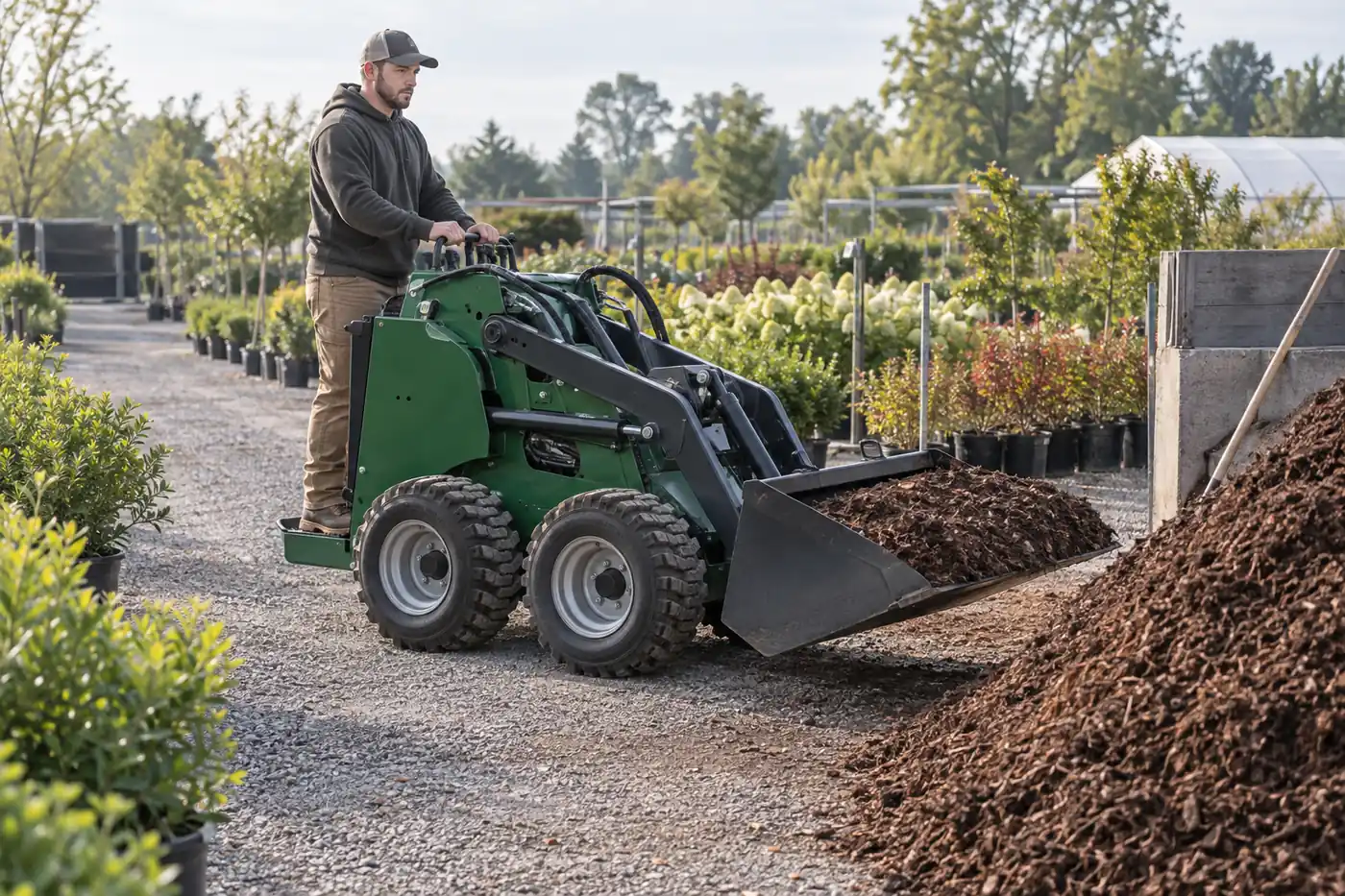
Wheeled Stand-On Loaders
Models: S-200SC / S-200SP
Designed for firm or prepared surfaces and repeated travel. They offer simpler undercarriage care compared to tracked variants.
Stand-On Mini Track Loaders
Models: S-200S / S-200SC / S-200SP / S-250P
For soft, loose, or uneven ground where traction and flotation matter most. Require routine debris cleaning, track tension, and wear checks.
The Operator Platform Is Part of the Machine Selection
A purpose-built stand-on skid steer loader integrates the operator station directly into its safety and control envelope.
-
1
Designated Standing Area
Ensure the tread is clean to maintain grip during operation.
-
2
Steps & Handholds
Use only manufacturer-approved contact points for mounting and dismounting.
-
3
Control Reach & Sightlines
Confirm neutral behavior in the manual. Maintain clear sightlines to the cutting edge, fork tips, and tool path.
-
4
Guarded Machine Envelope
Keep hands, feet, clothing, and bystanders strictly away from moving parts.
Safety Harness Warning
Never recommend or use a generic aftermarket harness or restraint. Use only safeguards and restraints specified by the manufacturer for the exact model; unapproved additions can interfere with controls or emergency exit.
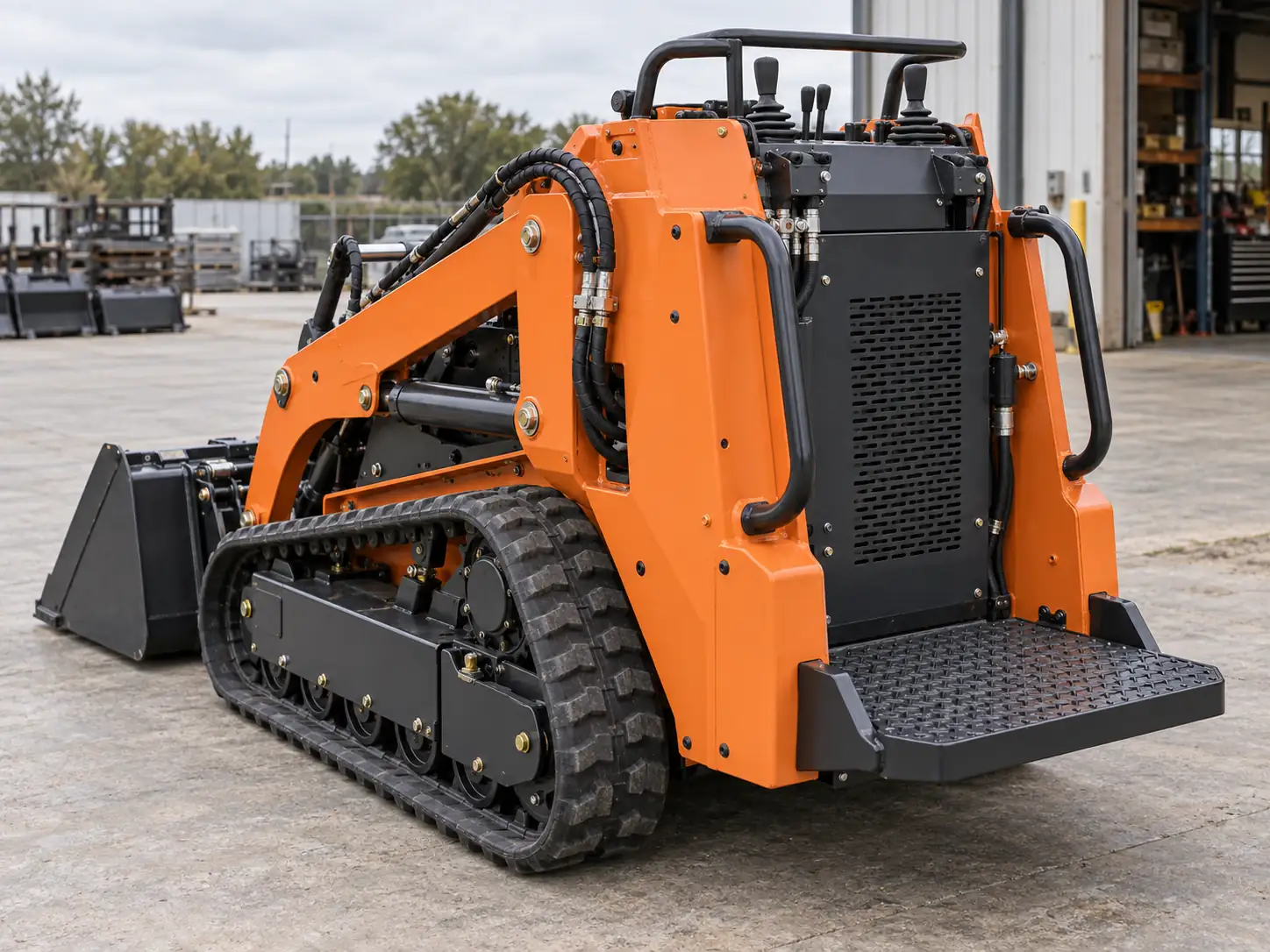
Equipment Format Matrix
There is no universal winner; choose by duty cycle, access width, surface condition, weather exposure, and the needs of trained operators.
| Format | Ground Interaction | Visibility & Posture | Weather Exposure | Best Evaluation Question |
|---|---|---|---|---|
| Stand-On Loader | Fits frequent on/off cycles | Close tool view, upright stance | Exposes operator to elements | "How often does the operator step off to check grade or gates?" |
| Seated Skid Steer | Fits longer uninterrupted cycles | Seated posture, restricted rear view | May offer full cab protection | "Are we running continuous material transfer in harsh weather?" |
| Walk-Behind | Operator remains on ground | Direct ground view | Full exposure | "Is access too tight or weight limit too low for a ride-on unit?" |
How to Operate a Stand-On Mini Track Loader Safely
This sequence does not replace manuals. Only trained operators should use the equipment following exact machine/attachment manuals, manufacturer safeguards, and confirmed limits.
Pre-Start Inspection
Inspect platform, steps, handholds, lock, hydraulics, tires/tracks, for leaks or damage.
Mounting
Mount using designated points and ensure clean footwear to prevent slipping.
Secure the Area
Check for bystanders, slopes, drop-offs, overhead and underground hazards.
Travel Protocol
Travel with load low, make no abrupt slope turns, and strictly follow the manual.
Step-Off Procedure
Before stepping off: lower tool, stop motion, neutralize controls and park as specified.
Service & Tool Change
Before tool change or service, relieve pressure and prevent unexpected movement.
Strict Warnings
No riders. No untrained operators. Do not bypass interlocks. Do not use improvised platforms. Do not use generic harnesses unless exact manufacturer instructions specify it.
Work Scenarios for a Stand-On Compact Loader
Capability depends on configuration, tool, load, surface and limits. Images are for context only.
Landscaping & Property Care
Handle mulch, soil, plants, grading, sweeping, and material placement. Crucial to verify gate widths, turf sensitivity, turning radius, and surface stability before deployment.
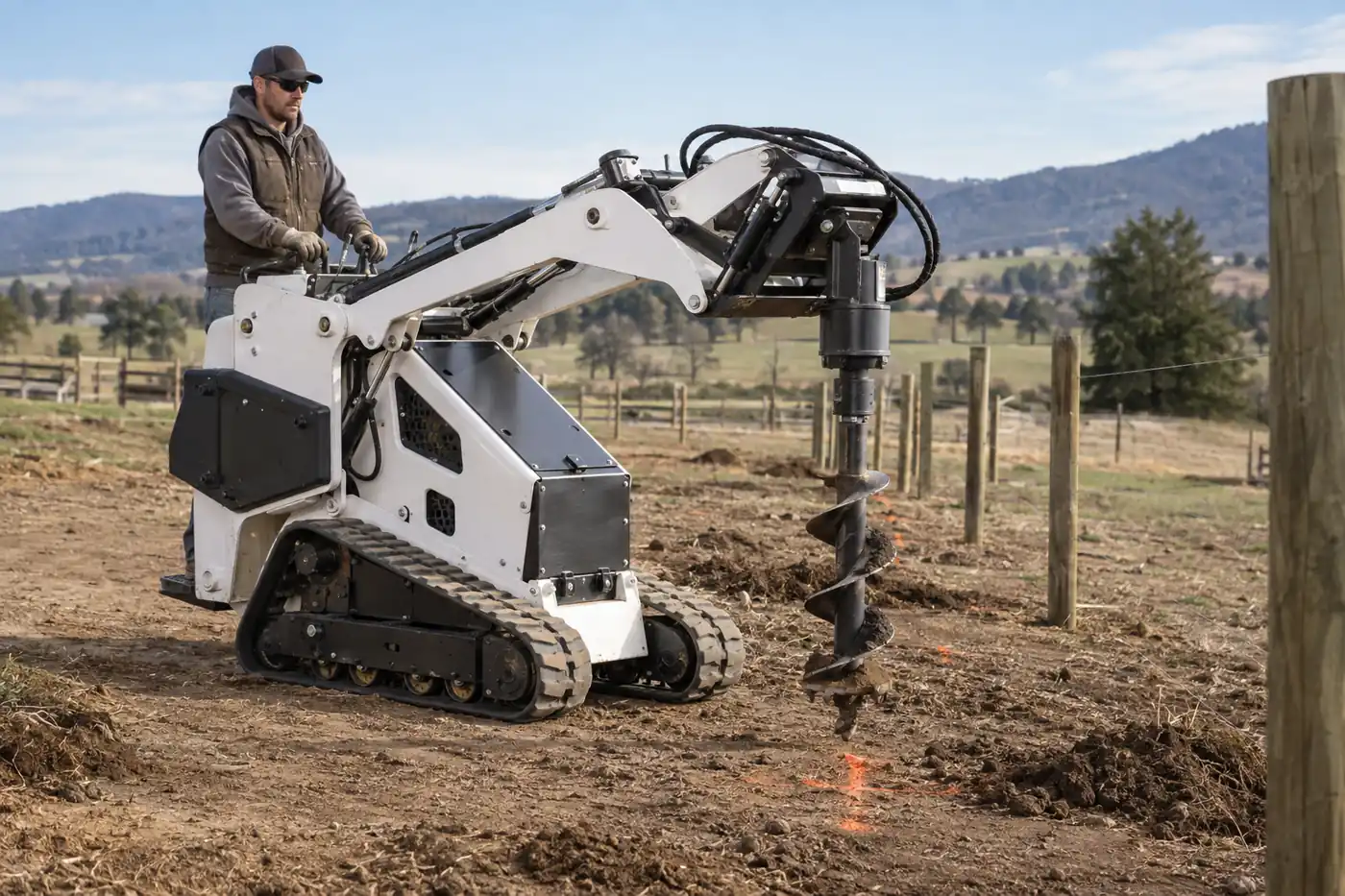
Fence, Tree-Care & Utility Support
Deploy auger, grapple, bucket, or compatible trench support. Requires careful planning of the tool path, underground services, bystander zones, and hydraulic requirements.
Common Compatible Tools
Bucket, forks, auger, grapple, sweeper, breaker, or trenching tool (subject to spec match).
Match the Attachment Before You Approve the Loader
Verify these five layers of compatibility in your written quotation to ensure safe and functional operation.
Stand On Skid Steer Loader Model Directions
Note: Availability and combinations vary. Ensure the machine and all tools are documented on the same written scope.
| Model | Verified Direction | Detail | Confirm Next |
|---|---|---|---|
| S-200S | Tracked | Runtong twin-cylinder 739 cc | Load basis, hydraulics, attachments |
| S-200SC | Wheeled or tracked | Mechanical controls | Surface, undercarriage, mount, hydraulics |
| S-200SP | Wheeled or tracked | Mechanical controls | Work cycle, tools, controls |
| S-250P | Tracked | Mechanical, dual-output arrangement | Functions, couplers, circuits |
Common Sourcing Risks & Prevention
Platform chosen without routine
Results in awkward exits, poor sightlines, and operator fatigue.
Map the full shift and step-off frequency before deciding.
Undercarriage chosen from clean-yard photo
Results in slip hazards, turf damage, excessive cleaning, and rapid wear.
Choose tracks or wheels based on the worst surface and turns.
Hydraulics checked after delivery
Results in slow tool operation, overheating, or completely unusable tools.
Document all hydraulic details (flow, pressure, return) first.
Improvised standing retrofit
Results in unsafe position, loss of control, or exit interference.
Use a factory-designed stand-on machine only.
Maintenance for Stand-On Utility Equipment
Daily inspection helps reduce avoidable downtime; exact manuals control intervals and procedures.
- Clean platform/tread, inspect steps/handholds, control return and visible safeguards.
- Inspect hoses, cylinders, couplers, leaks, and locks.
- For wheels: inspect tire and pressure. For tracks: clear debris and inspect tension/damage/wear.
- Check engine fluids, cooling/intake/fuel and service by hours/environment.
- Record hours, noise, leaks, wear, and service using exact configuration.
Environmental Impact: Mud, sand, nursery debris and demolition dust significantly shorten cleaning and inspection intervals.
Configuration Process
Define tasks & step-off frequency
Record access, slope, surface, exposure
Choose wheel or track
Include tool, material, load center, lift & transport
Confirm mount, hydraulics, couplers, return, controls
Compare same written scope (model, tools, packing, manuals, parts)
Configuration Support from Jining, Shandong
Hongrui supports OEM/ODM and configuration communication, technical consultation, after-sales coordination and spare-parts support for the agreed scope. Aim for a reviewable quotation naming the selected machine, tools, and included items.
Direct Contact:
Email: hongruijx@gmail.com
Phone: +86 15553722299
Location: Jining city, Shandong Province, China
Frequently Asked Questions
Is it safe to stand on a skid steer loader?
What are the benefits of a stand-on configuration?
What is the best safety harness to use?
Can I add a platform to an existing loader?
What attachments are compatible?
What are the maintenance requirements?
How should I evaluate a supplier?
Explore Related Loader Categories
Configure the Platform, Undercarriage and Attachments as One Package
Share your work cycle, access dimensions, surface type, material, maximum load, working height, and planned tools. Hongrui can discuss the wheeled or tracked direction and prepare a reviewable quotation.
Helpful Details to Provide:
- Site photos
- Gate width
- Surface & slope
- Attachment list
- Material weight & destination