
Snow Type and Depth
Note light powder, wet snow, compacted layers, drifting and the expected depth between clearing cycles.
Clear parking lots, driveways, paths and work yards with a loader package selected around snow depth, surface, push distance, stacking or discharge space, traction and attachment hydraulics—not a machine name alone.
Direct answer
A snow-removal skid steer is a compact power unit matched with a bucket, blade, pusher or blower for clearing roads, yards, parking areas and confined winter sites.
For an accurate quotation, start with the application, access limits and required attachment—not an unverified model number.
| Decision layer | What belongs here |
|---|---|
| Known from the buyer | Typical snowfall, surface area, snow density, route width, stacking height, temperature and travel distance. |
| Configured for the project | Machine capacity, wheeled or tracked setup, cold-weather package, tires or tracks, hydraulic flow and snow attachment. |
| Verified before order | Attachment width and compatibility, traction plan, cold-start provision, hydraulic demand, inspection record and transport size. |
A skid steer for snow removal is effective only when the machine and attachment fit the full route. Record the worst part of the job before choosing the loader.
Note light powder, wet snow, compacted layers, drifting and the expected depth between clearing cycles.
Separate asphalt, concrete, gravel, pavers and unfinished ground. Edge, traction and finish change with the surface.
Measure the narrowest gate, aisle, turn and overhead restriction with the selected attachment fitted.
Long pushes, repeated turns and uphill travel can change useful attachment width and machine margin.
Decide whether snow will be stacked, windrowed, collected, swept or blown before it is moved.
Define whether the route needs an opening pass, close scrape, clean walkway or de-icing follow-up.
Start with the complete working envelope and hardest repeated snow task. Final model, engine, cab or weather protection, undercarriage, auxiliary hydraulics and attachment are confirmed in the written quotation.
The right tool is defined by what must happen to the snow after it reaches the machine. Compare clearing action, route geometry and carrier requirements together.
| Attachment | What it does | Best-fit route | Confirm before quotation | Important limitation |
|---|---|---|---|---|
| Snow bucket | Collect, carry and stack | Cleanup, loading and restricted storage | Width, volume, density, tool weight and loading height | Dense wet snow can create more load than its appearance suggests |
| Angle blade | Cut and windrow to one side | Driveways and permitted side-discharge lanes | Width at angle, edge, protection, surface and controls | Obstacles, gravel and discharge space affect finish |
| Snow pusher | Contain snow for straight pushes | Open lots with planned lanes and stacks | Width, side plates, snow type, distance and capacity | The widest pusher is not always controllable |
| Snow blower | Throw snow out of the route | Narrow paths, banks and controlled discharge | Flow, pressure, couplers, return, controls and guarding | A tool that mounts may still be hydraulically incompatible |
| Rotary broom | Sweep light snow and finish | Walkways and entrances | Width, bristles, flow, debris and surface | Not a primary deep-snow tool |
| Spreader | Apply approved follow-up material | Planned slip-control work | Hopper, drive, controls and corrosion care | Material and rate follow the site plan |
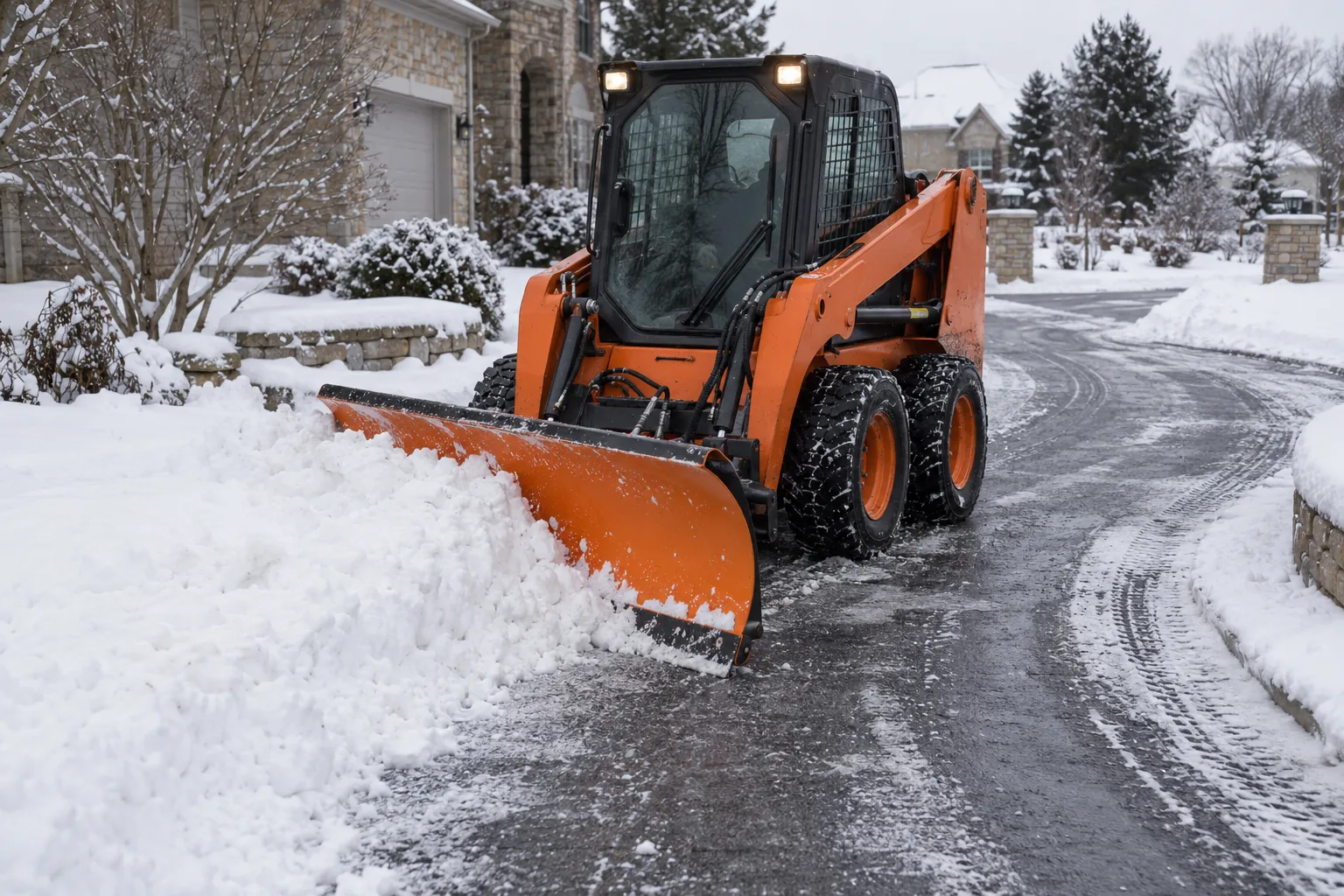
An angle blade moves snow toward a permitted side and can follow curving routes. A pusher contains snow for straight runs toward a planned stack. Compare turns, obstacles, surface, snowfall, push distance and storage—not which tool is universally better.
A snow blower needs more than a matching mount. Review the tool data and the selected loader circuit on the same sheet.
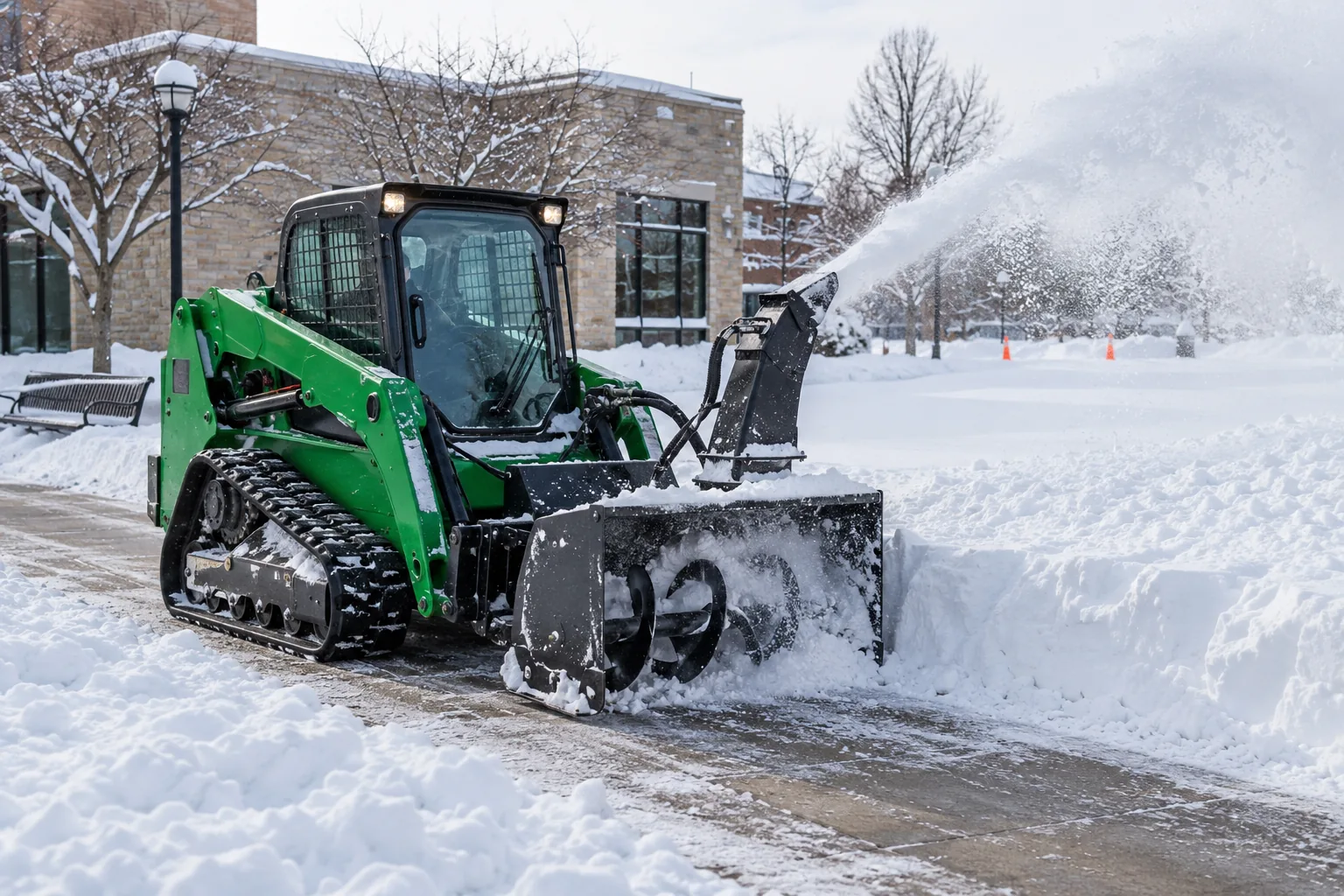
There is no universal winter winner. Use the route, surface, travel distance, attachment demand, operator environment and maintenance plan to decide.
| Decision factor | Wheeled skid steer | Tracked loader | Compact tractor | Buyer question |
|---|---|---|---|---|
| Tight maneuvering | Compact skid-steer turning | Similar maneuvering plus track-system care | Length and steering need more room | Smallest turn with the tool fitted? |
| Firm pavement | Practical starting point where tire service is accessible | Possible, but track wear remains | Can suit longer property travel | Distance and sharp-turn frequency? |
| Loose or uneven ground | Traction depends on tire and approved aids | Evaluate where flotation and traction matter | Tire setup, ballast and implement position matter | Worst surface on the complete route? |
| Powered tool | Auxiliary circuit must match | Same; tracks do not change hydraulics | PTO or hydraulic implement uses different checks | Flow, pressure, controls and return? |
| Operator environment | Cab, visibility, heating and defrosting depend on the selected configuration | What is included in writing? | ||
| Daily maintenance | Tires, aids, couplers and packed snow | Add tracks, rollers, tension and cleaning | Tires, ballast, PTO or hydraulic checks | What can the crew support every shift? |
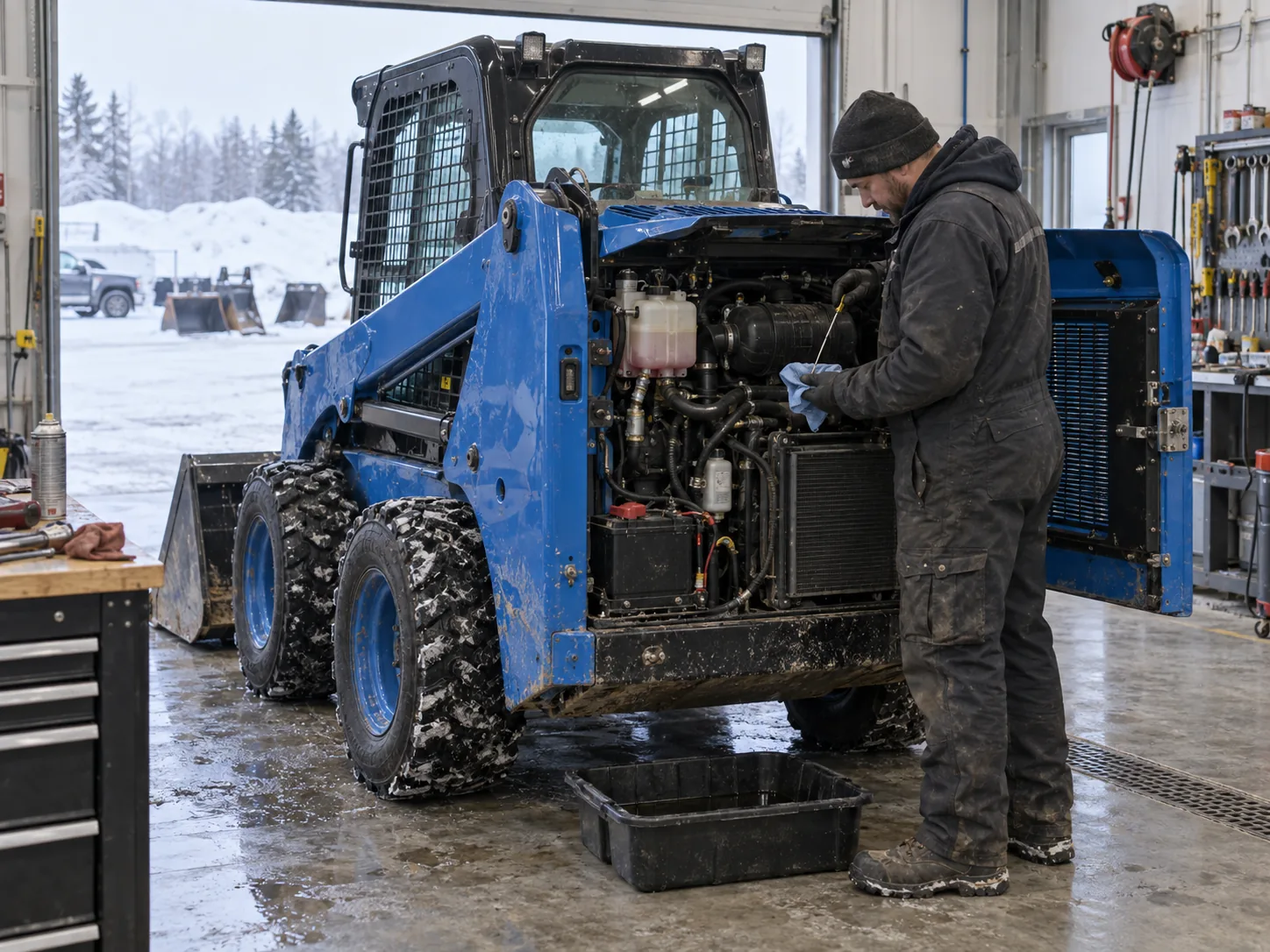
Cold-weather reliability begins before the route is blocked. Use the selected manuals and agreed configuration to build the routine.
This checklist supports purchasing and work planning; it does not replace the exact machine, attachment and site safety instructions.
A useful comparison puts the same machine, attachment and support scope on every quotation. Configuration and destination change the total.
Model direction, engine, wheels or tracks, operating layout, weather package and rated basis.
Type, width, weight, edge, protection, cylinders or motors, controls and wear parts.
Functions, available flow and pressure, couplers, hoses, return or case drain and control method.
Approved traction direction, fluids, lighting, heating or defrosting and service items.
Complete dimensions and weight, attachment packing, loading, destination and documents.
Exact manuals, parts identification, wear items and agreed technical support.
Hongrui is based in Jining, Shandong, China. The team supports OEM/ODM and configuration communication for machinery projects, followed by technical consultation, operation guidance, remote fault assessment and spare-parts coordination for the agreed scope.
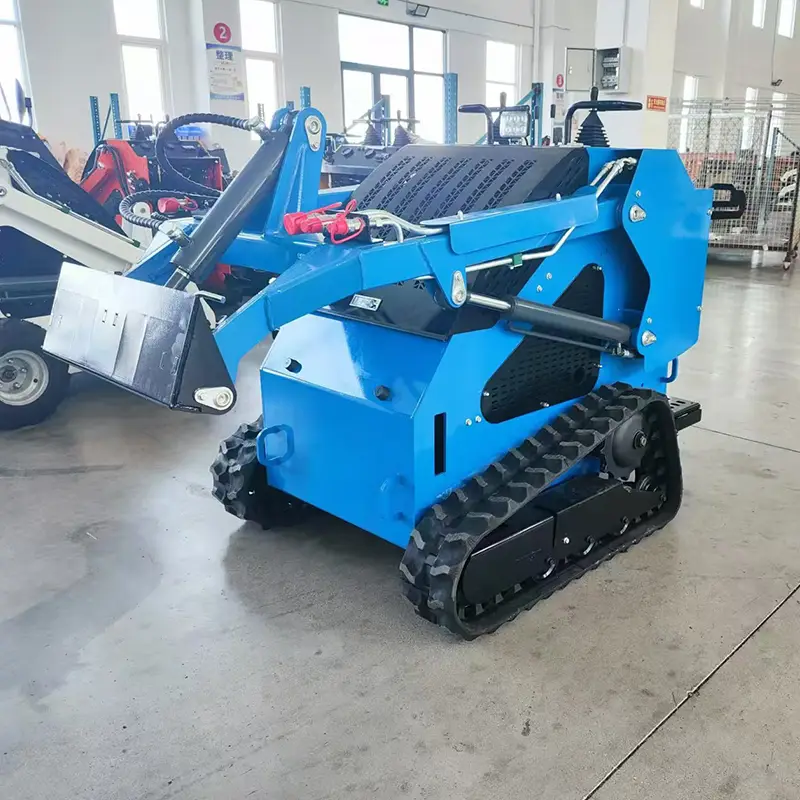
Match the tool to snow movement: a pusher for straight open-lot runs, an angle blade for windrowing, a bucket for collecting or stacking, a hydraulically matched blower for controlled removal and a broom for finishing. Many routes use more than one tool.
There is no universal size. Measure the access, turns, surface, slope and storage area with the attachment fitted, then choose a carrier and width that remain controllable as snow accumulates.
Wheels are a practical starting point on firm paved routes. Evaluate tracks where soft, loose or uneven ground makes flotation and traction more important. Ice, slope, turning, surface wear and approved traction aids can change the result.
A skid steer can offer compact maneuvering and front attachment control. A compact tractor may suit longer property routes where its turning space and implement system fit. Compare hydraulics or PTO, visibility, weather protection, travel and maintenance—not a universal efficiency claim.
No. The mount, flow, pressure, couplers, hoses, return or case drain, controls, tool weight and discharge arrangement must match the exact loader.
Use approved fluids and starting procedures, maintain the battery and charging system, inspect the undercarriage, hoses, couplers, lights and locks, warm up according to the manual and remove packed snow, ice and corrosive residue after work.
Send the site and surface, expected snow, access and turns, push distance, stacking or discharge plan, preferred tool, hydraulic requirements, destination and transport limits. A route sketch and photos can help.
Tell us where the loader must travel, what kind of snow it must move and where the snow can go. We will use those constraints to discuss the carrier direction, attachment, hydraulic circuit and written export scope that belong on the same quotation.
Include the site, surface, snow conditions, access limits, attachment choice and destination.
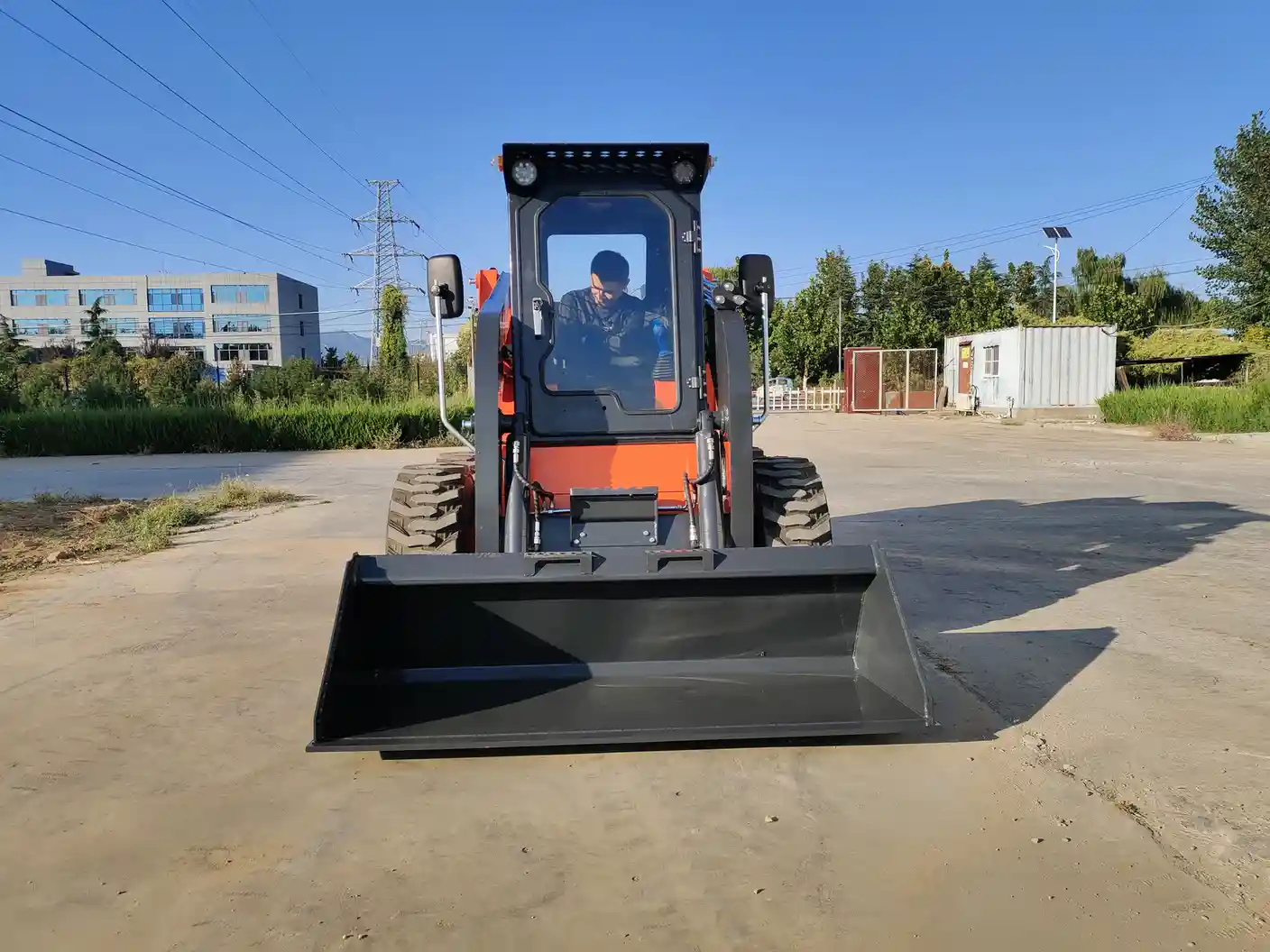
Evidence before commitment
A professional offer should connect the proposed configuration to evidence that can be checked before dispatch. Availability and document scope are confirmed for the specific order.
Configuration review, assembly checkpoints and key component traceability where applicable.
Function checks, leak inspection and order-specific test items recorded before shipment.
Required compliance documents are verified against destination and project requirements before order.
Packing method, loading photos and dispatch documents can be included in the delivery file.
Factory visits, remote video inspection or third-party pre-shipment checks can be coordinated when agreed. Published claims are not substituted for order-specific acceptance evidence.