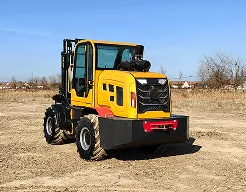
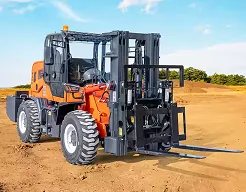
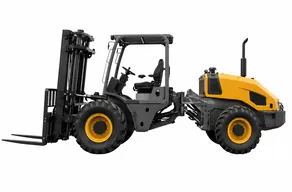
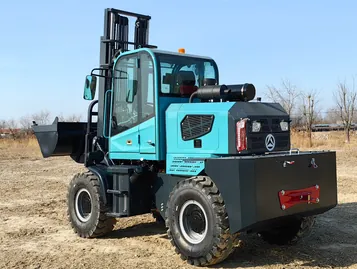
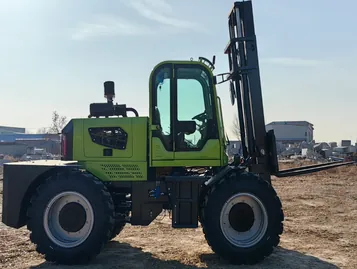
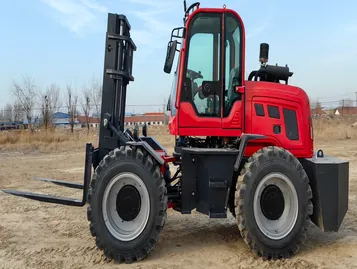
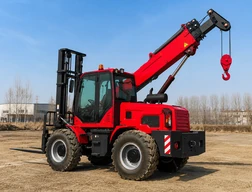
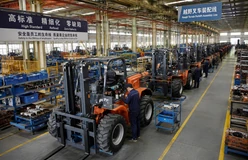
What Is a Rough Terrain Forklift?
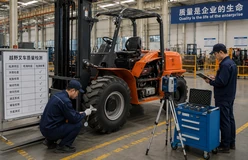
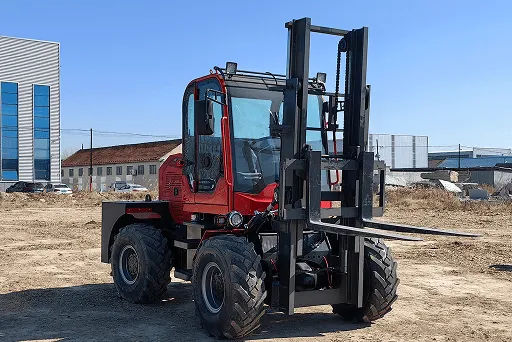
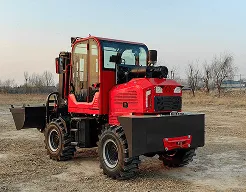
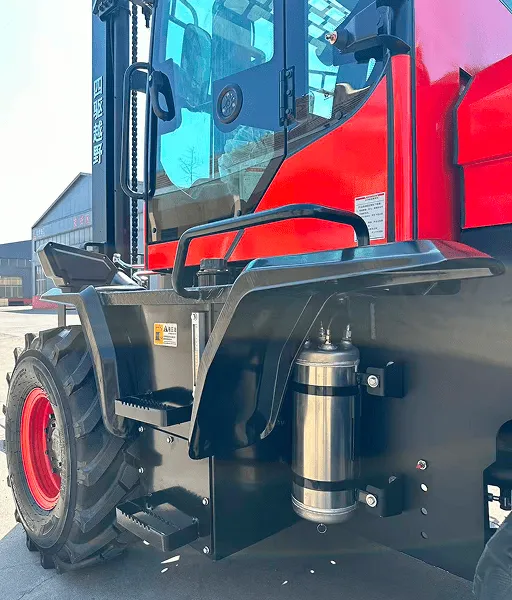
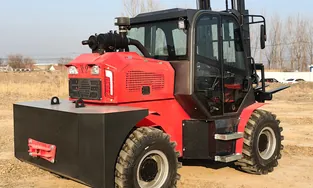
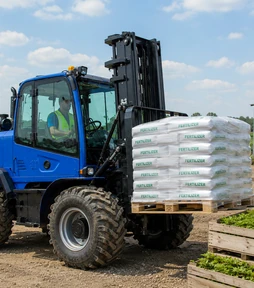
A rough terrain forklift is a heavy-duty material handling vehicle designed specifically for outdoor, unpaved surfaces. Unlike standard warehouse forklifts that use small, solid tires and have low ground clearance, rough terrain models feature large pneumatic tractor-style tires, robust 4WD systems, and articulated or heavy-duty straight frames to maintain stability on mud, gravel, and steep inclines.
How to Choose the Right Capacity (Decision Tree)
Selecting the wrong capacity is the most common mistake buyers make. You must factor in the load center and attachment weight. Here is a quick guide:
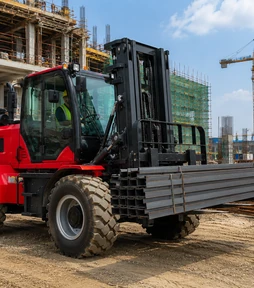
- Handling standard construction pallets (bricks, cement) on mostly flat dirt: A 3.0 Ton 2WD/4WD model is usually sufficient.
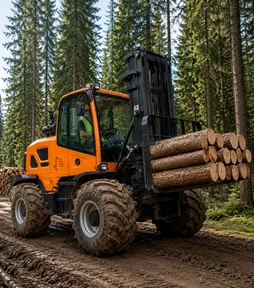
- Logging, mining, or handling steel pipes on slopes: Opt for a 5.0 Ton 4WD model to ensure enough torque and counterweight stability.
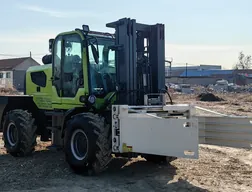
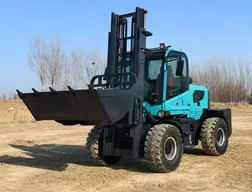
- Using heavy attachments (like a large bucket or bale clamp): Deduct the attachment weight from the forklift's rated capacity. A 500kg attachment on a 3T forklift means your safe lifting capacity is now 2.5T. Upgrade to a 3.5T or 5T model.
2WD vs. 4WD: Which Do You Need?
| Drive Type | Best Scenarios | Cost |
|---|---|---|
| 2WD (Two-Wheel Drive) | Flat unpaved yards, dry agricultural land, packed gravel. | Lower |
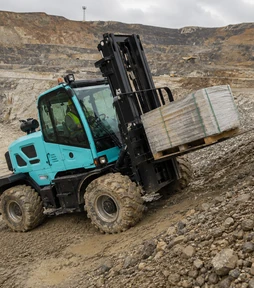
| 4WD (Four-Wheel Drive) | Muddy construction sites, steep hills (>15% grade), snow, mining sites. | Higher |
Expert Tip: Always choose 4WD if your site experiences heavy rainfall or snow. The downtime cost of a stuck 2WD forklift quickly exceeds the price difference of upgrading to 4WD.
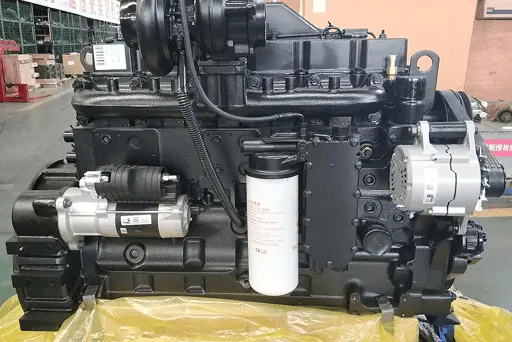
Engine Selection: Cummins vs. Standard Brands
For international buyers, we highly recommend specifying a Cummins engine (e.g., QSF2.8 or QSF3.8). While local Chinese engines (like Xinchai) are excellent and cost-effective, Cummins offers global warranty support and easy access to aftermarket filters and spare parts in almost every country, reducing maintenance downtime.