Skid Steer Loaders for Confined Jobsites
Move soil, handle materials and change tasks with Hongrui compact loaders. Choose seated or stand-on operation, wheels or tracks, and model-specific gasoline or diesel configurations for landscaping, farm work and site maintenance.
Start with the access width and the attachment you need. Then compare machine dimensions, loading requirements and hydraulic connections to build a configuration that fits the work.
- Seated & Stand-On Options
- Wheeled & Tracked Configurations
- Buckets, Forks & Hydraulic Attachments
Find Your Loader Configuration
Operator position and undercarriage are separate choices. Compare the four configurations below, then use the model specifications to check access, transport and attachment requirements.
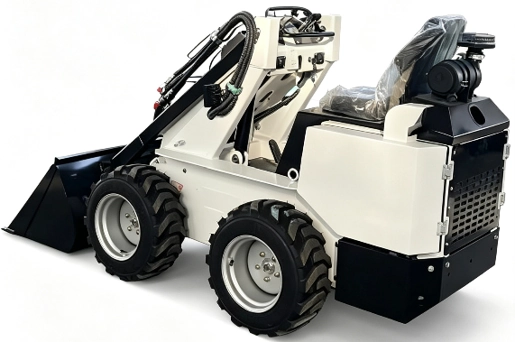
Seated Wheeled Skid Steer Loaders
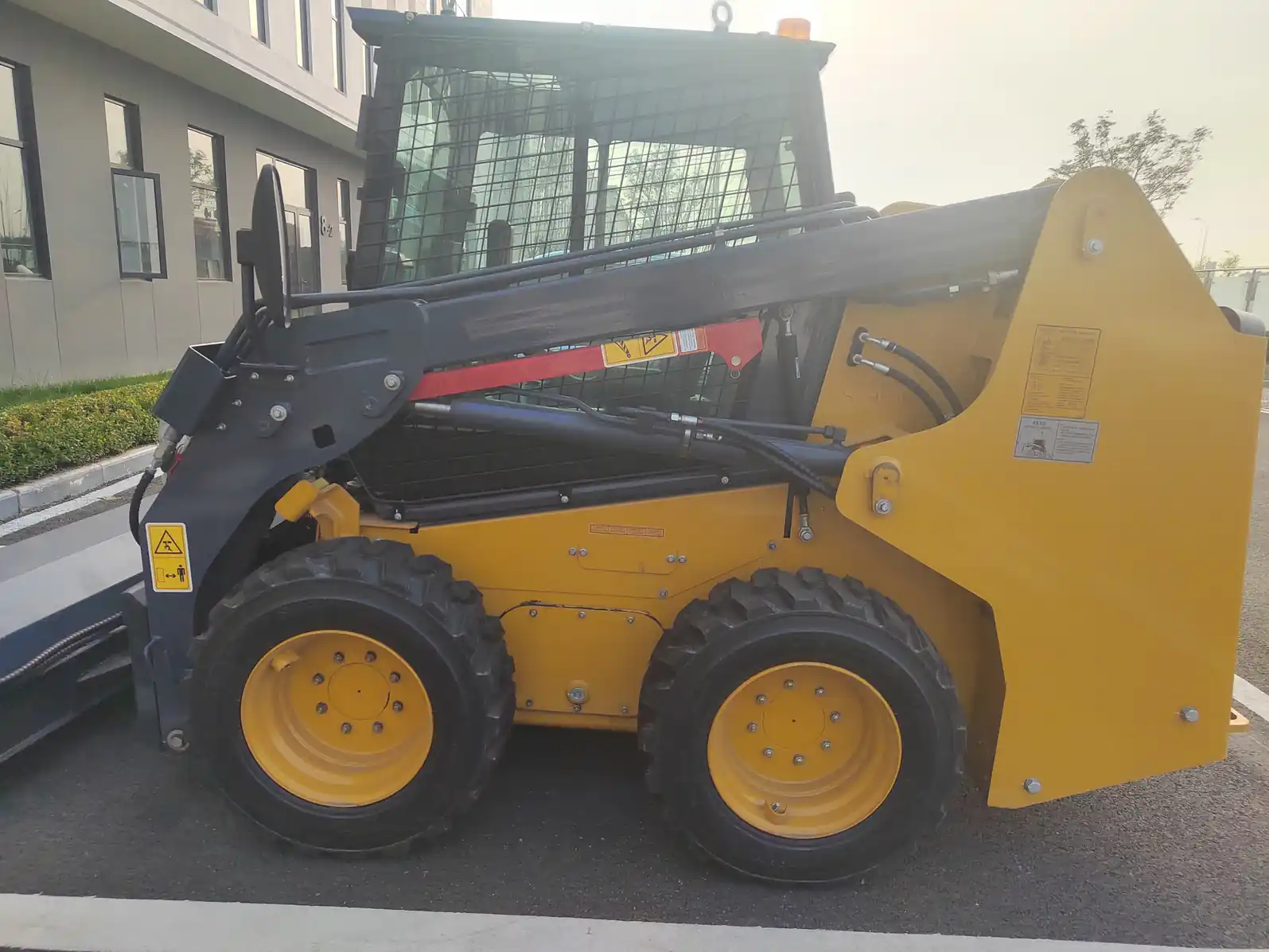
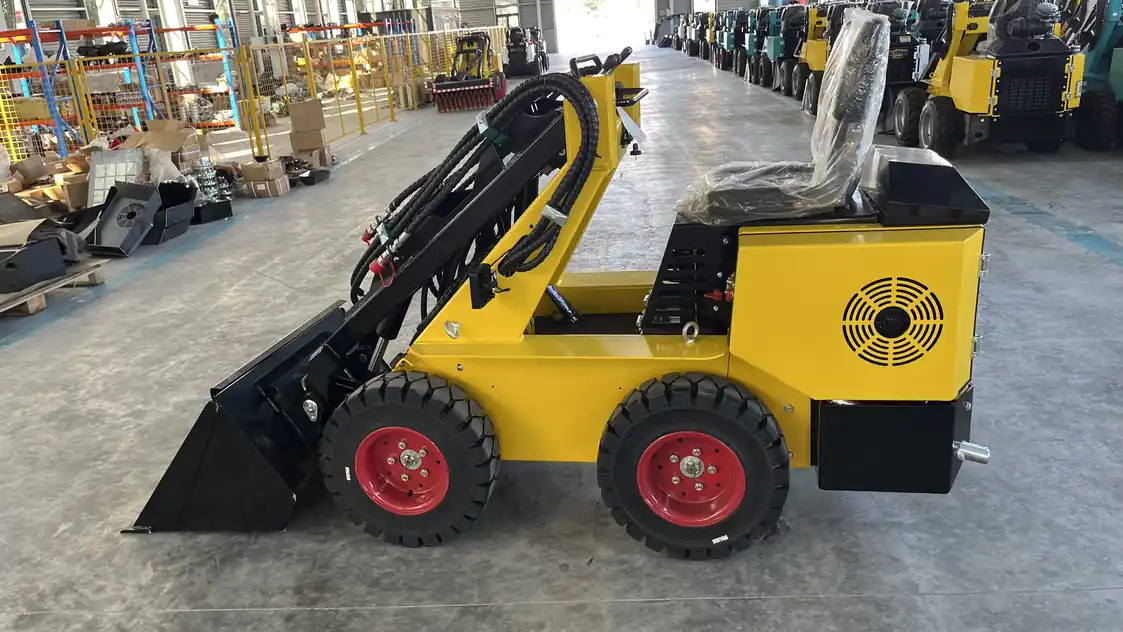
For yard loading and repeated material runs on firm ground, compare a seated operating position with the tire setup your route requires. The S300, S350, S500 and JS500 families offer wheel-based configurations with different engine options, giving you a starting point for matching access dimensions and loading work.
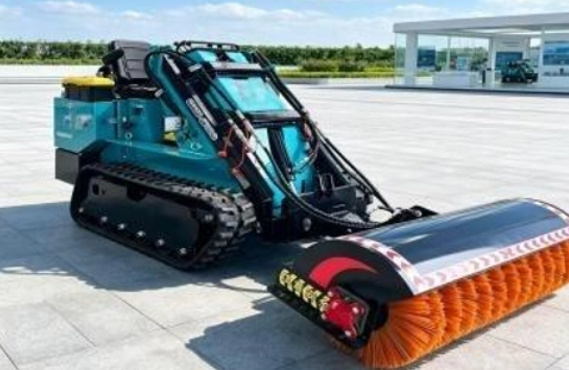
Seated Track Skid Steer Loaders
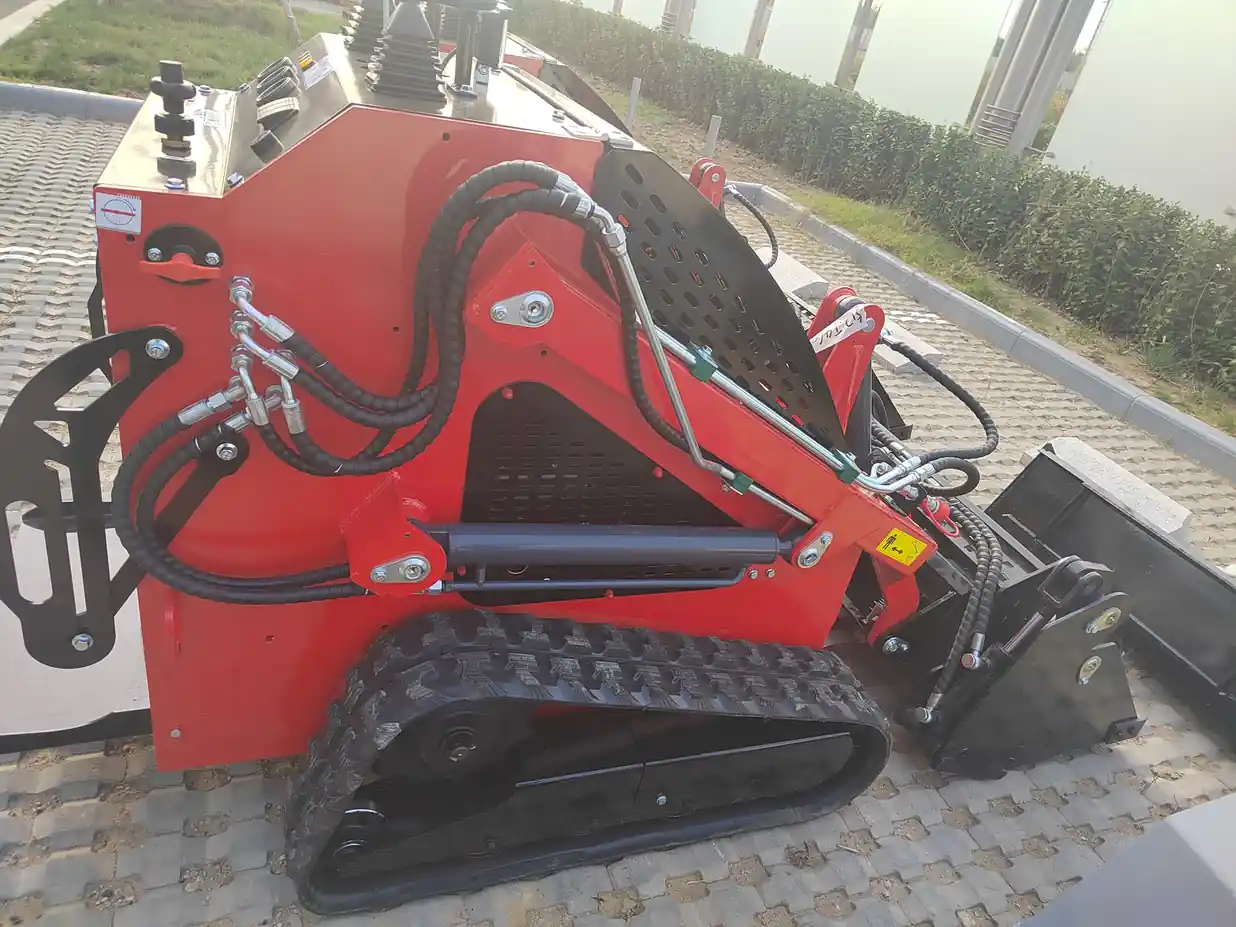
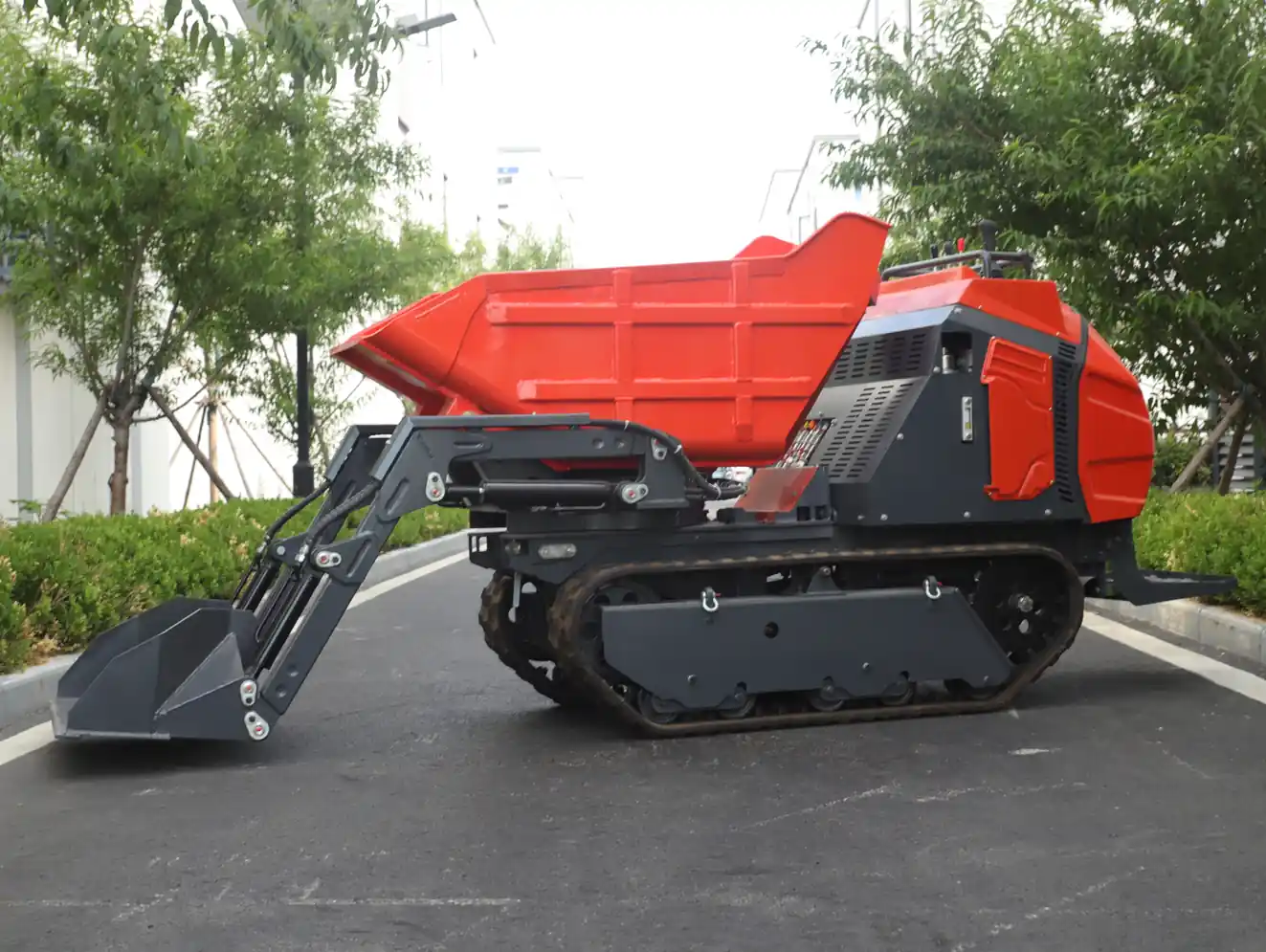
For landscaping and earthmoving routes with soft or uneven ground, evaluate a tracked undercarriage alongside the required loading capacity. The SL300, SL350, SL500 and JSL500 families combine a seated operating position with tracks; include undercarriage cleaning and transport weight in the comparison.
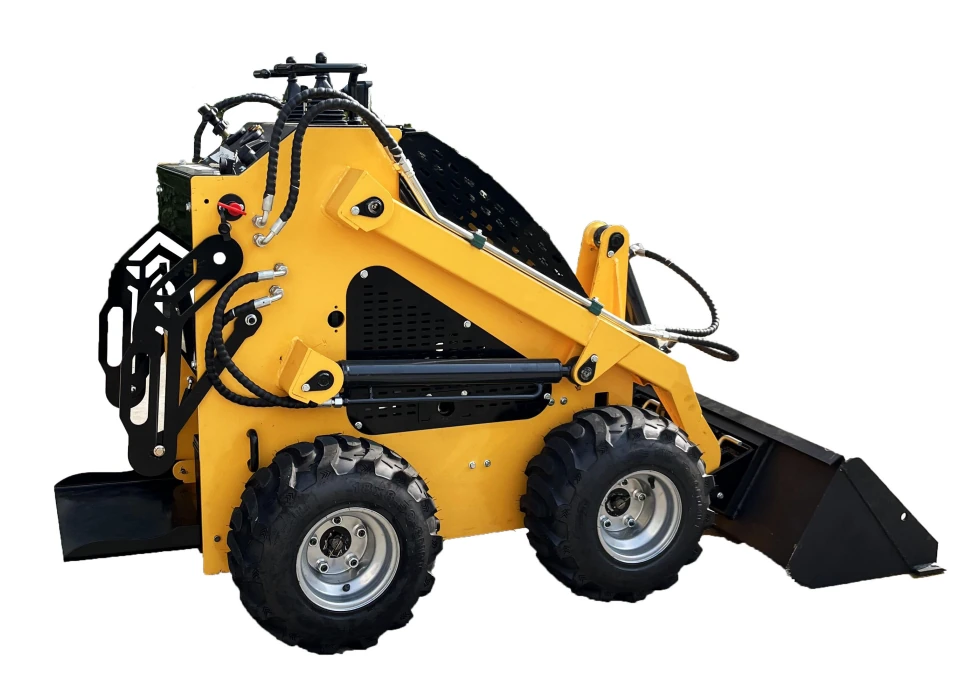
Stand-On Wheeled Mini Skid Steer Loaders
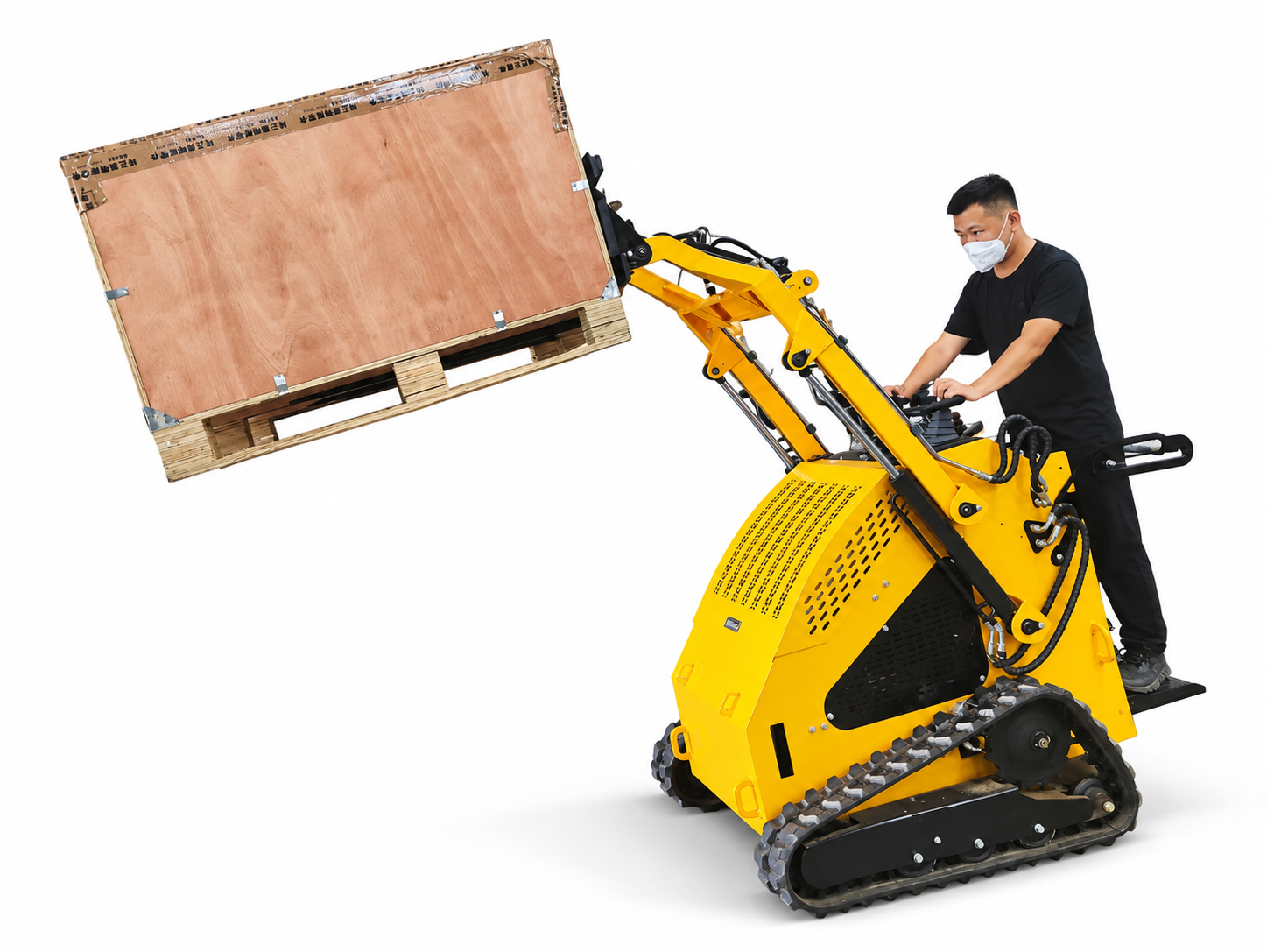
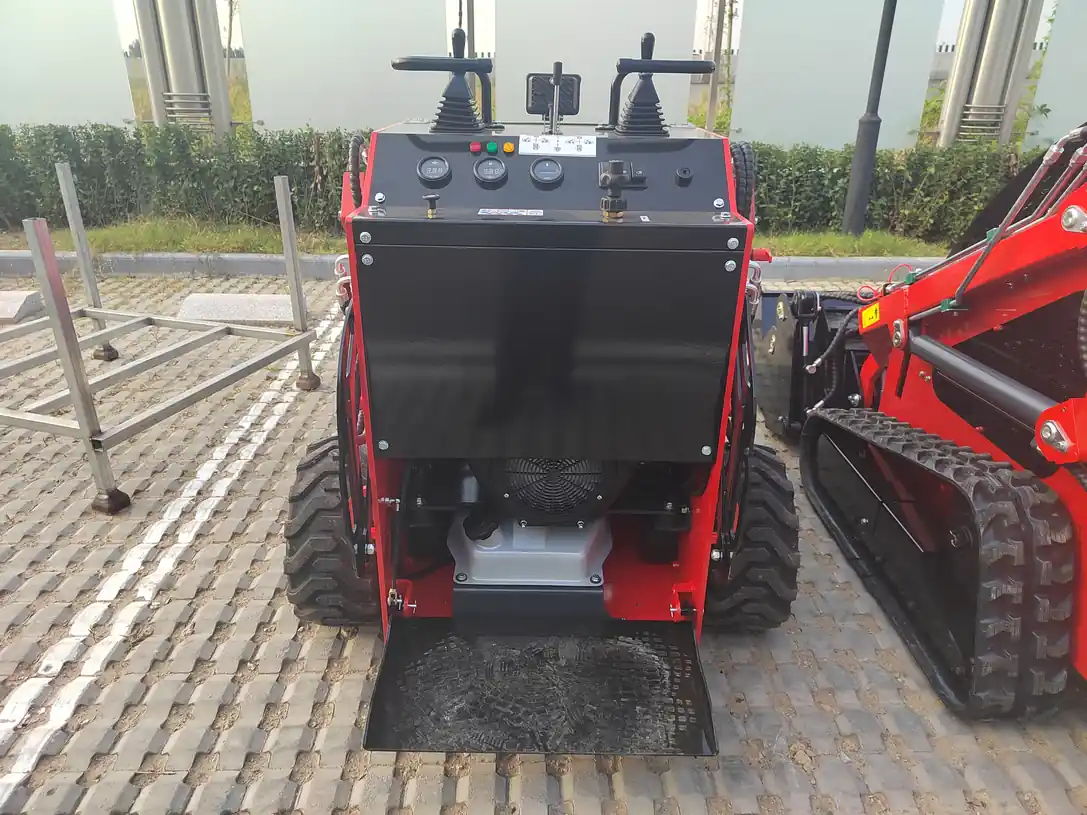
For crews that move between loading tasks and ground-level work, a rear standing platform provides a different operating layout from a seated machine. S-200SC and S-200SP configurations include wheeled versions with mechanical controls; tire selection and hydraulic output options should follow the attachment package and ground conditions.
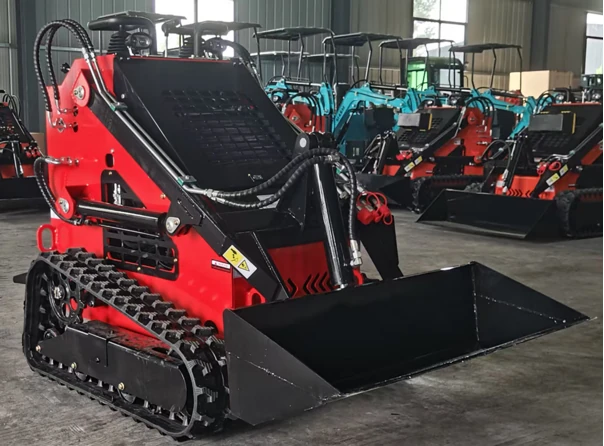
Stand-On Mini Track Loaders
For garden construction and material handling across unpaved areas, compare a rear standing platform with the track layout and attachment needs. The S-200S, S-200SC, S-200SP and S-250P range includes tracked configurations, with hydraulic output and control details selected at model level.
Compare Dimensions and Engine Configurations
Body width helps shortlist a machine for restricted access, while machine weight affects transport planning. The seated models below use different engine configurations and two body-size groups; the attachment and any added equipment must also be included when checking the complete machine envelope.
Seated Loader Model Reference
| Models | Undercarriage | Engine configuration | Body dimensions, L × W × H | Machine weight |
|---|---|---|---|---|
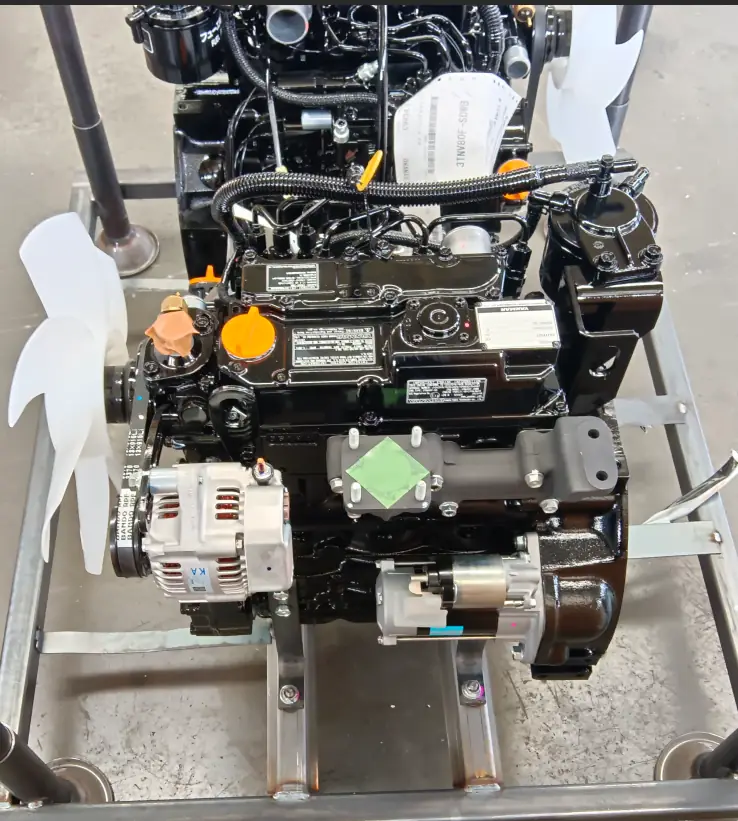
| S300 / SL300 | Wheeled / tracked | Runtong R740-1 gasoline, 739 cc | 1,960 × 850 × 1,400 mm | 920 kg |
| S350 / SL350 | Wheeled / tracked | Kepu KD292FA diesel, 0.997 L | 1,960 × 850 × 1,400 mm | 920 kg |
| S500 / SL500 | Wheeled / tracked | Laidong three-cylinder diesel | 1,960 × 1,100 × 1,400 mm | 1,020 kg |
| JS500 / JSL500 | Wheeled / tracked | Kubota 1105 diesel | 1,960 × 1,100 × 1,400 mm | 1,020 kg |
Within each pair, the first model is wheeled and the second is tracked. These body dimensions and machine weights describe the listed configurations; bucket width, protective structures and selected equipment can change access and transport requirements.
An 850 mm Body Does Not Mean an 850 mm Working Width
The S300, SL300, S350 and SL350 configurations list an 850 mm body width and a standard bucket measuring 900 × 420 × 600 mm. For a narrow gate, the 900 mm bucket width is the first access check; allow additional clearance for the route and turning space.
These four configurations list a 300 kg rated load. Assess the selected attachment, load position and loading height before applying that figure to a particular handling task.
Stand-On Configuration Overview
| Model | Configuration choices | Selection focus |
|---|---|---|
| S-200S | Tracked configuration with Runtong twin-cylinder 739 cc engine | Track layout and required hydraulic output |
| S-200SC | Wheeled or tracked; mechanical controls | Tire or track choice and attachment circuit configuration |
| S-200SP | Wheeled or tracked; mechanical controls | Hydraulic output options and operator-platform configuration |
| S-250P | Tracked; mechanical controls; dual-output configuration | Attachment circuit requirements and loading task |
Match each powered attachment to the selected machine circuit. Engine power, pump count and the number of couplers do not, by themselves, establish attachment compatibility.
Body width: 850 mm
Standard bucket width: 900 mm
Check the complete access envelope
Resolve the Jobsite Constraints Before Choosing a Model
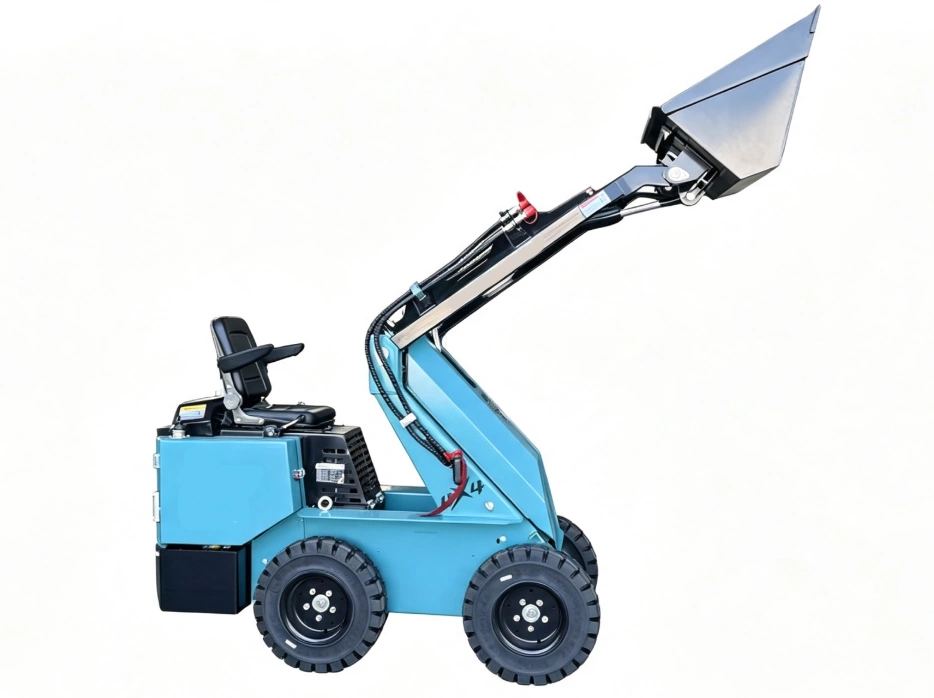
The Machine Fits the Gate, but the Bucket Does Not
A narrow courtyard entrance can rule out a loader after the body dimensions appear suitable. Hongrui’s 850 mm seated configurations use a 900 mm standard bucket, so comparing the complete width with the gate opening helps avoid selecting a machine that cannot reach its working area.
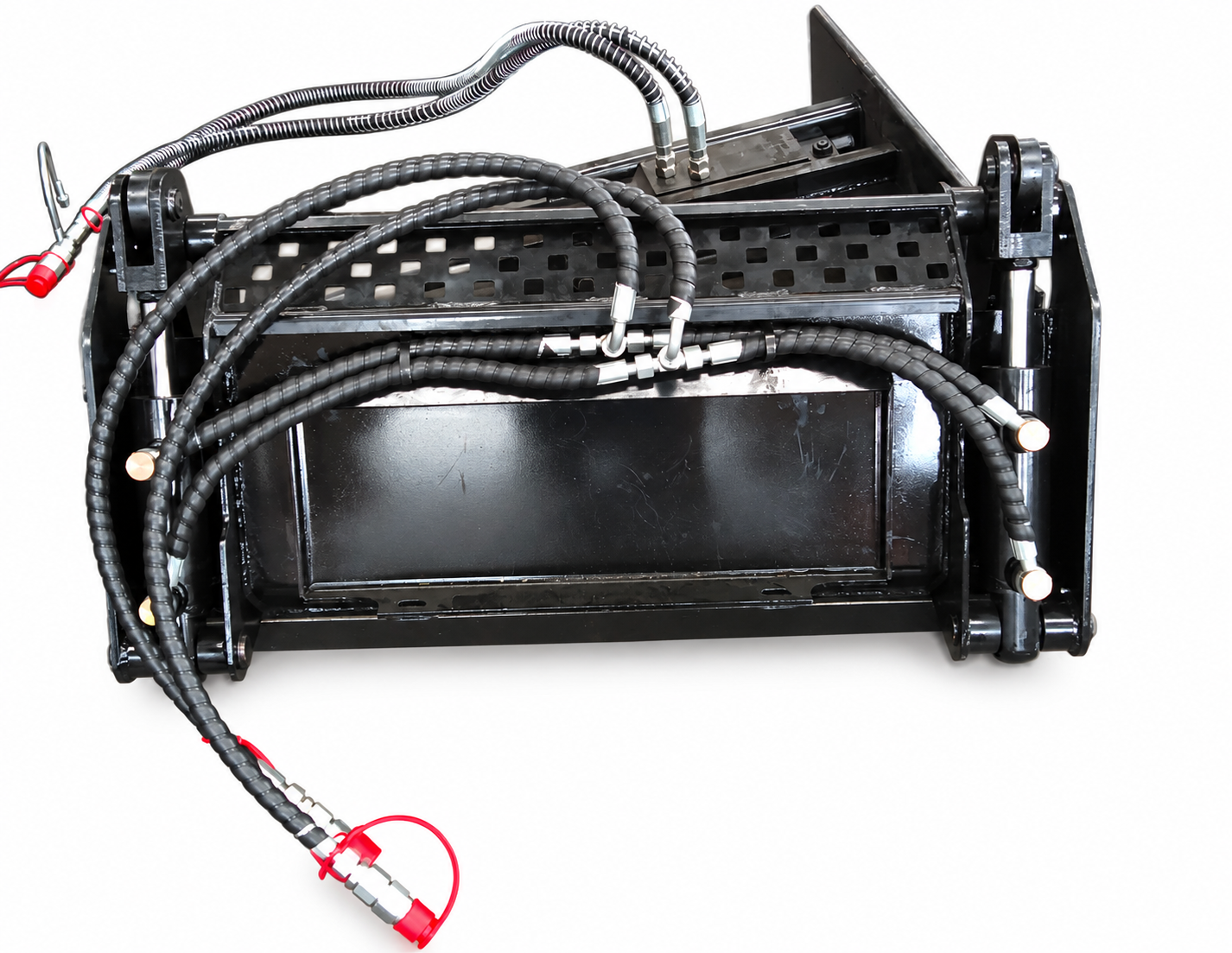
The Attachment Mounts, but the Hydraulic Setup Does Not Match
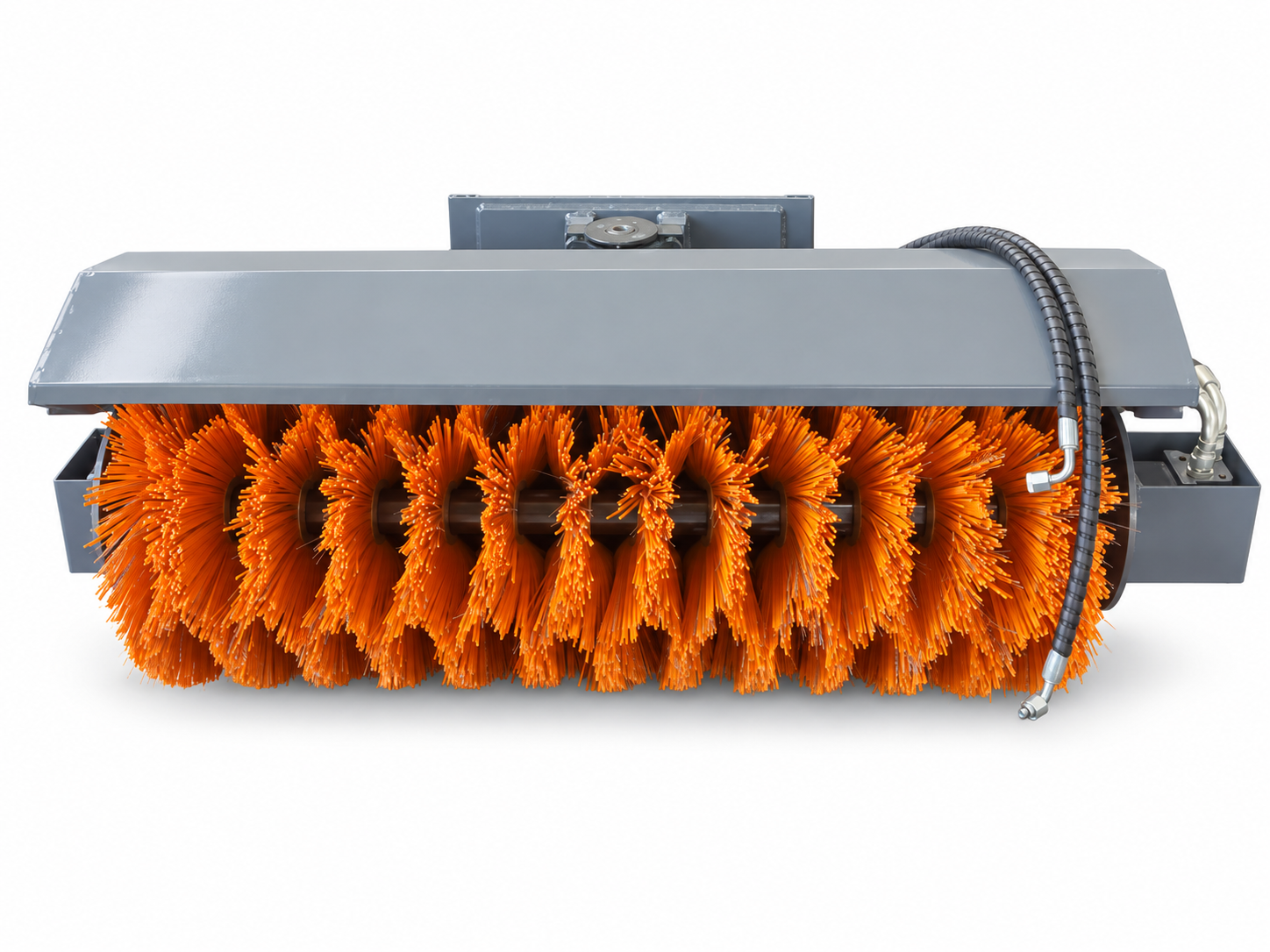
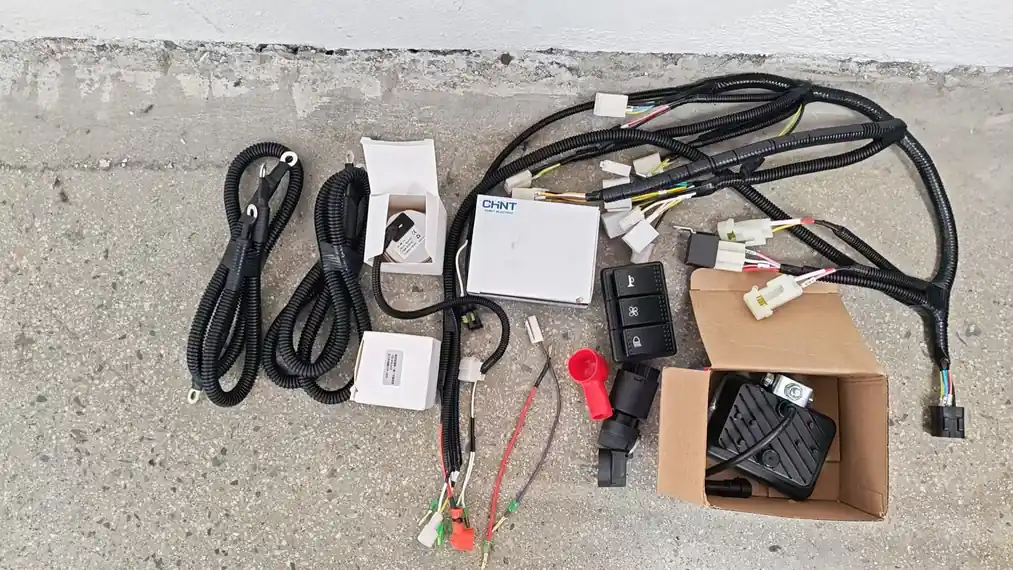
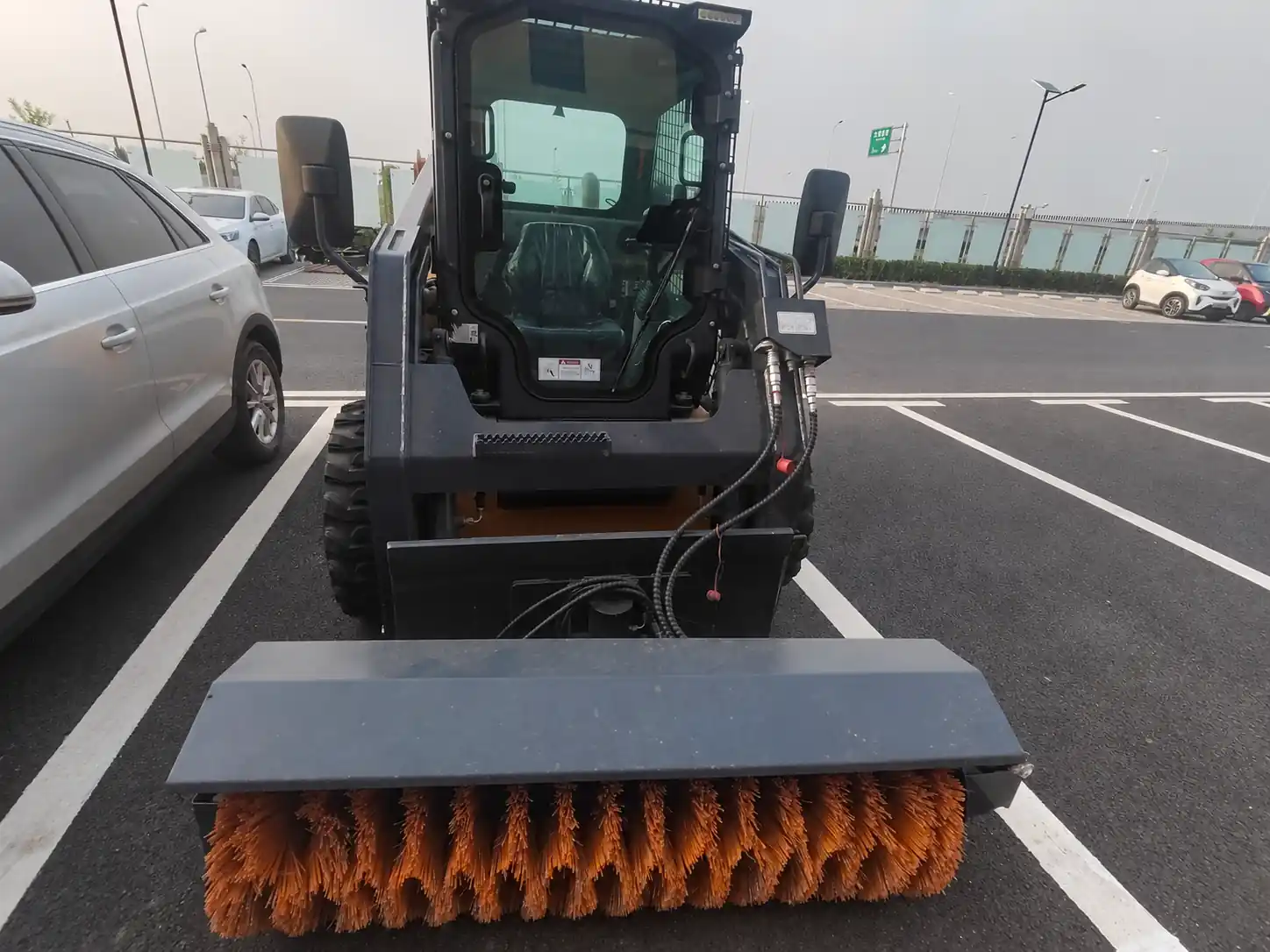
An auger, breaker or powered sweeper needs more than a matching mounting plate. Hongrui offers model-dependent hydraulic output configurations and attachment options; matching flow, pressure, couplers and any return-line requirements before ordering helps prevent an incomplete machine-and-tool package.
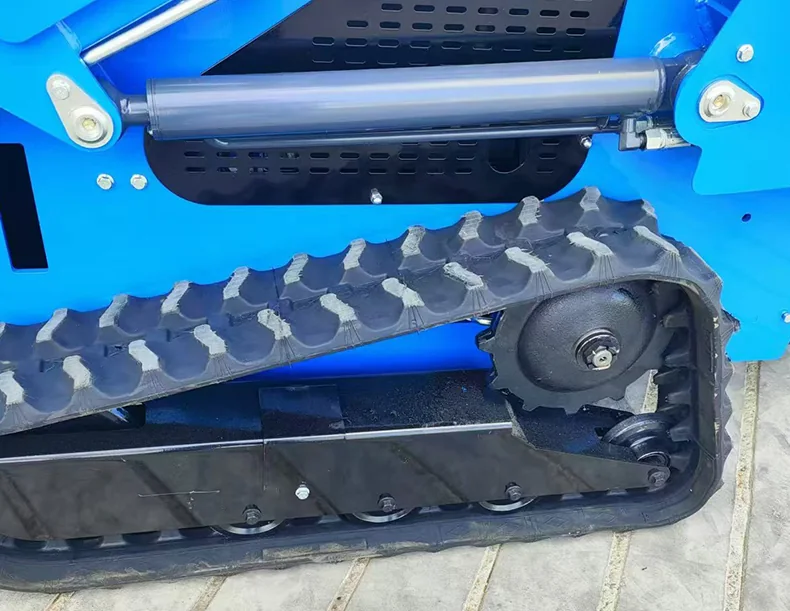
The Ground Conditions Change Between Jobs
A contractor may move between paved yards and unpaved landscaping sites. Wheeled and tracked configurations let the undercarriage choice follow the route, while tire condition, track wear and cleaning requirements remain part of the ownership decision.
Match the Attachment to the Work
A loader package should start with the material and the task. Buckets and forks address different handling needs, while powered tools add hydraulic requirements that must match the chosen machine configuration.
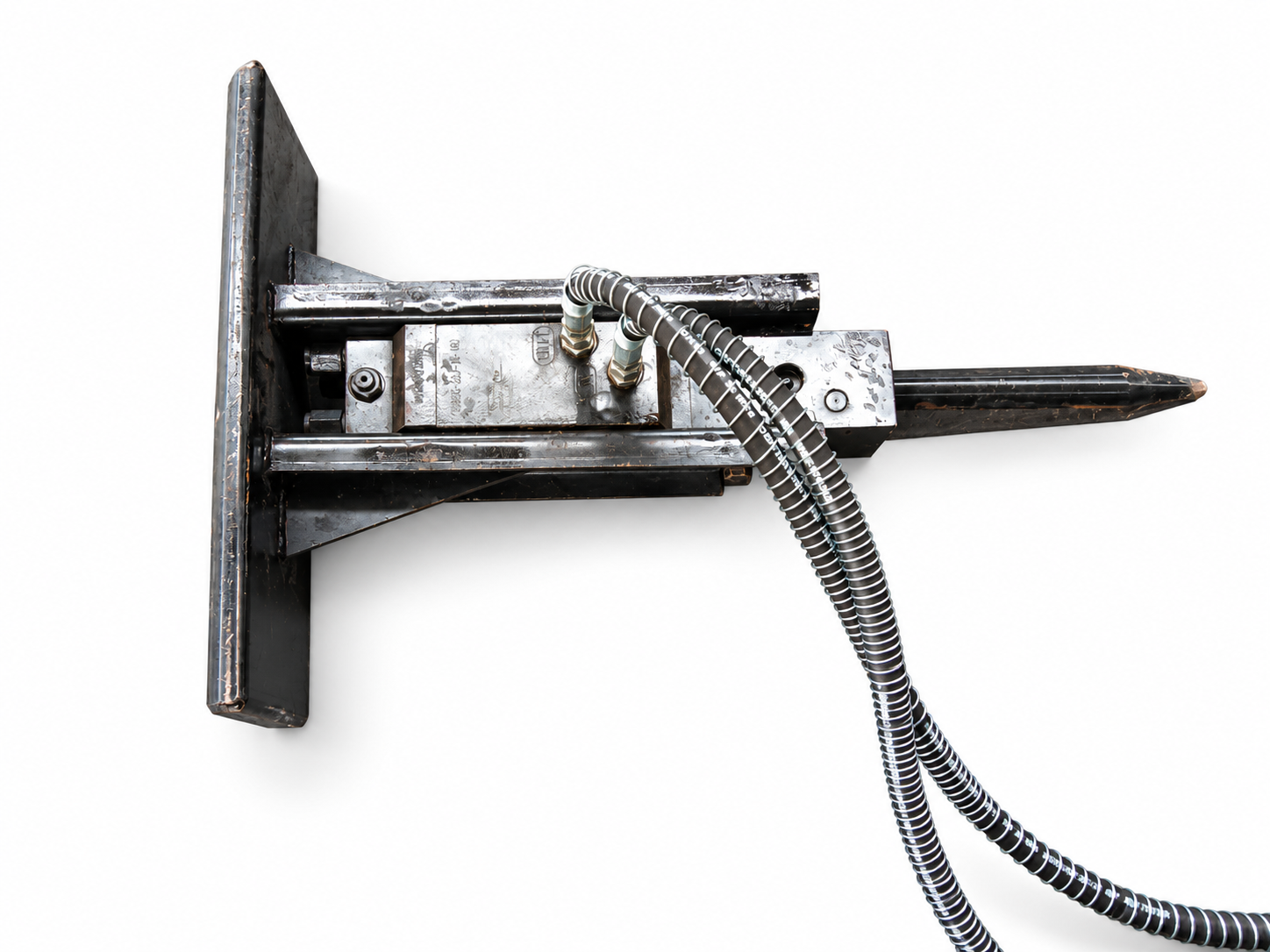
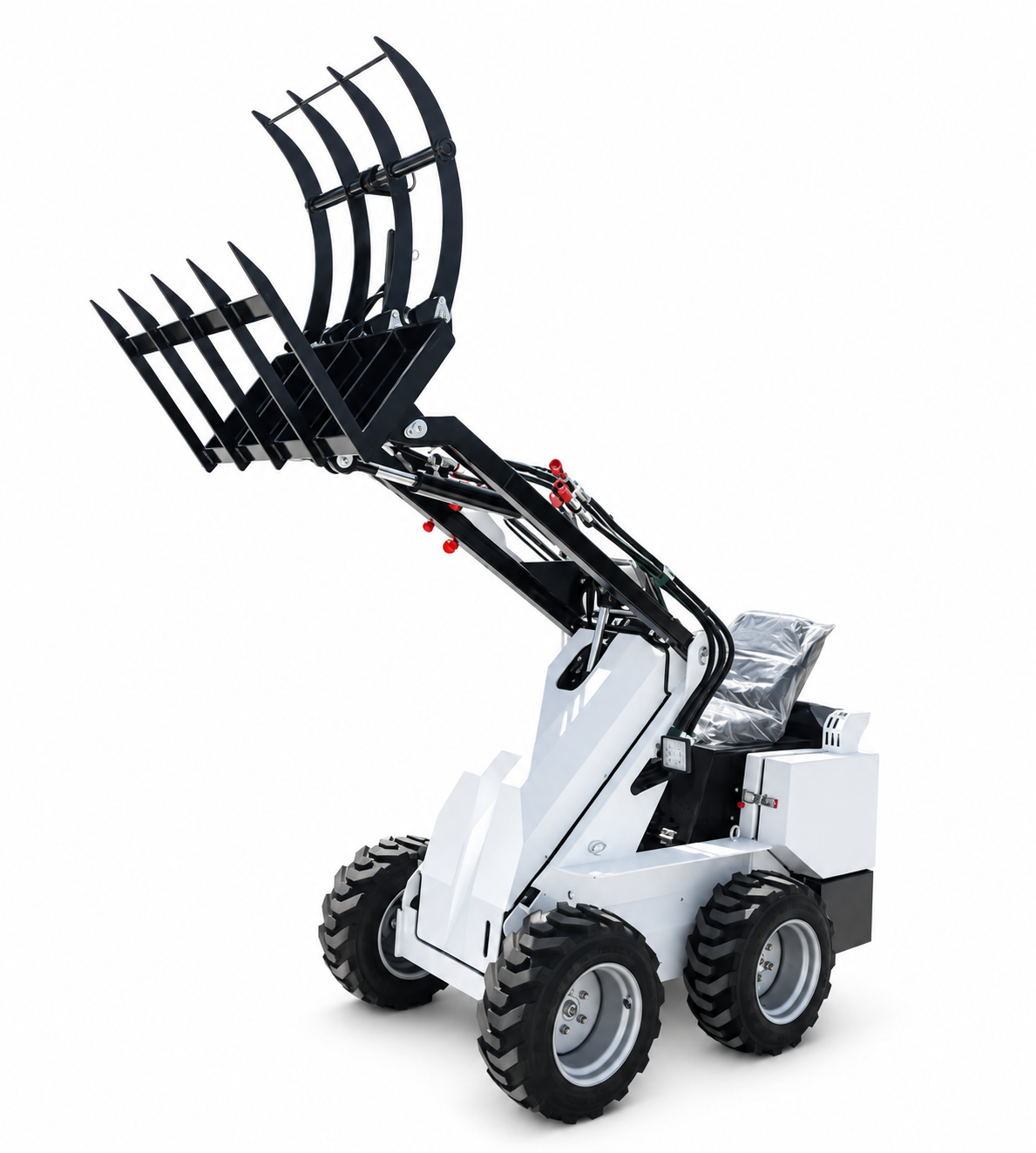
| Attachment | Typical task | What determines the match |
|---|---|---|
| Bucket | Moving soil, gravel or mulch | Material density, bucket width and rated loading configuration |
| Pallet forks | Handling palletized materials | Load centre, fork rating and capacity with the fitted attachment |
| Auger | Digging planting or fence-post holes | Ground conditions, auger size, hydraulic flow and torque requirement |
| Grapple | Handling branches or loose bulky material | Opening size, attachment weight and hydraulic connections |
| Sweeper | Cleaning yards and site access routes | Working width, surface condition and hydraulic demand |
| Breaker | Breaking concrete during site works | Carrier compatibility, tool weight, flow and operating pressure |
Check Both the Mechanical and Hydraulic Connection
Attachment compatibility has two parts: the mounting geometry and the hydraulic operating requirements. A plate that physically fits does not establish that a powered tool will operate correctly, and a familiar engine brand does not establish cross-brand attachment compatibility.
Specify the mounting plate, locking arrangement, coupler type, flow range and pressure requirement for the proposed tool. Include a case drain or dedicated return connection where the attachment manufacturer requires one.
Discuss a Loader and Attachment PackageConfiguration Choices That Matter After Delivery
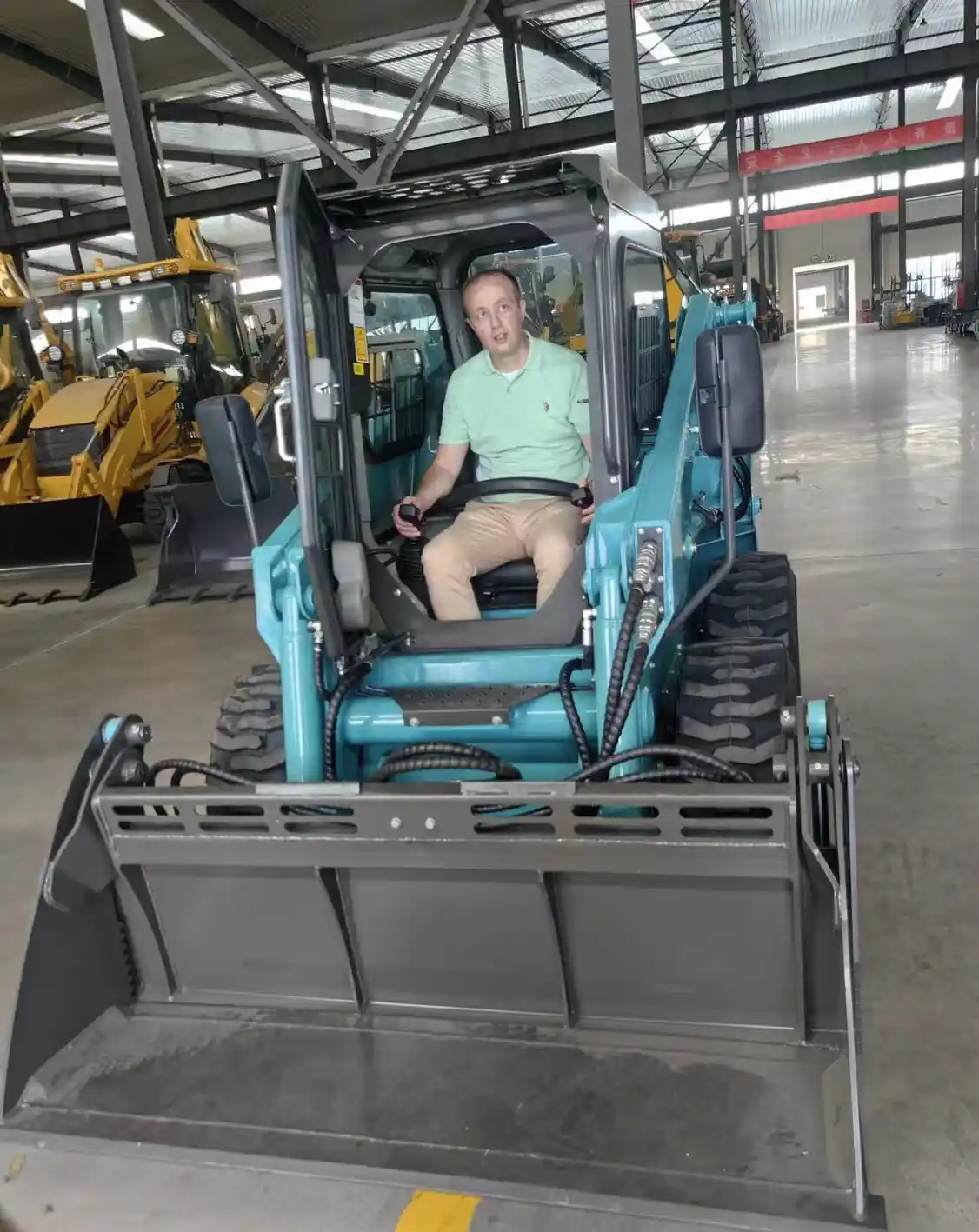
An Operating Layout That Follows the Work Pattern
Repeated loading runs and frequent transitions to ground work place different demands on the operator. Seated and rear-platform configurations let buyers compare operating position, access to controls and attachment visibility against the actual task sequence.
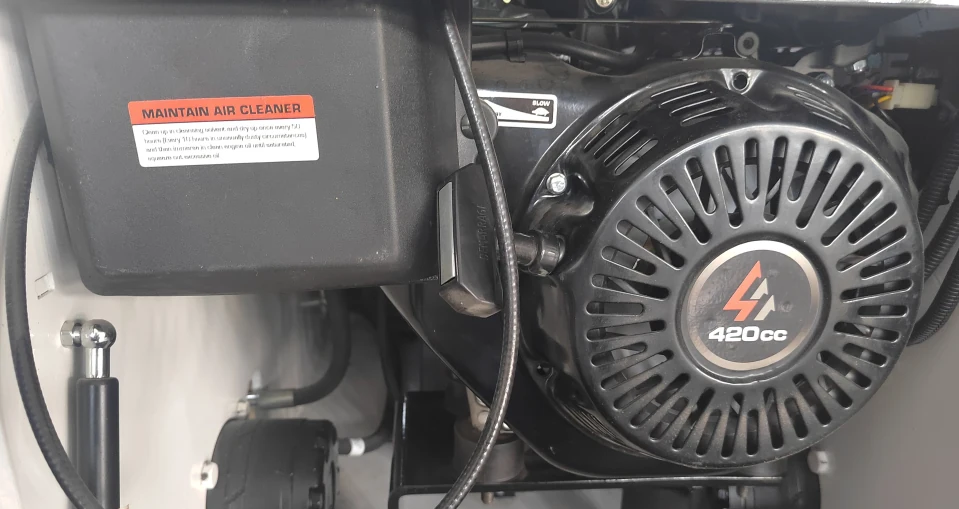
Engine Options for the Fleet You Already Maintain
For a farm or contractor managing existing fuel supplies and service routines, engine selection affects more than the purchase specification. Hongrui’s seated range includes Runtong gasoline, Kepu diesel, Laidong diesel and Kubota diesel configurations, allowing the shortlist to reflect fuel use and engine-parts support in the destination market.
Attachment Options Instead of a Bucket-Only Purchase
Landscaping and maintenance crews often need to handle materials, drill holes and clean the same site. Buckets, forks and powered attachment options let the purchase be organized around those tasks, with the machine circuit and mounting arrangement checked for each tool.
Wheels or Tracks? Compare the Ground and Maintenance Work
Hard surfaces, loose soil and debris create different undercarriage demands. Compare the working route and maintenance routine together; either configuration still needs adequate access width and a suitable attachment.
| Selection factor | Wheeled configuration | Tracked configuration |
|---|---|---|
| Ground conditions | A useful starting point for firm, paved working routes | Worth evaluating for soft or uneven unpaved ground |
| Wear items | Tires, wheel condition and inflation where applicable | Tracks, rollers, tension and debris accumulation |
| Sensitive surfaces | Tire choice and turning technique affect marking | Track contact spreads the load, but turning can still disturb turf |
| Transport planning | Use the selected machine weight and complete dimensions | Include undercarriage weight and complete dimensions |
| Attachment suitability | Depends on the specific machine, mount and circuit | Depends on the specific machine, mount and circuit |
Seated or Stand-On?
For sustained material runs, compare the seated layout with the operator’s reach to controls and view of the attachment. Where the work includes frequent transitions to ground tasks, evaluate the rear platform and access arrangement of a stand-on machine.
Operating position does not define lifting capacity. Compare the exact model and fitted attachment separately, including the loading height and the space available around the machine.
Work with Hongrui on the Machine and Its Support Requirements
Jining Hongrui Heavy Industry Machinery Co., Ltd. manufactures compact skid steer loaders in Jining, Shandong, China. Its activities include product design, machining, welding, assembly and after-sales support for wheeled and tracked configurations.
Operation and Maintenance Support
Support covers machine controls, attachment installation and routine maintenance. Training topics include fluid checks, lubrication points and tire or track inspection, helping operators establish a routine for the selected configuration.
Parts Enquiries Linked to the Actual Machine
After-sales support includes remote fault assessment and parts-supply coordination. A model reference, engine identification and photographs of the affected component help connect a service enquiry to the correct machine configuration.
Agree the Configuration Before Ordering
For a distributor order, the engine, undercarriage, controls and attachment package should be recorded together. Repeat orders should refer to the same agreed specification and identify any substitutions before shipment, so the delivered configuration can be checked against the purchase agreement.
Skid Steer Loader Buyer’s Guide
What Is a Skid Steer Loader?
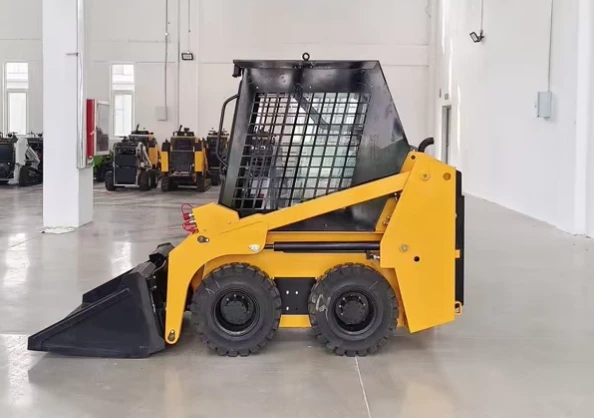
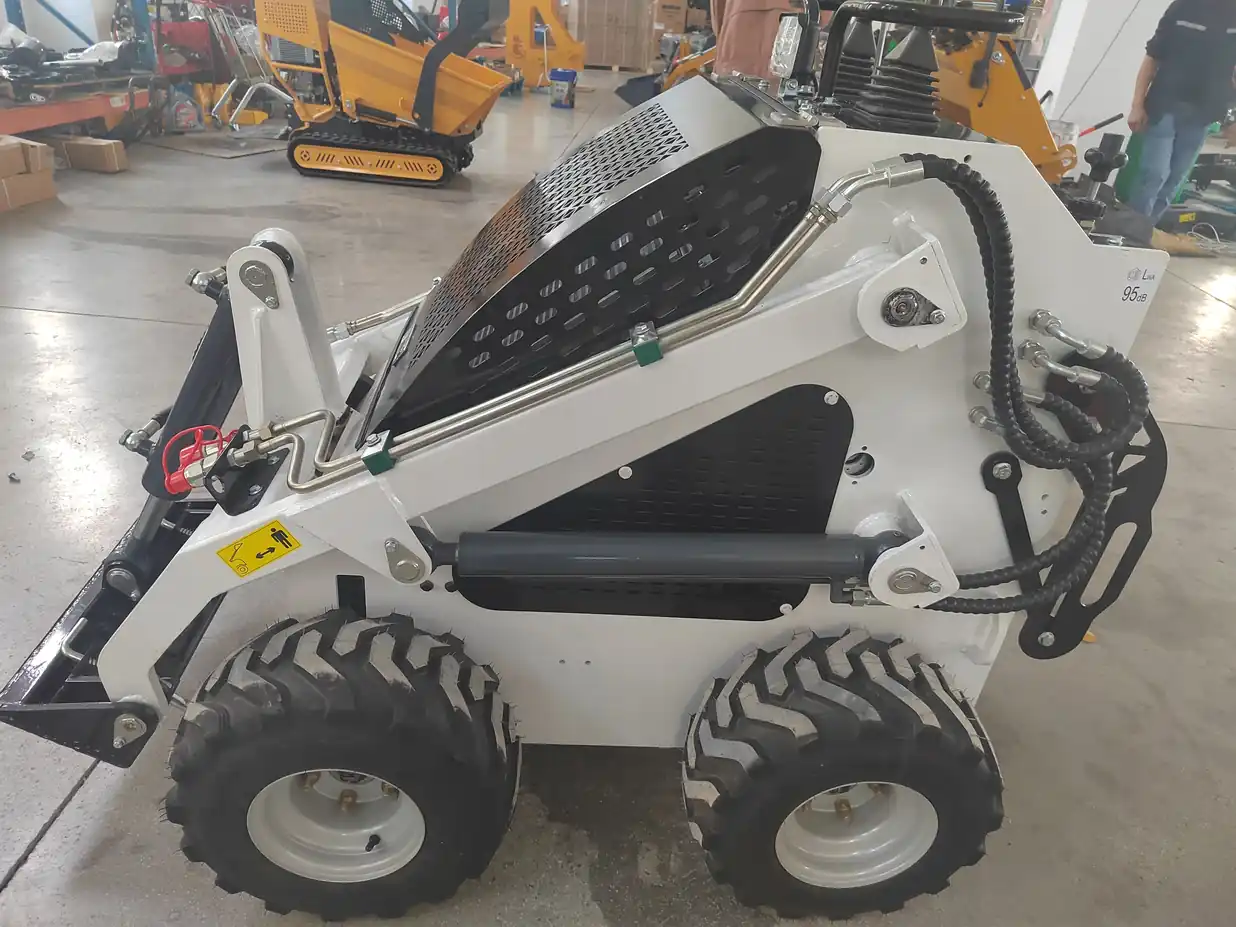
A skid steer loader is a compact loading machine that turns by varying the movement of its left and right sides. A front lift-arm assembly carries a bucket or another attachment for tasks such as loading, grading and material handling.
Wheeled machines are commonly called skid steer loaders, while tracked versions are commonly described as compact track loaders or mini track loaders. Hongrui offers seated and stand-on configurations, so operator position and undercarriage can be considered separately.
Which Configuration Makes Sense for Landscaping?
Start with the narrowest access point and the material to be moved. Garden gates, paths between planting areas and the width of the fitted bucket can restrict access before engine power becomes the deciding factor.
For Hongrui’s 850 mm seated models, the standard bucket is 900 mm wide. After checking that envelope, compare wheels or tracks for the ground conditions and select the bucket, auger or grapple required for the work.
How Should I Compare Rated Load and Loading Height?
Rated load, tipping load and loading geometry describe different limits. Compare capacities using the same rating basis and attachment conditions; a fork load carried farther forward is not the same loading case as material held in a bucket.
For truck or skip loading, check dump clearance and forward reach at the required position. A lift-height figure alone does not show whether the bucket will clear the side and discharge into the receiving body.
For the S300, SL300, S350 and SL350 configurations, begin with the listed 300 kg rated load and then assess the intended attachment and handling task.
Should I Choose a Gasoline or Diesel Engine?
Use the fuel already available to the crew, expected working hours and local engine-parts support to narrow the choice. Hongrui’s seated configurations include the Runtong R740-1 gasoline engine and Kepu, Laidong and Kubota diesel options across different model families.
A horsepower figure does not establish fuel consumption or attachment output. For a fuel-cost comparison, use the same material, attachment and work cycle, and compare fuel used against completed work rather than assuming one engine type will always cost less to operate.
Should I Buy a Skid Steer Loader or a Mini Excavator?
For repeated loading, short-distance material movement and tool changes, a skid steer loader is a useful machine to evaluate. For work dominated by trench depth, digging below ground level and excavation reach, a mini excavator is usually the more relevant starting point.
Both machine types can use attachments. The decision should follow the dominant task and working geometry, rather than the number of tools shown in a catalogue.
What Should an Import or Distributor Quote Include?
Compare the complete package: machine model, engine configuration, undercarriage, attachments, initial service parts and shipping scope. A lower machine-only price may cover a different attachment set or leave out items needed for commissioning and maintenance.
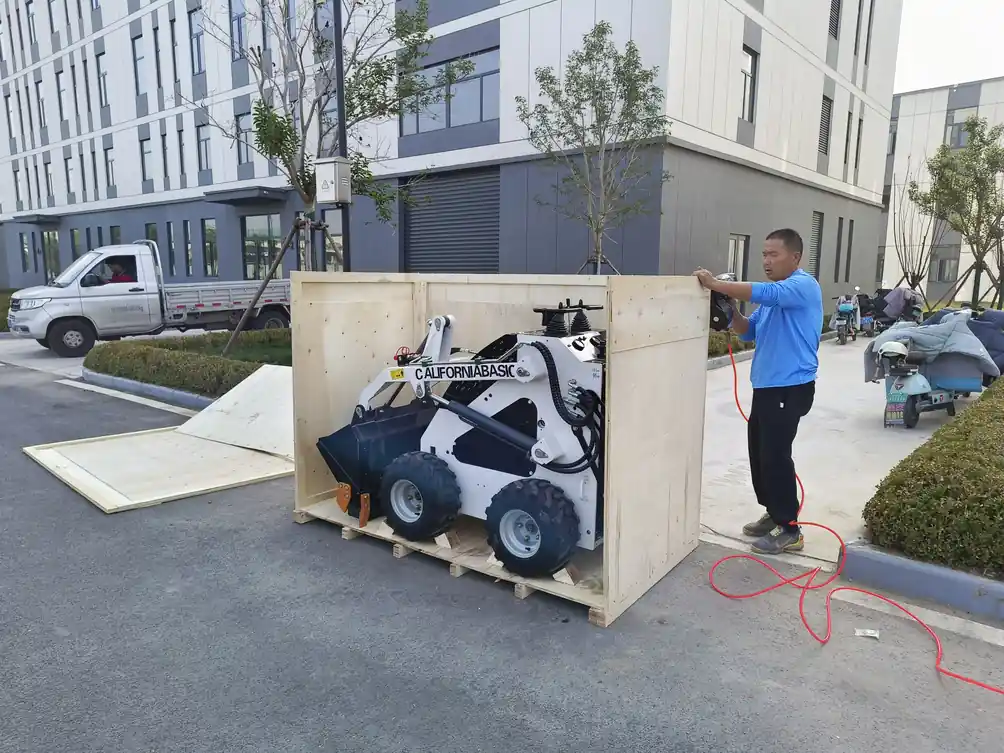
For an initial unit or repeat order, record the agreed configuration and review the destination-market documentation for the exact machine and engine. Quantity, packing dimensions, shipment terms and warranty coverage belong in the written quotation and purchase agreement.
- Exact model, engine and undercarriage
- Included attachments and connection requirements
- Manuals and initial service parts
- Packing dimensions and shipment scope
- Destination-market documentation
- Written warranty and order terms
What Daily Checks Should the Maintenance Plan Cover?
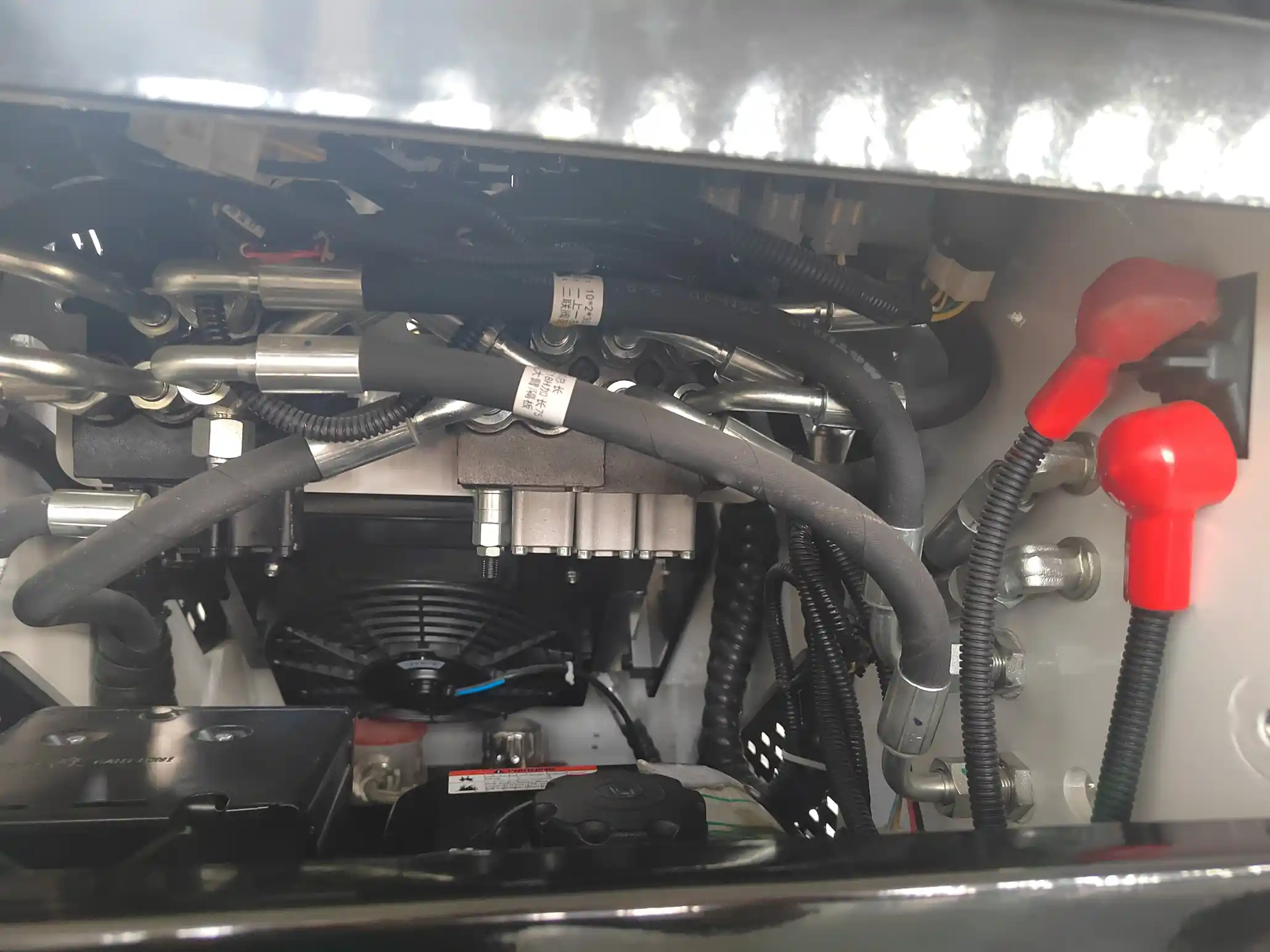
Use the operator’s manual for the exact machine to establish the inspection routine. Typical checks cover fluids, visible hose damage, attachment locking points, tires or tracks, lubrication points and debris around cooling components.
A wheeled configuration needs checks suited to its fitted tires; a tracked machine also needs attention to track condition and tension. Operation, servicing and any work around raised lift arms require the manufacturer’s specified procedures and safeguards.
Request a Loader Configuration and Quote
Share the main task, narrowest access width and attachments you plan to use. Include the destination country and order quantity so the discussion can cover the machine configuration, packing and supply scope.