

Prime Power vs Standby Power Generator: Which Rating Do You Need?
Choose a prime-rated generator for regular operation with a changing load, such as an off-grid construction site. Choose a suitable standby rating for backup during failures of the normal supply. If the load stays near full output for long periods, evaluate a continuous-duty rating instead. The correct choice depends on the operating pattern, not simply which quotation shows the largest kVA figure.
Prime and standby are duty ratings, not necessarily two different machines. One generator model may carry both ratings, with different permitted outputs and operating conditions. Buying a set advertised at its higher standby output does not make that output available for everyday prime service.
Prime vs Standby Power: The Practical Difference
| Selection factor | Prime power | Standby power |
|---|---|---|
| Main purpose | Regular generation, usually with variable demand. | Backup when the normal supply fails. |
| Common designation | PRP: Prime Rated Power. | ESP: Emergency Standby Power, or a separate manufacturer-defined standby rating. |
| Annual operating time | No annual-hour ceiling under the declared PRP conditions; maintenance is still required. | Limited by the specific rating declaration; do not assume every standby rating has the same limit. |
| Loading | Check average operating load as well as peak demand. | Check permitted load profile and emergency-duty conditions. |
| Overload | Available only where expressly declared, with time and other limits. | Do not add an assumed overload allowance to the published standby output. |
| Purchase comparison | Compare site-rated PRP kW and kVA with PRP. | Compare the same standby classification, hours and load conditions. |
The framework above follows the distinctions explained in Cummins’ generator-rating technical presentation. Use the selected set’s current datasheet and application approval for the binding limits.
Do Standby Generators Have a 200-Hour or 500-Hour Limit?
Both figures appear in manufacturer literature, but they do not describe the same rating. Caterpillar’s ratings guide distinguishes ESP, with a maximum expected usage of 200 hours per year, from its separately defined Standby rating, with a maximum expected usage of 500 hours. Both carry specified average-load conditions. The word standby alone is therefore incomplete procurement information.
Ask the supplier to identify the exact rating, permitted annual hours and averaging rule in writing. A generic online table cannot override that declaration. See Caterpillar’s explanation of its rating categories.
Annual hours are not a one-hour outage limit
Do not confuse an overload allowance with the duration of backup operation. Caterpillar, for example, describes a limited 10% overload on applicable prime ratings for a maximum of one hour in twelve, capped at 25 hours annually; its guide excludes gas sets from that allowance. That is not a rule requiring every standby generator to stop after one hour.
For an extended outage, review the specific set’s duty limits, accumulated hours, actual load, fuel arrangements and maintenance requirements. Escalate a foreseeable mismatch before the next outage rather than treating the annual-hour figure as either a shutdown timer or permission to ignore servicing.
Prime does not mean full prime output without limits
Unlimited annual hours under PRP do not mean unlimited time at any load. Manufacturer guidance commonly specifies a maximum average load over an operating period. A steady demand close to the maximum PRP output therefore needs a different evaluation from a variable demand with occasional peaks.
Continuous Operating Power (COP) addresses constant-load service over unlimited annual hours at its declared output. Limited-Time Running Power (LTP) addresses restricted-duration operation under its own conditions. Neither is simply another name for standby. These distinctions are also covered in the Cummins liquid-cooled generator application manual.
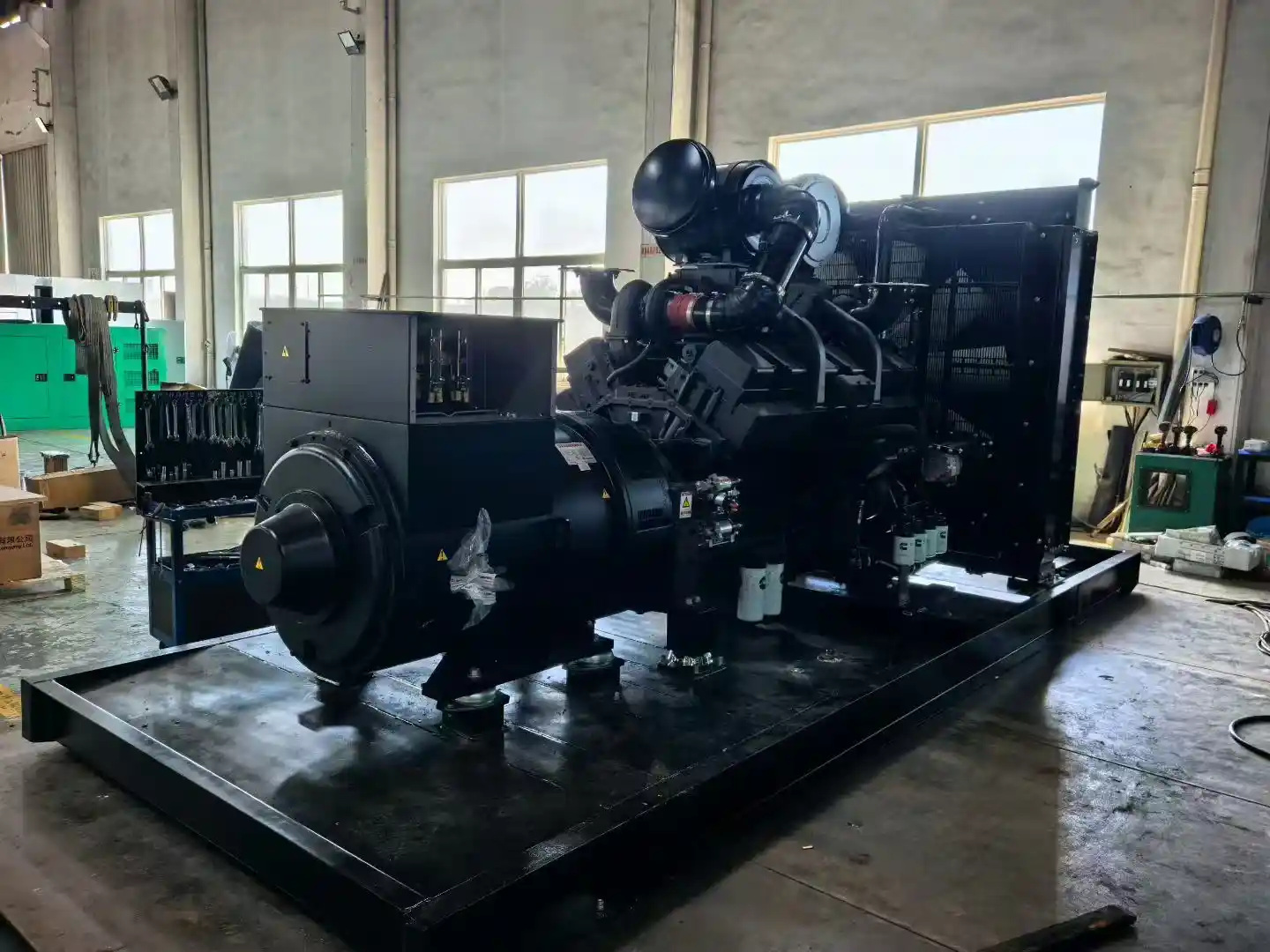
Why Can the Same Generator Have Two Power Ratings?
Infrequent backup operation and thousands of operating hours create different service-life and thermal requirements. A manufacturer may therefore declare a higher output for restricted standby duty and a lower output for regular service. Do not infer a universal difference in engine block, radiator size or controller simply from the two labels.
A concrete example is the Cummins C200 D5 entry on its 6CTA8.3 generator product page. At 50 Hz, it lists 145 kW / 181 kVA prime and 160 kW / 200 kVA standby. Those are different declared duties for the named model, not interchangeable capacities.
A buyer needing 160 kW for regular generation should not approve that model solely because the standby column says 160 kW. Equally, do not convert every standby number to prime by subtracting a fixed percentage. Obtain the actual rating for the proposed model, frequency, voltage and site conditions.
Worked Example: Check Average kW, Not Just Peak kVA
Suppose a proposed generator has a declared 200 kW PRP rating and the supplier specifies a 70% maximum average load for the relevant operating period. Consider this illustrative eight-hour work shift:
| Running load | Duration | Energy |
|---|---|---|
| 100 kW | 2 hours | 200 kWh |
| 140 kW | 4 hours | 560 kWh |
| 180 kW | 2 hours | 360 kWh |
| Total | 8 running hours | 1,120 kWh |
Average operating load = 1,120 kWh / 8 h = 140 kW.
Average load factor = 140 / 200 = 70%.
On these assumptions, the profile meets the stated average limit, and the highest running demand is below the PRP rating. It has no margin against that average limit, however. More time at 180 kW, future equipment or additional auxiliary demand could change the result.
Do not dilute the calculation by adding sixteen hours when the engine is stopped. Caterpillar’s rating example explicitly excludes non-running time from its average-load calculation. Follow the selected manufacturer’s complete calculation method, including any rules for low-load periods.
This is a screening example, not final generator sizing. Motor starting, step-load acceptance, power factor, harmonics and site derating still need checking. A 250 kVA nameplate at a stated 0.8 power factor corresponds to 200 kW; 70% of that real-power rating is 140 kW, not 175 kW. Keep kW and kVA separate.
Use our generator sizing calculator guide to organize those load inputs before requesting a model selection.
Which Rating Fits Your Site?
Reliable utility supply with occasional outages
Start with a suitable standby rating. Provide the outage history and required emergency loads, then check the declaration against the expected use. Include exercise and test operation in the operating plan rather than assuming the generator only accumulates hours during blackouts.
Construction, mining or a frequently failing grid
Start with PRP for a variable daily load. A site calling its generator a backup does not change a pattern of six or eight hours of operation each day. Track runtime and demand: when utility reliability deteriorates, reassess the duty rather than continuing under the original standby assumption.
Steady production or base-load generation
Request a COP assessment or another expressly approved application rating. If your process needs a nearly constant 180 kW, the 200 kW PRP example above does not pass its assumed 140 kW average limit. Ask for a proposal based on the actual profile, not just a larger advertised peak number.
Peak shaving, grid support or specialist critical facilities
Neither a generic standby label nor annual hours alone settles these applications. State the planned operating purpose, utility-parallel requirements and facility criteria explicitly. Have the supplier and project designer confirm the appropriate rating and applicable permissions; emergency-backup assumptions should not silently carry over to planned generation.
Compare the Operating Package, Not a Presumed Price Premium
There is no fixed percentage by which prime service must cost more. Compare quotations for the same useful site output and operating profile. A shared generator platform can carry multiple ratings, while fuel systems, cooling arrangements, service access and redundancy may change the complete project cost.
Prime applications accumulate service hours quickly, so arrange fuel deliveries, parts and planned maintenance coverage. Standby applications also need calendar-based attention to batteries, fuel and readiness. Follow the model’s schedule rather than assigning one universal service interval to each rating. Our diesel generator maintenance guide covers the planning inputs.
Where loss of power during maintenance is unacceptable, evaluate a second set, a temporary connection or another engineered backup arrangement. An unlimited-hours rating is not a promise of operation without service interruptions.
What Should a Prime or Standby Generator Quotation Include?
- Declared duty: PRP, ESP, COP, LTP or the manufacturer’s named application rating, with its operating conditions.
- Output basis: electrical kW and kVA, power factor, voltage, frequency and available output at the installation site.
- Load evidence: minimum, average and maximum running demand, time at each level and largest starting load.
- Runtime: expected daily and annual hours, longest anticipated outage and planned non-emergency use.
- Boundaries: averaging method, overload permission if any, ambient and altitude limits, and auxiliary-power allowance.
- Complete scope: fuel autonomy, transfer or paralleling equipment, service plan, acceptance tests and written warranty conditions.
For a Zentramo generator set enquiry, provide this information with your load schedule. Request a configuration-specific proposal and ask suppliers to quote the same duty basis. The right choice is the generator that supports your real operating pattern, not the largest number in the standby column.