
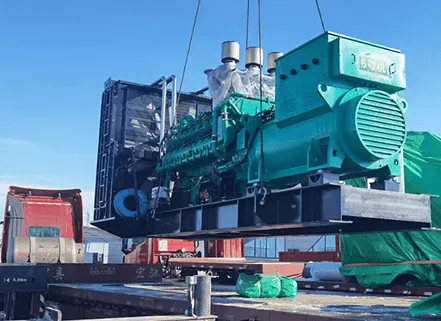
How to Choose and Buy a Generator
To choose and buy the right generator, start with the load and operating duty—not a model name or headline power rating. Define what must remain powered, which loads start together, how long the generator will run, what fuel is available, and where the equipment will be installed. Then compare suppliers on the same technical scope, including the engine, alternator, controller, breaker, enclosure, fuel system, transfer equipment, testing, documentation, and after-sales support.
This process matters because a generator that looks adequate on a simple kilowatt total may still fail when motors start, site temperature rises, or nonlinear loads distort the waveform. An oversized unit can also increase capital cost and operate inefficiently. The goal is not to buy the largest generator your budget allows. It is to specify a complete power system that can start, carry, protect, and control the actual load throughout its intended duty.
1. Define What the Generator Must Do
Begin with the operating problem. A buyer seeking emergency backup for essential circuits has a different requirement from a mine operating without utility power or a rental company moving equipment between sites.
| Use case | Questions to answer | Likely system direction |
|---|---|---|
| Emergency standby | Which loads are critical, how quickly must power return, and how long do outages last? | Standby-rated set, ATS or manual transfer arrangement, suitable fuel autonomy |
| Prime power | Will the generator be the main source, and how variable is the daily load? | Prime-rated set with fuel, maintenance, and load-factor planning |
| Continuous or baseload power | Is the load relatively constant and expected to run for unlimited hours? | Continuous-duty rating and a design optimized for sustained operation |
| Temporary or mobile power | How often will the unit move, and what connections, towing, or lifting provisions are needed? | Trailer-mounted or containerized configuration with quick connection and site protection |
| Mission-critical facility | What downtime is acceptable, and is redundancy required? | Automatic controls, tested transfer equipment, remote monitoring, or paralleled N+1 capacity |
Do not treat standby, prime, and continuous ratings as interchangeable power labels. They describe permitted operating conditions and load profiles. Caterpillar’s explanation of generator set ratings shows why the same basic machine can carry different ratings for different applications.
2. Build a Real Load List
List every load that may be powered by the generator. For each item, record quantity, voltage, phase, frequency, running kW or kVA, power factor, starting method, starting current, and whether it must operate at the same time as other loads. Separate essential loads from loads that can be shed or started later.
A practical schedule normally includes:
- Lighting, receptacles, computers, and communications equipment
- Motors, pumps, fans, compressors, conveyors, lifts, and HVAC equipment
- UPS systems, variable-frequency drives, rectifiers, welders, and other nonlinear loads
- Fire pumps, medical equipment, process controls, and other critical loads
- Generator auxiliaries such as fuel-transfer pumps, ventilation fans, heaters, and battery chargers
Use equipment nameplates, single-line diagrams, measured demand, motor data, and operating sequences whenever available. Estimates based only on building area or a list of appliance names may be acceptable for an early budget, but they are not enough for final industrial selection.
3. Size for Running Load and Starting Load
Running kW is only one part of sizing. Motors and compressors can require a much larger current during acceleration. Large step loads can create unacceptable voltage and frequency dips even when the final running load is below the generator’s steady-state rating.
For a preliminary assessment:
- Add the loads expected to run simultaneously.
- Identify the largest starting event or planned load step.
- Check both real power in kW and apparent power in kVA.
- Include power factor, harmonic loads, permitted voltage dip, and permitted frequency dip.
- Apply site derating for altitude and temperature using manufacturer data.
- Add justified expansion capacity, not an arbitrary oversizing percentage.
Load sequencing, soft starters, variable-frequency drives, and load shedding can sometimes reduce the generator capacity required, but these measures must be included in the controls and operating design. Caterpillar’s commercial generator sizing guidance likewise treats running demand, starting demand, load steps, voltage, frequency, environment, and future growth as connected inputs. Critical projects should be validated with manufacturer sizing software or by a qualified electrical engineer.
4. Confirm the Electrical Standard
The generator must match the electrical system it will supply. State the required voltage, frequency, phase, number of wires, grounding arrangement, neutral treatment, breaker rating, and connection method. A 50 Hz machine cannot simply be quoted against a 60 Hz requirement, and a suitable kW figure does not correct a voltage or phase mismatch.
Also confirm whether the alternator and controls can support the actual load characteristics. Motor starting, UPS systems, variable-frequency drives, sensitive electronics, and high fault-current requirements may affect alternator size, excitation system, reactance, waveform distortion, and protection settings.
5. Choose the Fuel Around the Site
Fuel selection affects runtime, storage, maintenance, installation, emissions, and supply resilience. Compare fuels against local availability and the intended duty rather than relying on a universal preference.
| Fuel | Often suited to | Check before buying |
|---|---|---|
| Diesel | Industrial standby, prime power, construction, mining, and remote sites | Tank capacity, fuel quality, refilling logistics, cold-weather needs, emissions rules, and low-load operation |
| Natural gas | Sites with a reliable pipeline supply and longer operating schedules | Available pressure and flow, pipe sizing, gas quality, utility interruption risk, and power derating |
| LPG | Locations that prefer stored gaseous fuel or do not have pipeline gas | Tank sizing, vaporization capacity, ambient temperature, delivery access, and local storage rules |
| Biogas or other gas | Farms, wastewater plants, and industrial sites with a usable gas resource | Gas composition, contaminants, pressure stability, treatment equipment, and engine compatibility |
Ask for fuel-consumption data at several load points rather than one best-case number. Calculate the storage or supply needed for the required autonomy, including refilling constraints during an emergency.
6. Select the Physical Configuration
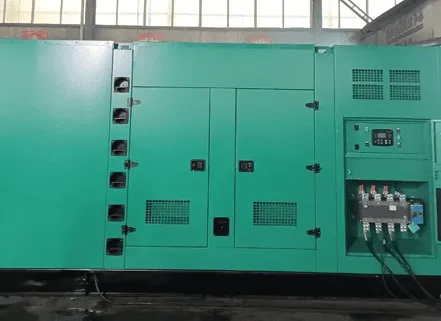
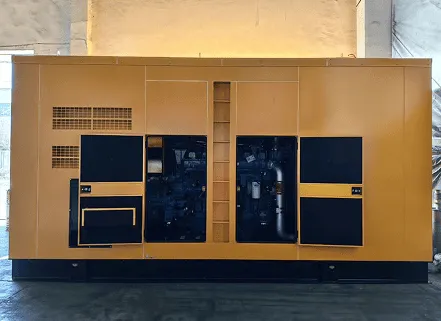
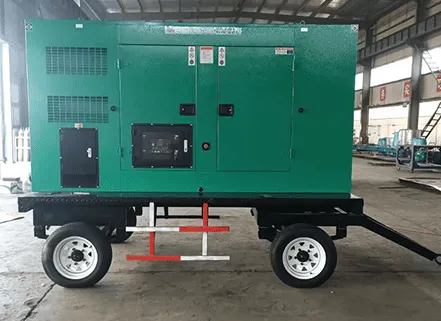
An open generator set is often appropriate inside a properly designed plant room. A silent or weatherproof enclosure is useful outdoors or near occupied areas. Containerized systems can provide more space for attenuation, auxiliary equipment, larger fuel tanks, and harsh-environment protection. Trailer-mounted units suit temporary or mobile work.
Check the complete installation, not only the canopy label:
- Cooling-air intake and hot-air discharge paths
- Exhaust routing, back pressure, insulation, and discharge location
- Noise limit at a stated distance and under a stated load
- Rain, dust, humidity, salt, snow, temperature, and solar exposure
- Service clearances, lifting points, doors, lighting, and safe access
- Foundation, vibration isolation, cable entry, and fuel access
Noise attenuation can increase airflow resistance and trap heat, so enclosure design must balance acoustics with cooling. Cummins’ technical paper on generator set enclosures highlights airflow, heat rejection, service access, fuel access, security, and site noise as connected design considerations.
7. Decide How Power Will Transfer and Be Controlled
A manual-start generator may be acceptable where trained staff are always present and a short interruption is tolerable. Automatic standby systems usually need an automatic mains failure controller and an automatic transfer switch. Confirm whether the ATS is included, its current rating, pole arrangement, enclosure rating, transfer method, control voltage, and interface responsibility.
For several generators, confirm the paralleling switchgear, synchronizing logic, load sharing, load shedding, redundancy philosophy, and black-start sequence. Remote monitoring may need engine data, electrical measurements, alarms, event history, fuel level, communications protocol, and connection to a building-management or supervisory system.
If you need a refresher on the complete package and where the ATS sits in the system, read What Is a Genset or Generator Set?
8. Compare the Engine, Alternator, Controller, and Serviceability
Do not evaluate the engine brand alone. The generator set is an integrated system. Request the exact engine model, alternator model, controller model, cooling arrangement, breaker, battery system, charger, filters, sensors, and standard protections.
For international projects, check whether routine service parts and trained support are available where the unit will operate. Ask for recommended spare parts for commissioning and the first service interval. Clarify warranty start date, covered components, labor and travel terms, claim procedure, and whether warranty support is handled by the set assembler, component manufacturer, or local dealer.
9. Verify Compliance and Installation Responsibilities
The applicable electrical, emissions, fire, fuel-storage, noise, building, and workplace-safety requirements depend on the destination and application. State the project country, installation type, and required standards in the inquiry. Ask the supplier to identify which certificates apply to the quoted configuration and which site approvals remain the buyer’s or installer’s responsibility.
Portable and temporary generators also require safe connection and ventilation. OSHA warns that improper generator use can create shock, electrocution, fire, and carbon-monoxide hazards, and that a generator should not be connected directly to a structure without a properly installed transfer switch. Review the manufacturer’s instructions and use qualified professionals for installation and commissioning. See OSHA’s portable generator safety guidance.
10. Ask for Factory Test Evidence
A quotation is not proof of performance. Define the inspection and test package before ordering. Depending on project risk, this may include:
- Visual and dimensional inspection
- Insulation, wiring, protection, alarm, and emergency-stop checks
- No-load and staged load-bank testing
- Voltage and frequency recording during steady load and load steps
- Fuel, oil pressure, coolant temperature, exhaust, and leak checks
- ATS, remote-start, synchronizing, or paralleling functional tests
- Factory acceptance testing witnessed in person or by live video
- A serial-numbered test report and final configuration record
Zentramo offers open, silent, containerized, gas, ATS, and paralleling configurations on its industrial generator set page. Confirm the precise rating, component models, accessories, testing, and documentation for the unit quoted to your project.
11. Compare Quotations on Total Scope
Place quotations in a line-by-line comparison. A lower price may exclude the ATS, breaker, batteries, charger, silencer, base tank, cables, commissioning, testing, export packaging, or documentation included elsewhere.
| Quotation item | What to compare |
|---|---|
| Generator rating | Standby/prime/continuous definition, kW, kVA, power factor, voltage, frequency, phase, and site derating |
| Main components | Exact engine, alternator, controller, breaker, radiator, batteries, and charger models |
| Configuration | Open, silent, containerized, trailer, tank capacity, noise basis, and protection level |
| Controls | Manual/automatic operation, ATS, AMF, remote monitoring, communications, or paralleling scope |
| Testing | Test points, load duration, load steps, witnessed FAT, and supplied report |
| Commercial scope | Incoterm, packing, freight responsibility, taxes, payment terms, delivery basis, and validity |
| After-sales scope | Warranty, commissioning, training, manuals, drawings, spare parts, and response process |
Generator Buying Checklist
Before issuing a purchase order, confirm that you have:
- A load schedule with running, starting, step-load, and power-factor information
- The correct duty rating and expected annual operating profile
- Voltage, frequency, phase, grounding, breaker, and connection requirements
- Fuel type, autonomy, storage, and local supply assumptions
- Altitude, ambient temperature, humidity, dust, corrosion, and noise conditions
- The selected open, silent, containerized, or mobile arrangement
- ATS, control, monitoring, load-shedding, and paralleling requirements
- Exact component models and the complete accessory list
- Required standards, certificates, drawings, manuals, and test records
- Inspection, factory acceptance test, packaging, shipping, warranty, parts, and commissioning scope
Request a Generator Recommendation
The fastest route to a useful proposal is a complete project brief. Send the load list, required duty, voltage and frequency, fuel preference, site conditions, enclosure needs, automatic-transfer requirements, destination country, and expected delivery scope. Zentramo can then review the requirement and propose a suitable industrial configuration. Submit the details through the contact page to request a technical proposal and quotation.