
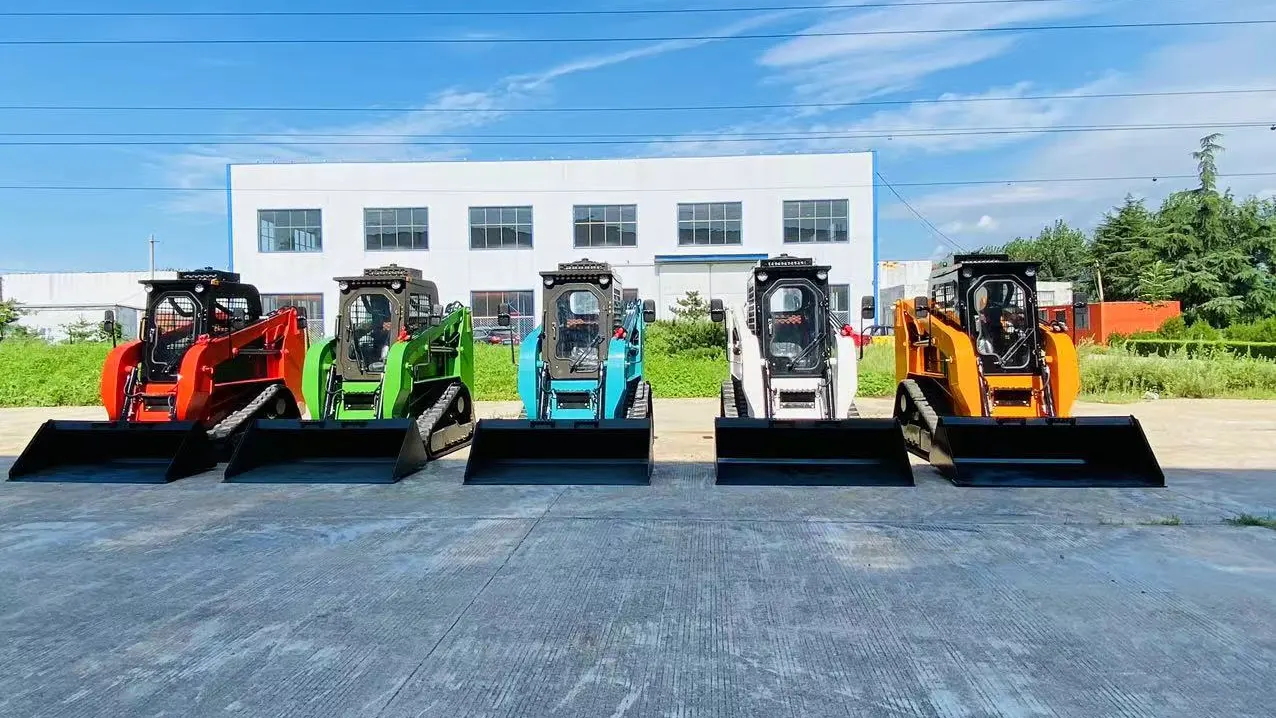
Tracked Skid Steers for Soft Ground, Uneven Routes and Attachment Work
Compare Hongrui’s seated 300 kg and 500 kg tracked classes for landscaping, farm handling and compact construction. Start with the worst surface on the route, then confirm machine width, load class, engine and attachment hydraulics as one configuration.
What Is a Tracked Skid Steer?
A tracked skid steer is a compact loader that uses a track undercarriage instead of tires and turns by changing the speed or direction of its left and right sides. The larger contact area can improve traction and flotation on soft, loose or uneven ground. That advantage comes with another decision: track condition, tension, rollers, packed debris, pivot-turn wear and transport weight must be part of the ownership plan.
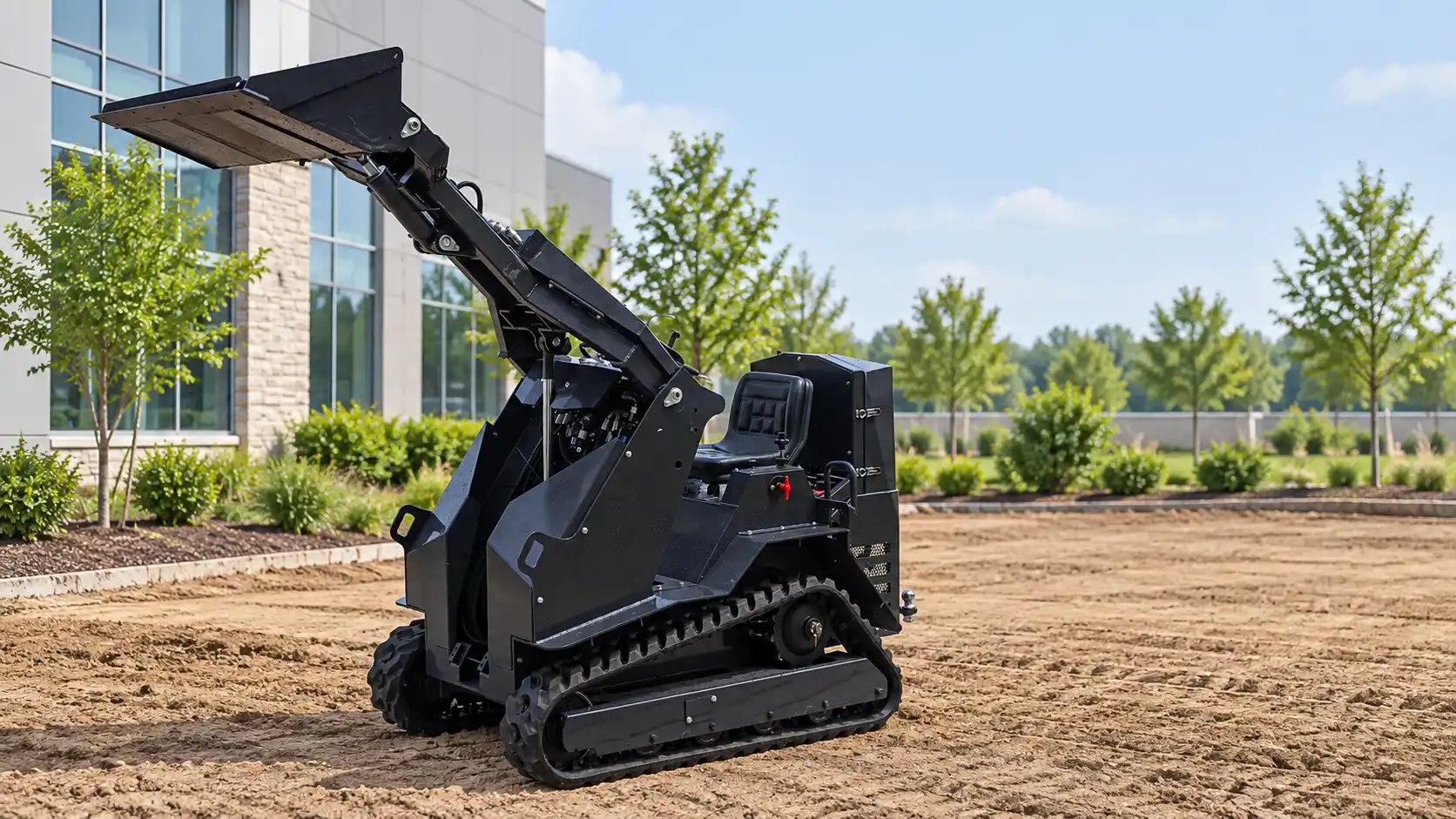
Use tracks when:
- The worst part of the route is soft, loose or uneven.
- Traction and flotation matter more than frequent travel on hard pavement.
- The work includes repeated grading, material handling or compatible powered attachments.
- The owner can support track cleaning, inspection and wear-part planning.
Caution: Tracks are not a promise of zero surface damage. Load, turning method, soil condition, slope and operator practice still affect the ground.
Choose the Tracked Class After the Route Is Understood
Both classes use a seated tracked layout. The 300 kg class prioritizes a narrower body; the 500 kg class provides a higher rated-load direction within a wider working envelope. Do not select from engine brand alone.
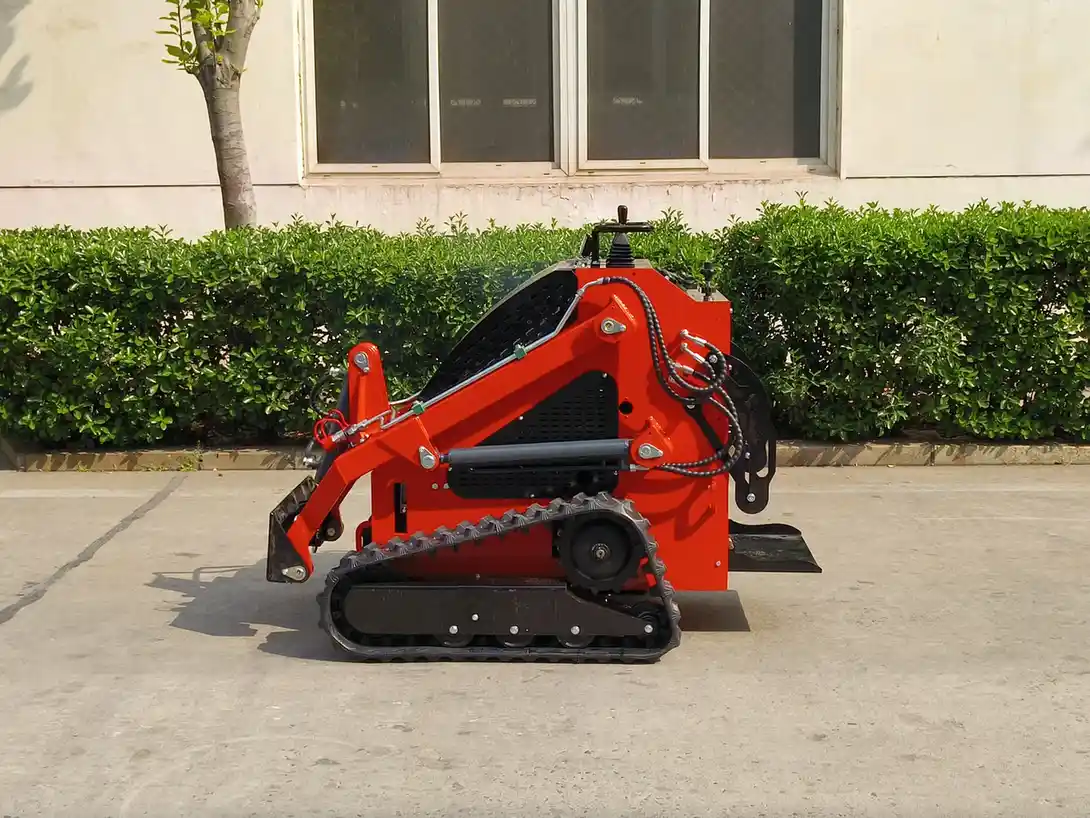
300 kg Class — Narrow Tracked Configuration
With an approximately 850 mm body and 900 mm standard bucket, this class is the tracked starting point for restricted landscaping routes, greenhouse or farm access, compact yards and light material handling after the complete machine-and-attachment envelope is checked.
- approx. 1,960 × 850 × 1,400 mm
- approx. 920 kg machine weight
- 20 MPa hydraulic pressure
- approx. 2,000 mm lift
- up to 10 km/h travel speed
- gasoline or diesel by model
SL300 — Runtong R740-1 gasoline, 739 cc.
SL350 — Kepu KD292FA diesel, 0.997 L.
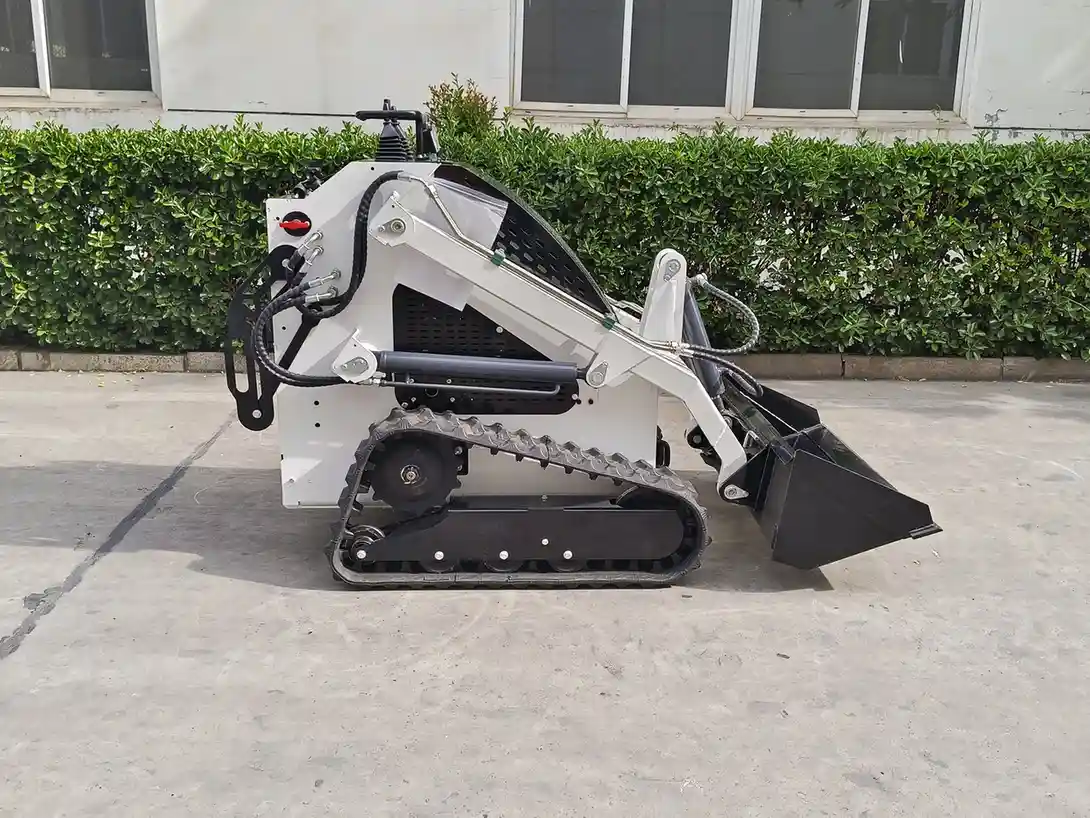
500 kg Class — More Load in a Wider Tracked Chassis
With an approximately 1,100 mm body and 1,100 mm standard bucket, this class is the stronger starting point for heavier landscaping materials, pallet work, farm handling and compatible attachments that remain within the confirmed machine rating.
- approx. 1,960 × 1,100 × 1,400 mm
- approx. 1,020 kg machine weight
- 20 MPa hydraulic pressure
- approx. 2,000 mm lift
- up to 10 km/h travel speed
- diesel by model
SL500 — Laidong three-cylinder diesel.
JSL500 — Kubota 1105 diesel.
Note: Final rated operating load, engine, track package, attachment compatibility and included scope are confirmed for the selected configuration in the written quotation.
Tracked Skid Steer Specifications at a Glance
| Model | Class | Engine configuration | Body, L × W × H | Standard bucket | Approx. weight | Shared hydraulic / travel reference |
|---|---|---|---|---|---|---|
| SL300 | 300 kg class | Runtong R740-1 gasoline, 739 cc | 1,960 × 850 × 1,400 mm | 900 × 420 × 600 mm | 920 kg | 20 MPa; approx. 2,000 mm lift; up to 10 km/h |
| SL350 | 300 kg class | Kepu KD292FA diesel, 0.997 L | 1,960 × 850 × 1,400 mm | 900 × 420 × 600 mm | 920 kg | 20 MPa; approx. 2,000 mm lift; up to 10 km/h |
| SL500 | 500 kg class | Laidong three-cylinder diesel | 1,960 × 1,100 × 1,400 mm | 1,100 × 420 × 600 mm | 1,020 kg | 20 MPa; approx. 2,000 mm lift; up to 10 km/h |
| JSL500 | 500 kg class | Kubota 1105 diesel | 1,960 × 1,100 × 1,400 mm | 1,100 × 420 × 600 mm | 1,020 kg | 20 MPa; approx. 2,000 mm lift; up to 10 km/h |
Width Check: Body vs. Bucket
An 850 mm body does not mean an 850 mm working width. The listed standard bucket for the 300 kg class is approximately 900 mm wide, while the 500 kg class body and standard bucket are both approximately 1,100 mm wide.
Turning clearance, hose routing and alternative tools still belong in the route check.
Tracked Skid Steer vs Wheeled Skid Steer
Evaluate the ground and the work cycle before committing to an undercarriage type.
Choose from the worst recurring surface, not the best photograph of the site. Consider slope, turning frequency, travel distance, debris, surface sensitivity and maintenance capacity together.
Compare wheeled and tracked compact skid loadersWhere a Tracked Loader Earns Its Undercarriage
Landscaping & Residential
Repeated work: moving soil or mulch, grading, planting holes and cleanup
Track value: traction and flotation on prepared soil or uneven ground
Critical check: gate and bucket width, turf sensitivity, turning space and the full attachment sequence
Farm & Property Maintenance
Repeated work: feed or material movement, fence work, yard cleanup and seasonal maintenance
Track value: access across loose or unpaved routes
Critical check: load shape, slope, route distance, debris and attachment match
Compact Construction
Repeated work: backfill, debris handling, surface preparation and compatible light breaking
Track value: ground contact over uneven or loose material
Critical check: attachment weight, hydraulic flow/pressure, work-zone controls and transport method
Greenhouse & Narrow Access
Repeated work: material movement, soil preparation and maintenance between restricted routes
Track value: useful contact on unpaved rows when width and turning space allow
Critical check: 850 mm body versus approx. 900 mm standard bucket, irrigation lines, crop clearance and pivot-turn effects
Select the Tool and the Track Carrier as One System
A tracked chassis gets the machine to the work. The attachment determines what happens there. A tool can lock onto the carrier and still be unsuitable for its hydraulic circuit or remaining operating margin.
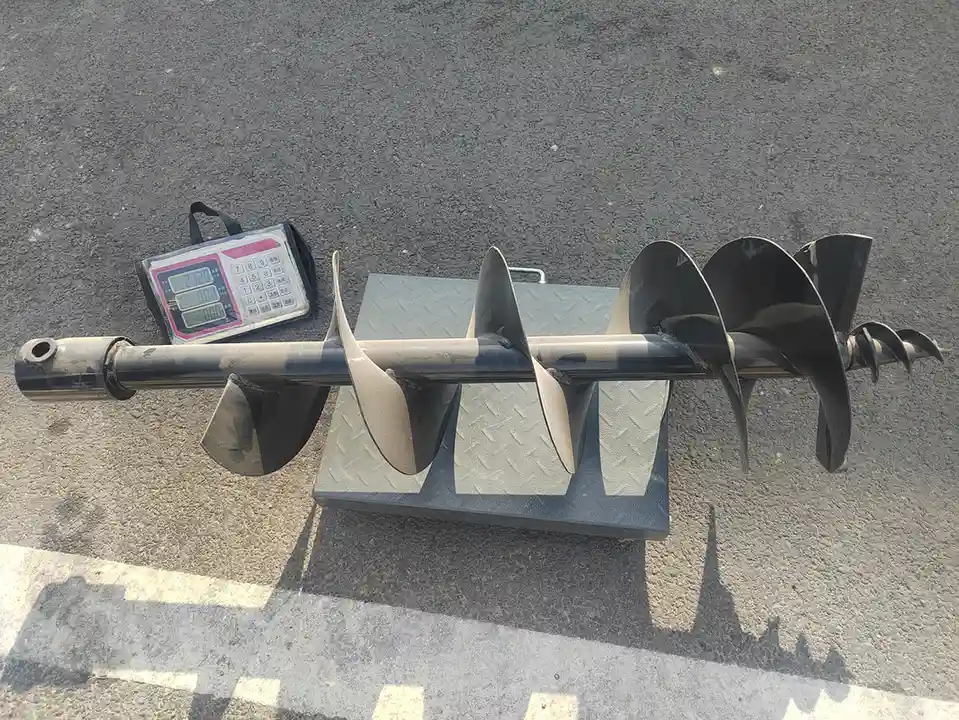
Auger Planning
Confirm bit diameter, soil condition, required flow and safe clearance.
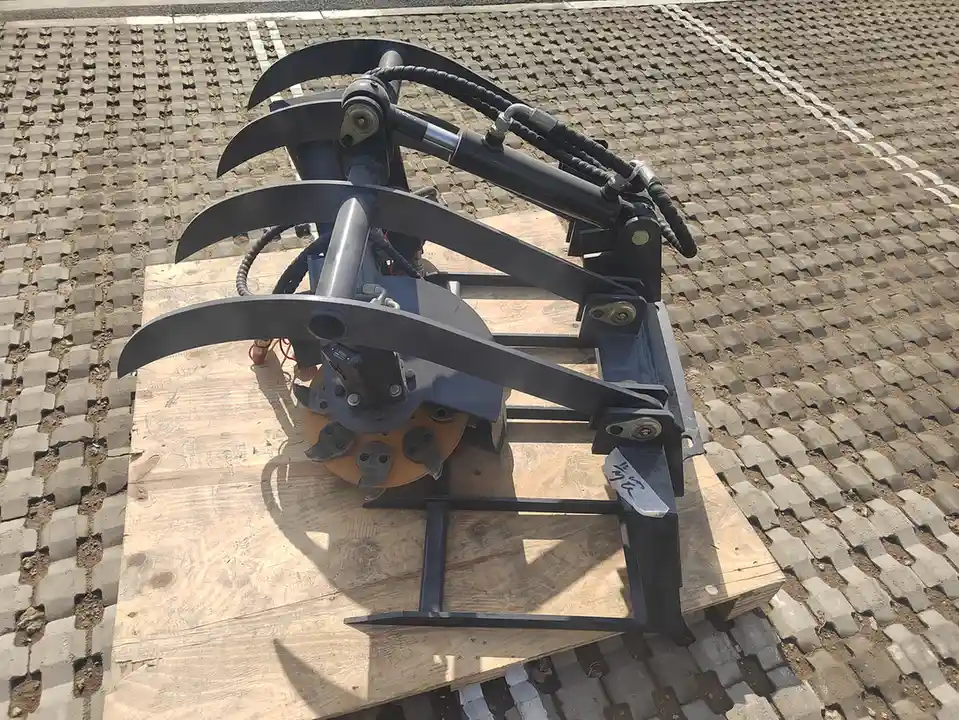
Grapple Planning
Confirm hydraulic function, tool weight, load shape and hose routing.
| Check | Buyer Decision | What Must Be Recorded |
|---|---|---|
| Mechanical interface | Will the tool lock securely and preserve the intended geometry? | Plate or pin type, locking arrangement and attachment width |
| Hydraulic flow & pressure | Can the exact carrier operate the powered tool correctly? | Required and available flow/pressure for the selected model |
| Couplers & return path | Are the hose and return requirements complete? | Coupler type/size, hose routing and case drain or return line where required |
| Weight & load center | How much operating margin remains? | Tool weight, projected load center and confirmed rated-load basis |
| Controls | Does the tool need another function? | Control method and every auxiliary function |
* Sweeper or breaker notes: confirm required circuit, debris controls and carrier compatibility before operation.
Four Ways a Track Advantage Can Be Lost Before Work Starts
Problem
Tracks are chosen for one muddy corner, but most travel is on hard pavement.
Consequence
The undercarriage may carry extra wear and maintenance without delivering enough route value.
Response
Map the full work cycle and choose from the worst recurring surface, turning frequency and travel distance.
Problem
The loader body clears the entrance, but the bucket or attachment does not.
Consequence
The machine cannot reach or turn inside the work zone.
Response
Measure the complete working envelope, including tool width, hoses, height, turning points and transport clearance.
Problem
The tool mounts, but hydraulic requirements are incomplete.
Consequence
The powered attachment may run incorrectly, overheat or remain unusable.
Response
Put flow, pressure, couplers, return path and controls into the pre-order compatibility schedule.
Problem
Track care is treated as an after-delivery detail.
Consequence
Packed debris, incorrect tension or unnoticed wear can shorten undercarriage service life.
Response
Define cleaning access, inspection responsibility, manual-based intervals and wear-part identification before the machine enters service.
Plan Undercarriage Care Before the First Muddy Job
Daily Visual Checks
Fluids; leaks and hose damage; hydraulic couplers; attachment locking points; track cuts or missing material; visible tension condition; rollers and undercarriage debris; cooling-air paths; guards and controls.
After Muddy, Sandy or Abrasive Work
Remove packed material from the undercarriage and cooling-air paths using the safe method in the exact machine manual; inspect for damage or uneven wear; record issues before the next shift.
Manual-Based Service
Track-tension procedures, lubrication, filters, fluids, engine service and wear limits depend on the exact model, engine and track system. Do not copy a generic online interval into the maintenance plan.
SAFETY: Lower the attachment, stop the engine, relieve hydraulic pressure and follow the manufacturer’s isolation and raised-lift-arm safeguards before service. Keep bystanders clear, carry loads low during travel and avoid sudden turns on slopes.
From Track-Class Review to Workshop Assembly
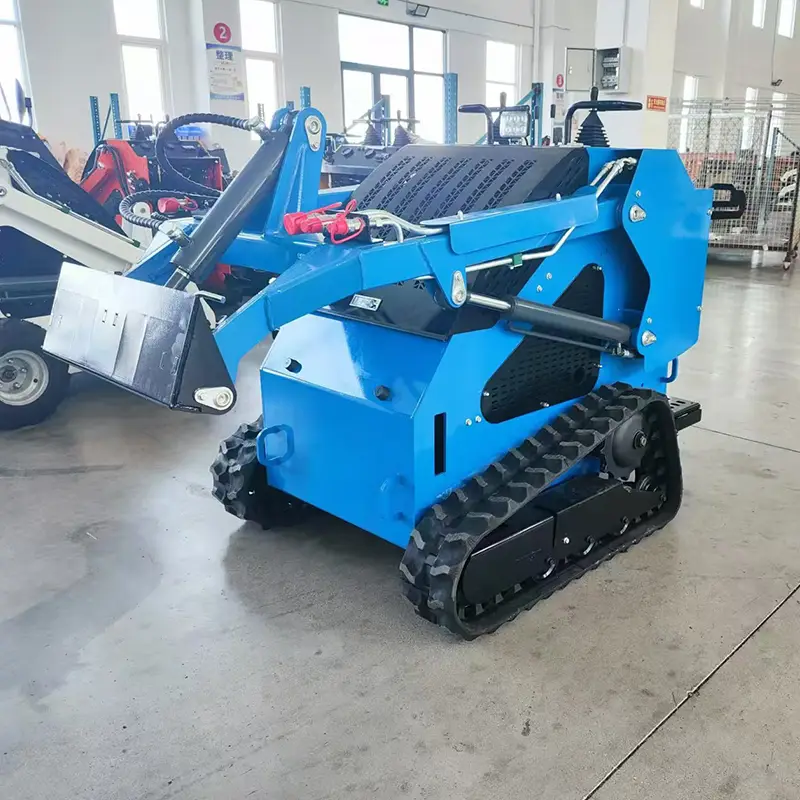
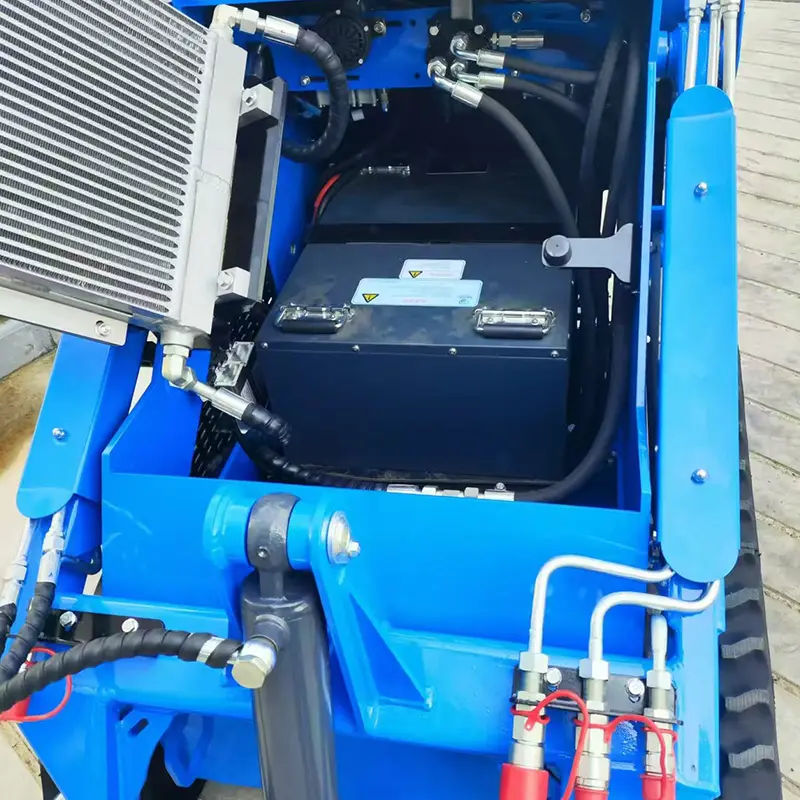
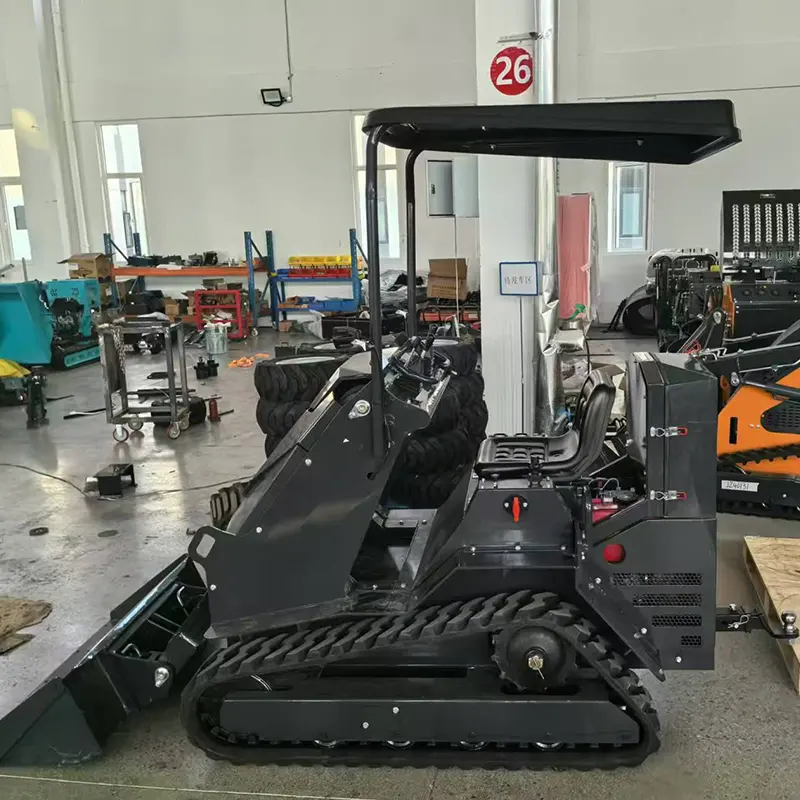
Hongrui manufactures compact skid steer loader configurations in Jining, Shandong, China. Before ordering, the selected model, engine, track package, attachment interface, hydraulic requirements and included scope should be recorded together.
After delivery, model and engine identification plus clear component photos help connect service or parts enquiries to the correct configuration.
Tracked Skid Steer Selection Guide
Which tracked skid steer models fit landscaping work?
There is no universal “best” model. Start with the narrowest route, surface, heaviest recurring material and attachment sequence.
- SL300 and SL350 are the narrower 300 kg class at approximately 850 mm body width.
- SL500 and JSL500 are the 500 kg class at approximately 1,100 mm body width.
The listed standard bucket can be wider than the body, so the complete working envelope must pass the route check.
What are the advantages of a compact track loader over a wheeled model?
Tracks provide a larger contact area that can improve traction and flotation on soft, loose or uneven ground. That can help landscaping, farm and compact construction routes where tires struggle. Wheels often remain the simpler direction for frequent travel on firm pavement and lower undercarriage maintenance. Surface, turning frequency, travel distance and cleaning capacity should decide the comparison.
Tracked skid steer or wheeled skid steer—which should I choose?
Use a short decision list:
Choose tracks when: the worst recurring surface is soft or uneven and the extra undercarriage care is acceptable.
Choose wheels when: firm routes, frequent hard-surface travel and simpler upkeep dominate.
Do not choose either from horsepower alone.
Which attachments are useful for landscaping?
Buckets handle soil and mulch; augers support planting and post holes; grapples handle brush or bulky material; sweepers clean hard areas; and forks move compatible palletized loads. Match the tool’s mount, flow, pressure, couplers, return line, controls, weight and load center to the exact carrier.
Which attachments are useful for compact construction?
Buckets, forks, sweepers and compatible breakers can support material handling, cleanup and selected surface work. The operating environment, bystander controls, attachment weight and hydraulic requirements determine whether the package is suitable. A physical quick-attach connection alone is not approval to operate the tool.
What determines the price of a new compact track loader?
Model class, engine, track and undercarriage package, hydraulic configuration, cab or operator setup, attachments, spare-parts scope, packing, destination and trade terms can change the quotation. Buyers should compare written configuration scopes, not headline prices with different included equipment.
What maintenance does tracked compact equipment need?
Daily checks normally cover fluids, leaks, hoses, couplers, attachment locks, tracks, rollers, packed debris, cooling paths, guards and visible damage. Track tension, lubrication, filters, engine service, wear limits and replacement procedures must follow the manuals for the exact model, engine and operating environment.
Continue With the Loader Path That Matches the Decision
Skid Steer Loaders
Need wheeled and tracked seated or stand-on options?
Review Family →Compact Skid Loaders
Is total route width the main problem?
Compare Widths →Mini Skid Loaders
Do you need a rear-platform carrier?
Explore Stand-on →Small Skid Steer Loaders
Do you need a smaller seated loader comparison?
Review Small Loaders →Build the Track Package Around the Route You Actually Work
Share the narrowest access point, worst surface, slope, travel distance, heaviest material and required attachments. Hongrui will use those inputs to discuss the 300 kg or 500 kg tracked direction and prepare a configuration scope for quotation.
Helpful Inputs to Share
- • Site photos
- • Access dimensions
- • Surface & slope
- • Travel distance
- • Material & max load
- • Attachment list
- • Working height
- • Destination country