
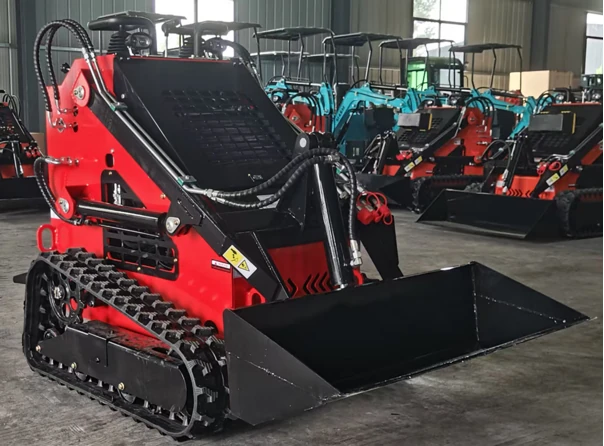
Mini Skid Loaders Built Around the Task, Surface and Attachment
Move material, prepare soil, drill, sweep and handle site work with a compact stand-on carrier configured for the ground conditions and tool package. Compare wheeled and tracked Hongrui models, then confirm the attachment interface and hydraulics before ordering.
Choose the Stand-On Configuration That Matches the Ground
Start with the surface and travel pattern, then match the model, controls, attachment and hydraulic requirements. The same product name can hide meaningful differences in traction, maintenance and working stability.
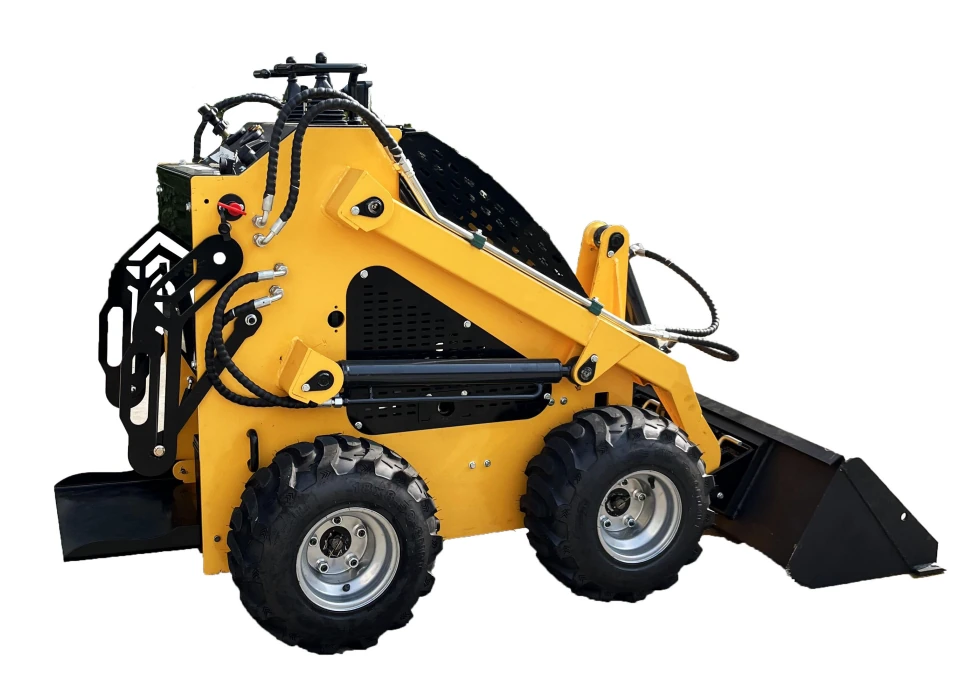
Wheeled Stand-On Mini Skid Loaders
MODELS: S-200SC / S-200SP
A practical direction for firm yards, paved areas, workshops and projects with frequent travel. Wheels simplify cleaning and routine undercarriage service, while surface condition and tire selection still affect traction and ground pressure.
Selection Cues:
- Firm or prepared surface
- Frequent travel
- Simpler undercarriage care
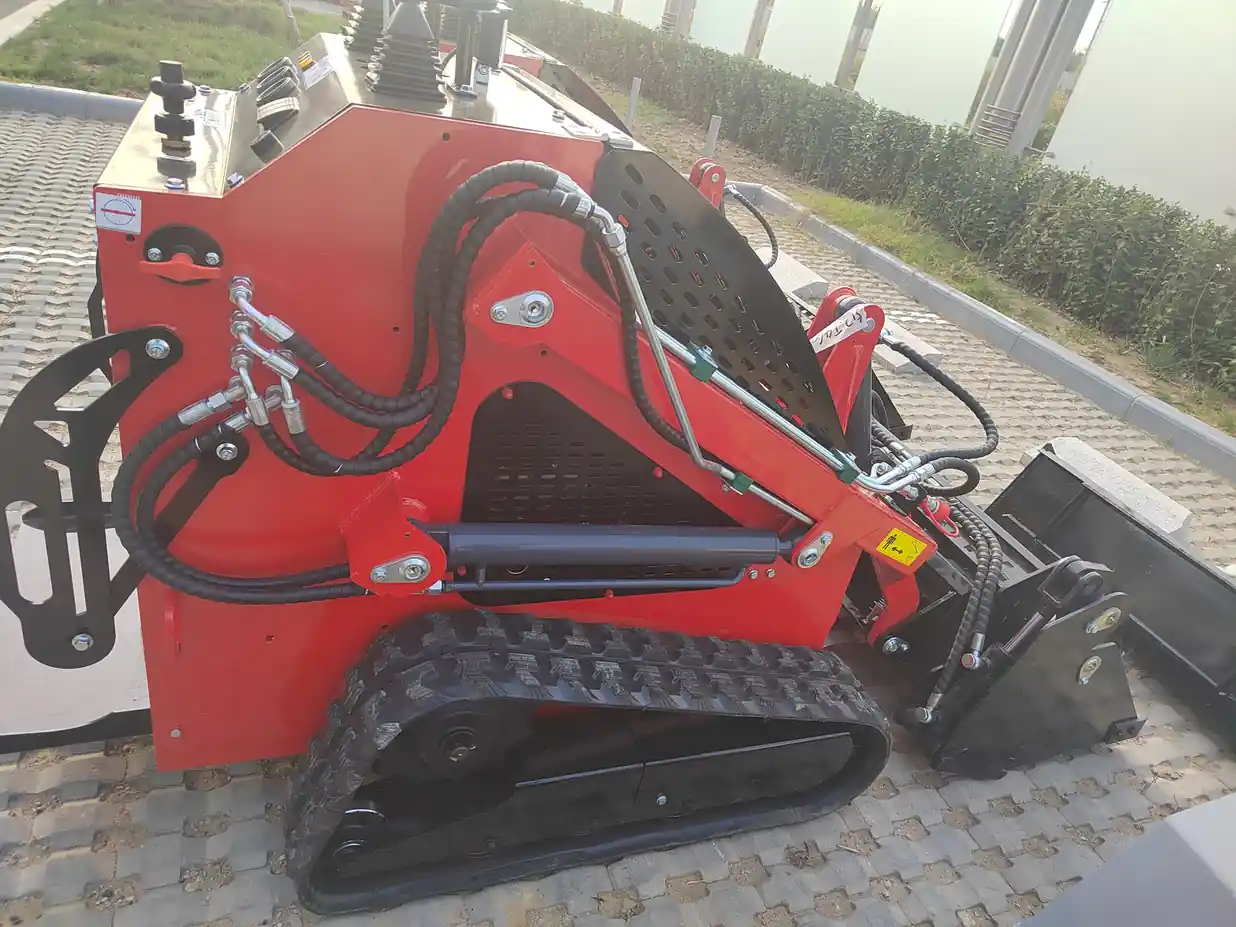
Stand-On Mini Track Loaders
MODELS: S-200S / S-200SC / S-200SP / S-250P
A practical direction for soft soil, loose material, slopes and uneven landscaping work where traction and flotation matter. Tracks require more cleaning and wear inspection, especially after mud, sand and abrasive debris.
Selection Cues:
- Loose or uneven ground
- Added traction
- Lower point pressure
Mini Skid Loader Model Directions
Use this table to narrow the conversation. It identifies the verified configuration direction without turning unconfirmed options into standard specifications.
| Model | Verified Configuration Direction | Control or Engine Detail | Best Next Check |
|---|---|---|---|
| S-200S | Tracked stand-on mini loader | Runtong twin-cylinder, 739 cc | Confirm rated load, hydraulic output and planned attachments |
| S-200SC | Wheeled or tracked stand-on configuration | Mechanical controls | Confirm surface, undercarriage, mount and hydraulic match |
| S-200SP | Wheeled or tracked stand-on configuration | Mechanical controls | Confirm work cycle, attachments and control requirements |
| S-250P | Tracked stand-on configuration | Mechanical controls; dual-output arrangement | Confirm output functions, couplers and attachment circuit requirements |
Model availability and final component combinations may vary by quotation. Ask for the selected machine and every planned attachment to be stated on the same technical scope.
Wheeled Mini Skid Loader or Mini Track Loader?
Wheels usually suit firm surfaces, frequent travel and simpler undercarriage care. Tracks usually suit soft, loose or uneven ground where traction and flotation matter more. The correct choice depends on the real surface, turning frequency, transport plan and maintenance conditions.
Wheels
- Surface: Firm, paved or prepared ground
- Travel: Efficient for frequent movement on hard surfaces
- Impact: Higher point pressure
- Upkeep: Simpler cleaning and fewer undercarriage wear parts
- Package: Usually the simpler package
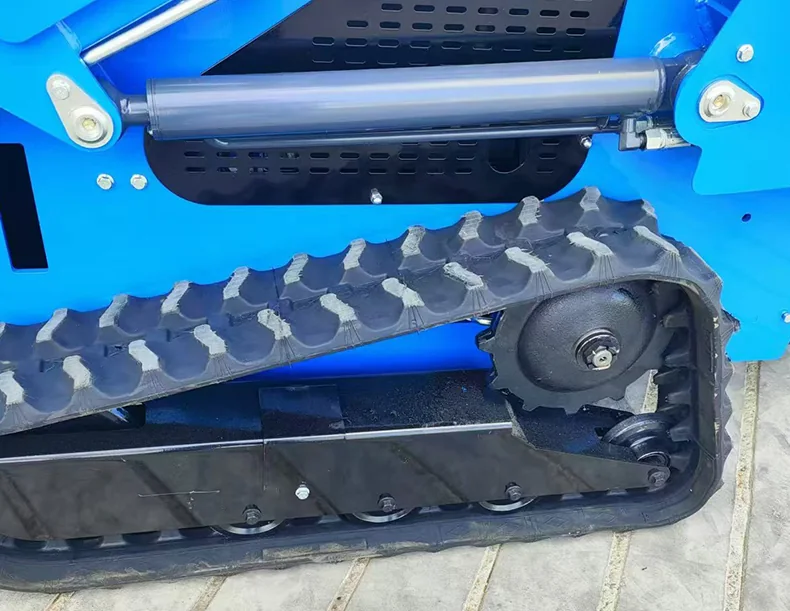
Tracks
- Surface: Soil, gravel, mud and uneven terrain
- Travel: Stable traction where wheel slip is a concern
- Impact: Load spread over a larger contact area
- Upkeep: Regular cleaning, tension and wear inspection required
- Package: Extra undercarriage cost and weight must be included in the quote
Callout: Choose the undercarriage from the worst surface the machine must cross—not from the cleanest area in the project photos.
One Compact Carrier Across the Work Sequence
A mini skid loader creates value when the machine, attachment sequence and site access are planned together.
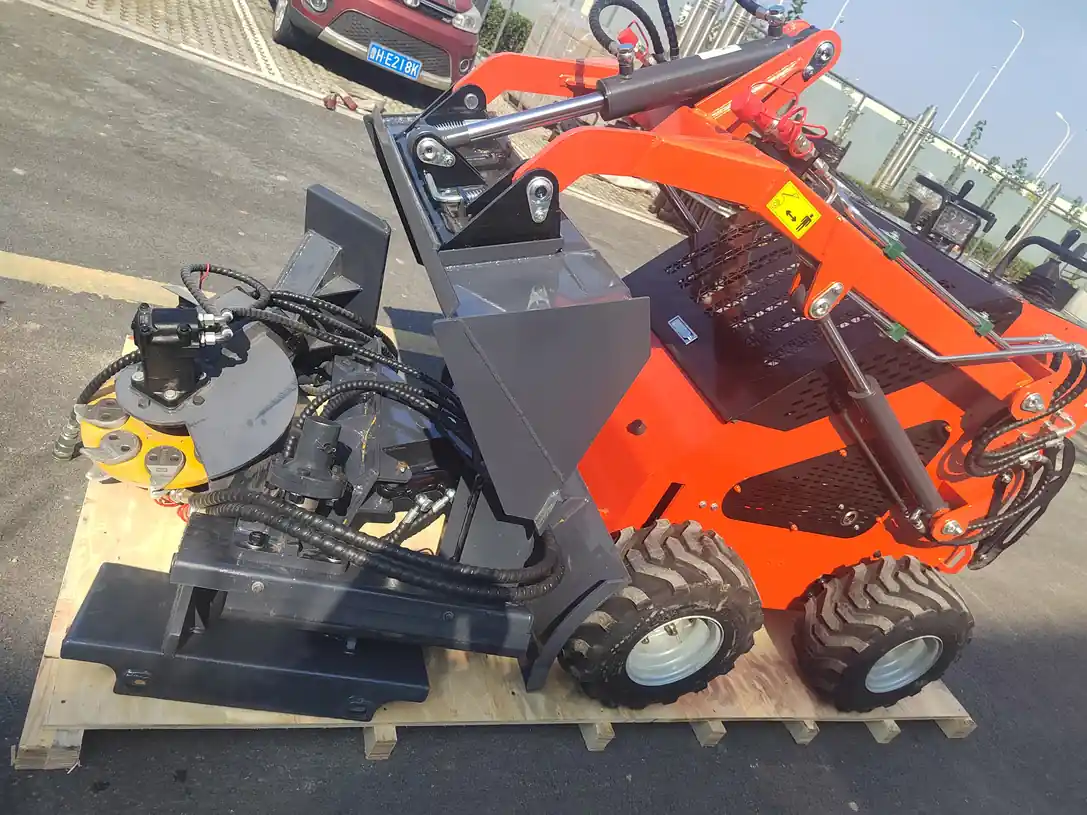
Landscaping and site preparation
Move soil or mulch, grade compact areas, drill planting holes and handle materials without bringing several single-purpose machines into the same yard.
Tree care and property maintenance
Plan grapple, bucket, fork or auger work around gates, turf, roots and turning space. Confirm attachment weight and load center before selecting the carrier.
Utility and trench support
Use the loader for spoil handling, material movement and compatible trenching or drilling tools while keeping hydraulic demand and site stability within the selected configuration.
Farms, yards and material handling
Match bucket or fork work to the surface, load shape, working height and travel distance. Pallet handling requires the real load center and remaining capacity with forks installed.
Dealer and rental-fleet packages
Build an attachment package around recurring customer tasks, easy inspection and parts planning rather than listing every tool as universally compatible.
Match the Attachment Before You Approve the Loader
A tool can look mechanically compatible and still be wrong for the hydraulic circuit, controls or remaining rated load. Treat the carrier and attachment as one configuration.
| Check | Why it matters | What belongs in the quotation |
|---|---|---|
| Mechanical mount | The tool must lock securely and retain the intended geometry | Mount type, pin or plate interface and locking method |
| Hydraulic flow and pressure | Too little flow limits function; an unsuitable circuit can create heat or component risk | Required and available flow/pressure for the selected model |
| Couplers and return path | Hose and return requirements vary by attachment | Coupler size/type, hose routing and return-line requirement |
| Weight and load center | The tool reduces the load the carrier can safely handle | Attachment weight, projected load center and confirmed rated operating basis |
| Controls and functions | Multi-function tools may need an auxiliary or dual-output arrangement | Control method and every required hydraulic function |
Buyer mistake to avoid: Ordering a package from photos alone without a written machine–attachment compatibility schedule.
Prevent Configuration Problems Before the Machine Ships
The machine reaches the site, but the attachment cannot complete the task
Lost time, extra freight and another round of sourcing.
Response:
Define the complete work sequence first and quote the loader together with each attachment, hose and coupler requirement.
The undercarriage works on the yard but struggles on the real job surface
Slip, turf damage, cleaning burden or avoidable wear.
Response:
Compare the worst ground condition, turning frequency and travel distance before choosing wheels or tracks.
Hydraulic requirements are discovered after delivery
Slow tool speed, excessive heat or an unusable attachment.
Response:
Put required and available flow, pressure, couplers, return route and control functions into the technical review.
The attachment changes the usable lifting margin
The expected load cannot be handled as planned.
Response:
Evaluate attachment weight, load center, lift geometry and stability with the selected model; do not compare engine power as a substitute for rated operating load.
Why a Stand-On Mini Loader Fits Multi-Task Crews
Step on, work, step off
The stand-on layout suits jobs that alternate between machine operation and ground-level tasks, especially landscaping, tree care and utility support.
Wheeled and tracked directions
Buyers can select the undercarriage around traction, ground disturbance, travel pattern and maintenance priorities instead of accepting one fixed chassis direction.
One carrier, planned attachment package
Bucket, fork, auger, grapple, sweeper and other tool directions can be reviewed as one procurement scope when the mount and hydraulic requirements are compatible.
Configuration communication before quotation
Model, undercarriage, engine or control direction, attachment interface and included scope can be written into the quotation so the buyer can compare a complete package.
What Determines Mini Skid Loader Cost?
Price changes with the complete working package. A lower machine-only figure may exclude the undercarriage, hydraulic functions, attachment set, export packing or support items needed for the job.
Base model and operating range
Frame, lift geometry, rated operating basis and selected engine or control configuration.
Wheels or tracks
Undercarriage components, weight, traction needs and maintenance scope.
Hydraulic package
Auxiliary functions, flow and pressure requirements, couplers, hoses and return paths.
Attachments
Tool type, size, weight, cylinders or motors, wear parts and quantity.
Export scope
Packing, shipping dimensions, destination documents, spare-parts package and local unloading plan.
Buyer check: Compare quotations only after the same machine configuration, undercarriage, attachment list, hydraulic scope and included accessories are written into each offer.
Plan Safe Operation and Daily Care Around the Exact Configuration
Safety Focus
Only trained operators should use the machine. Follow the manual supplied for the selected model and attachment, keep bystanders clear, and never exceed the confirmed operating limits.
- ■ Inspect the attachment lock, hoses, couplers, tires or tracks before work.
- ■ Enter and leave the platform using the designated steps and handholds; keep footwear and the platform clear of mud and oil.
- ■ Carry loads low, avoid sudden turns on slopes and keep the heavy end uphill where the manual requires.
- ■ Verify overhead, underground and bystander hazards before auger, trenching or lifting work.
- ■ Lower the attachment, relieve hydraulic pressure and secure the machine before service or tool changes.
Maintenance Scope
Daily inspection reduces avoidable downtime, but intervals and fluids must follow the selected engine and machine manuals.
- ■ Check engine oil, coolant or cooling path, fuel, leaks and visible damage.
- ■ Inspect hydraulic hoses, cylinders, couplers and attachment locking points.
- ■ For wheels, inspect tire condition and pressure; for tracks, clean debris and inspect tension and wear.
- ■ Clear radiator and air-intake areas according to the working environment.
- ■ Record operating hours and complete engine, filter, fluid and wear-part service at the specified interval.
Callout: Mud, sand, demolition dust and abrasive debris shorten inspection intervals. Build cleaning access and spare wear parts into the operating plan.
How to Choose a Mini Skid Loader
Define the repeated task
List what the machine must do most often and the attachment sequence required during a normal shift.
Check access and surface
Record gate width, overhead clearance, turning space, slope, soil condition and the hardest route the machine must travel.
Choose wheels or tracks
Balance travel efficiency and maintenance simplicity against traction, flotation and uneven-ground stability.
Calculate the working package
Include attachment weight, material weight, load center, lift height and transport weight rather than evaluating the bare carrier alone.
Match the hydraulics and controls
Confirm mount, flow, pressure, couplers, return line and every auxiliary function needed by the tool.
Compare the written scope
Put the selected model, undercarriage, engine/control direction, attachments, included accessories, packing and support scope on the quotation.
Quote-Ready Inputs
Gather these details before requesting a quote to ensure an accurate configuration:
- Worksite photos
- Access dimensions
- Surface and slope
- Material and maximum load
- Required attachments
- Working height
- Destination country or region
Configuration Support from Jining to Your Jobsite Plan
Hongrui is based in Jining, Shandong, China. The team supports OEM/ODM and configuration communication for machinery projects, followed by technical consultation, after-sales coordination and spare-parts support for the agreed scope.
Mini Skid Loader Questions Buyers Ask Before Ordering
Guide Contents
What are the typical uses for a compact utility loader?
How do mini track loaders compare with small wheeled skid steers?
Which attachments are available for a mini skid loader?
How much does a mini skid loader cost?
Is a stand-on mini loader suitable for landscaping?
What safety checks are required before operation?
What maintenance does a stand-on loader need?
Continue with the Right Equipment Path
Need the broader loader family?
Review seated wheeled, seated tracked and stand-on configurations across the skid steer loader range.
Explore Skid Steer LoadersComparing narrow-access capacity classes?
Use the compact skid loader guide when body width, 300 kg or 500 kg class selection and access-route planning are the main decision.
Compare Compact Skid Loaders
Configure the Loader and Attachments as One Working Package
Share the surface, access, material, maximum load, working height and planned tools. Hongrui will use those inputs to discuss a wheeled or tracked model direction and prepare a reviewable quotation scope.
Helpful inputs: site photos, access dimensions, attachment list, material weight and destination.