
Cat vs JCB Skid Steer: Which Should You Choose?
Choose a Cat skid steer when its local service support, hydraulic configuration and operator controls best match your existing fleet. Choose a JCB skid steer when side-door access and its single-arm layout offer a practical advantage in your daily work. Neither brand wins every application. Compare specific machines with the same lift-capacity basis, attachments and equipment package, then test them on the work that earns your revenue.
This guide focuses on conventional wheeled skid steers. The Cat 250 and JCB 270 provide a useful similar-capacity starting point. JCB Teleskid machines are considered separately because their extending boom changes both the work they can reach and the lifting limitations you must check.
Cat vs JCB skid steer: the practical differences
The most useful comparison is not a list of brand slogans. It is a decision about access, productive capacity, attachment performance and local support.
| Decision factor | Cat | JCB | What the buyer should verify |
|---|---|---|---|
| Cab entrance | Conventional front-entry layout on the wheeled machines considered here | Side-entry cab enabled by a single-arm Powerboom layout | Access with your actual attachment installed and sufficient space beside the machine |
| Loading performance | Choose the model and lift configuration for the load | Do the same; a Teleskid needs a separate reach-capacity assessment | Permitted load, load center, dump clearance and forward reach |
| Powered attachments | Multiple auxiliary hydraulic packages on selected models | Standard and optional packages vary by model and market | Required flow, pressure, cooling, case drain and electrical controls |
| Operator experience | Evaluate fitted seat, controls, camera and cab package | Evaluate those same features plus side-door access | A full demonstration with the regular operator, not just a brief walkaround |
| Service and resale | Dependent on the local dealer and exact machine | Dependent on the local dealer and exact machine | Written parts lead times, service response and comparable sold-machine evidence |
Start with comparable machines: Cat 250 vs JCB 270
These models have closely matched published rated operating capacities. That makes them more useful for an initial comparison than pairing a small Cat with a much larger JCB, or a wheeled loader with a compact track loader.
| Published specification | Cat 250, US listing | JCB 270, US listing |
|---|---|---|
| Lift design | Vertical lift | Vertical lift |
| Rated operating capacity | 2,689 lb (1,220 kg) | 2,723 lb (approximately 1,235 kg) |
| Advertised engine power | 74 hp gross, SAE J1995:2014 | 74 hp advertised; confirm test standard in your quotation |
| Cab access | Front entry | Side entry |
Sources: Cat 250 specifications and JCB 270 specifications, checked October 18, 2026. Cat states a defined base-machine configuration, including standard tires, bucket and no optional counterweights. Obtain the equivalent JCB configuration and rating conditions before treating the figures as a fully normalized comparison.
The published capacity gap is just 34 lb, or about 1.3%. That is not a sound basis for declaring a brand winner. A heavier attachment, different counterweight package or a pallet positioned farther forward can matter more to the actual lifting task.
Do not treat rated operating capacity as permission to lift that weight with any tool at any height. Ask for the manufacturer’s applicable operating limits with the proposed fork carriage, load center and attachment. Tipping load, bucket breakout force and pallet-handling capacity are different measurements.
Cab access, visibility and operator comfort
JCB’s clearest design distinction is side entry. It can be valuable when an operator repeatedly exits to open gates, handle materials or change tasks, because the access route does not pass over the front attachment. However, the side door still needs usable clearance beside the machine.
Cat’s front-entry arrangement should be tested with the actual bucket or attachment fitted. Check the step surfaces, handholds, door clearance and the operator’s ability to enter without awkward movements. A layout that is comfortable in an empty display yard may be less convenient when the machine is parked beside a wall or equipped with a bulky tool.
JCB attributes improved visibility to its single-arm design. This is a reason to conduct a comparison, not a substitute for one. From the seated operating position, assess the cutting edge, fork tips, rear corners, pedestrians and overhead obstructions. Cameras support observation; they do not eliminate blind spots or replace site controls.
For either brand, spend enough time in the cab to evaluate joystick reach, seat adjustment, HVAC, noise, vibration and visibility in reverse. Confirm whether suspension, ride control and cameras are standard, optional or absent on the quoted machine. Keep the operator and test route consistent.
Attachment compatibility: check more than the mounting plate
Do not assume JCB skid steers require a proprietary attachment system. JCB’s 270 product information describes an industry-standard quick hitch. Nevertheless, a tool that physically mounts is not automatically approved, controllable or hydraulically compatible.
Work through four checks before transferring an existing attachment between Cat and JCB:
- Mechanical fit: Confirm mounting geometry, latch engagement, attachment weight, hose routing and clearance through the permitted movement range.
- Hydraulic match: Compare the tool’s required flow and pressure with the exact machine package. Check case-drain requirements and allowable return pressure.
- Electrical functions: Verify connector type, pin assignment and control compatibility. A connector that plugs in does not prove its functions match.
- Application approval: Confirm guarding, cooling capacity, operating limits and manufacturer requirements for the intended duty.
The Cat 250 US listing specifies 20 gpm standard flow, with 30 gpm High Flow and High Flow XPS options. XPS also provides a higher maximum pressure than the basic High Flow package. The JCB 270 Singapore page lists a 90 L/min standard circuit. These regional specifications are useful reference points, not a substitute for matching the exact market and serial-number configuration.
For a simple bucket, geometry and capacity dominate. For a rotary cutter, cold planer or other continuously powered tool, hydraulic output and heat management become much more important. Ask both dealers to demonstrate your most demanding attachment after the machine reaches operating temperature. Record output quality and useful work completed, not just engine speed.
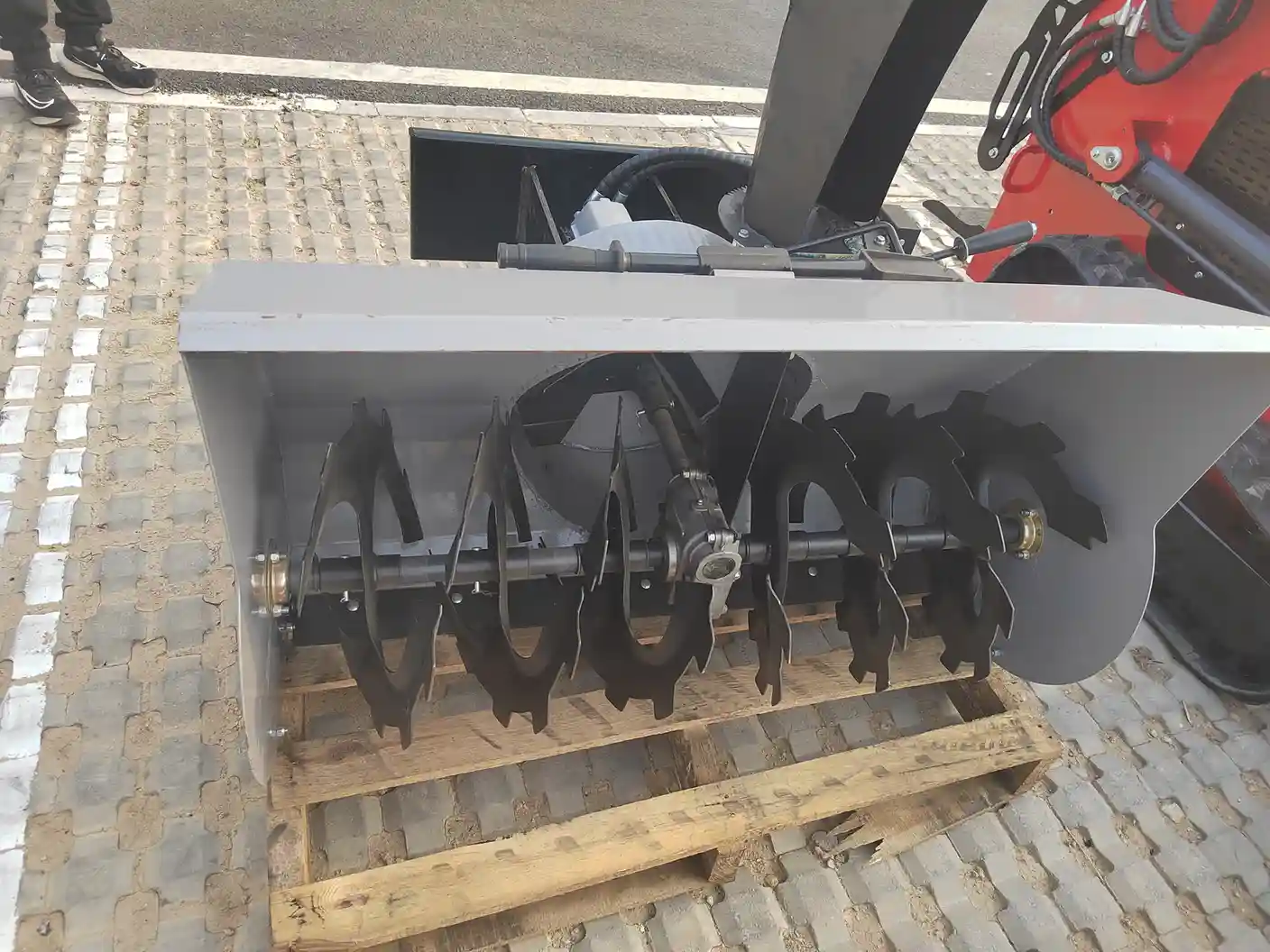
For a task-based overview, see our guide to skid steer attachment types. Build the machine specification around the attachments you will actually use, rather than buying unused hydraulic options.
Reliability, maintenance and dealer support
There is no verified fleet-wide failure-rate comparison here that proves either brand is universally more reliable. Individual owner reports can identify questions to ask, but they cannot establish failure frequency without comparable machine hours, duty cycles and maintenance histories.
JCB describes ground-level daily checks and rear service access on the 270. During a demonstration, ask the technician to show the real inspection and filter-access points. Perform the same exercise on the Cat. A service task that is theoretically accessible may still take longer with your attachment, guarding or site conditions.
Ask each local service provider for the same written information:
- Availability and lead times for filters, belts, hoses, sensors and the model’s common wear parts.
- Mobile-service callout charges, travel time and normal diagnostic availability.
- Warranty exclusions, required maintenance records and who pays transport costs.
- Whether emergency repairs and a replacement rental can be arranged during your working season.
- Support for the exact engine, emissions package and serial-number range being purchased.
Do not assume every Cat or JCB uses the same emissions equipment. Identify the actual engine and market certification, then obtain its maintenance requirements. For used imports, confirm that local technicians can support the installed configuration before agreeing to buy.
Purchase price, resale and cost per productive hour
The cheaper quotation is not necessarily the cheaper machine to own. Compare delivered, work-ready configurations with the same attachments, tires, cab equipment, warranty scope and financing assumptions. A base-price advertisement is not an apples-to-apples fleet quotation.
A practical budgeting formula is:
Use engine hours separately from productive hours. A loader that spends considerable time idling can show low fuel use per engine hour without being economical per completed job. For loading work, also compare cost per tonne moved or per truck loaded under the same conditions.
A transparent, hypothetical break-even example
Suppose one matched quotation costs $6,000 more than the other. Over an expected 3,000 productive hours, that premium equals $2 per productive hour before interest, resale and other cost differences. This is an illustrative calculation, not a Cat or JCB price estimate.
If a controlled demonstration shows a genuine 15-minute daily saving across 200 working days, that represents 50 hours per year. At an assumed recoverable contribution of $60 per hour, it could be worth $3,000 annually. But the saving only has that value if the released time can be used productively; idle capacity is not cash profit. Apply the same test to either brand, and include the costs of achieving the saving.
For resale, request recent completed sales of comparable year, model, hours, condition and equipment in your region. Asking prices and brand reputation alone are weak evidence. Use a conservative resale estimate and run a second scenario with a lower exit value.
Which brand fits your application?
| Your work pattern | Useful starting point | Condition that can change the decision |
|---|---|---|
| Existing Cat fleet and attachments | Evaluate Cat for operator familiarity and service continuity | JCB may still be preferable if access benefits and verified operating costs outweigh switching costs |
| Frequent exits around gates and material-handling tasks | Give JCB’s side-entry layout a thorough demonstration | Insufficient side clearance or a better local Cat support package can alter the result |
| Daily demanding hydraulic attachment work | Compare the exact hydraulic packages, not the brand names | Required pressure, cooling, guarding or control functions may eliminate a configuration |
| Regular loading over obstacles | Assess a JCB Teleskid separately | Permitted capacity at the required reach may be insufficient; extra reach is not free lifting capacity |
| Mostly mud or soft ground | Reconsider whether a wheeled skid steer is the right machine | A compact track loader comparison may be more relevant than this brand comparison |
The JCB 3TS-8W Teleskid uses a telescopic boom. Assess it as a different capability option, not simply a conventional JCB skid steer with extra reach. Obtain the load information for the intended extension, height and attachment, and do not assume the retracted-boom rating applies at full reach.
A buying checklist that produces a defensible decision
Send both suppliers one identical requirement sheet. This prevents a well-equipped machine being compared with a stripped-down quotation.
- Define the work: Maximum actual load, material density, loading height, clearances, surfaces, gradients and annual productive hours.
- List each attachment: Model, mounting system, weight, flow, pressure, electrical functions and special safety requirements.
- Normalize the quotation: Engine/emissions version, tires, counterweights, hydraulic package, cab, controls, delivery and warranty terms.
- Run a controlled demonstration: Same operator, material, route and target finish. Record cycle times, fuel added, visibility and access observations.
- For a used machine, inspect professionally: Verify service history, cold starting, leaks, tire wear, linkage play and diagnostic information. Have a qualified technician assess the hydrostatic and hydraulic systems.
- Check transport: Use the equipped machine’s actual weight plus attachments and securing equipment to verify the trailer and vehicle combination.
- Compare support and downside risk: Price a realistic service basket and allow for a repair delay, rather than assuming uninterrupted operation.
The winner is the machine that satisfies the mandatory requirements and delivers the lowest credible cost for your work. If both perform similarly, operator preference and stronger local service can legitimately decide the purchase.
Frequently asked questions
Is JCB better than Cat for skid steers?
JCB can be a better fit when side-door access provides a clear daily benefit. Cat can be a better fit when its selected hydraulic package, controls and local support align more closely with the job. Compare exact configurations rather than assigning a universal winner.
Can Cat and JCB skid steers share attachments?
Some attachments can be shared when the mounting, load, hydraulic and electrical requirements all match. Confirm compatibility for the specific carrier and tool; a standard quick hitch alone is not enough.
Does JCB side entry make every operation safer?
It changes the access route and avoids climbing over the front attachment. It does not remove lifting, rollover, collision or maintenance hazards. Safe operation still depends on the manual, site controls and trained operators.
Which brand has better resale value?
That requires local sold-price evidence for comparable machines. Model, age, hours, condition, service records and dealer demand matter. Do not budget a fixed brand premium without supporting transactions.
Should I compare a Cat 259 with a JCB 270?
Not as a like-for-like wheeled-loader comparison: the Cat 259 family is a compact track loader family. First decide whether you need wheels or tracks, then compare equivalent capacity classes and rating conditions.
Build the specification before choosing the badge
Shortlist Cat and JCB against the same job requirements, then let a real demonstration and written support terms decide. If you are also evaluating a different budget or compact machine class, review Zentramo’s skid steer loader options and compare their verified specifications separately. Do not treat a smaller loader as a direct substitute for a full-size Cat 250 or JCB 270.
Editorial note: This is a specification-based buying guide, not a hands-on head-to-head test. Specifications vary by market and configuration. Cat and JCB are their respective owners’ trademarks; this comparison does not imply dealership authorization or affiliation. The cover is an AI-generated concept illustration, not a photograph of either manufacturer’s model.