
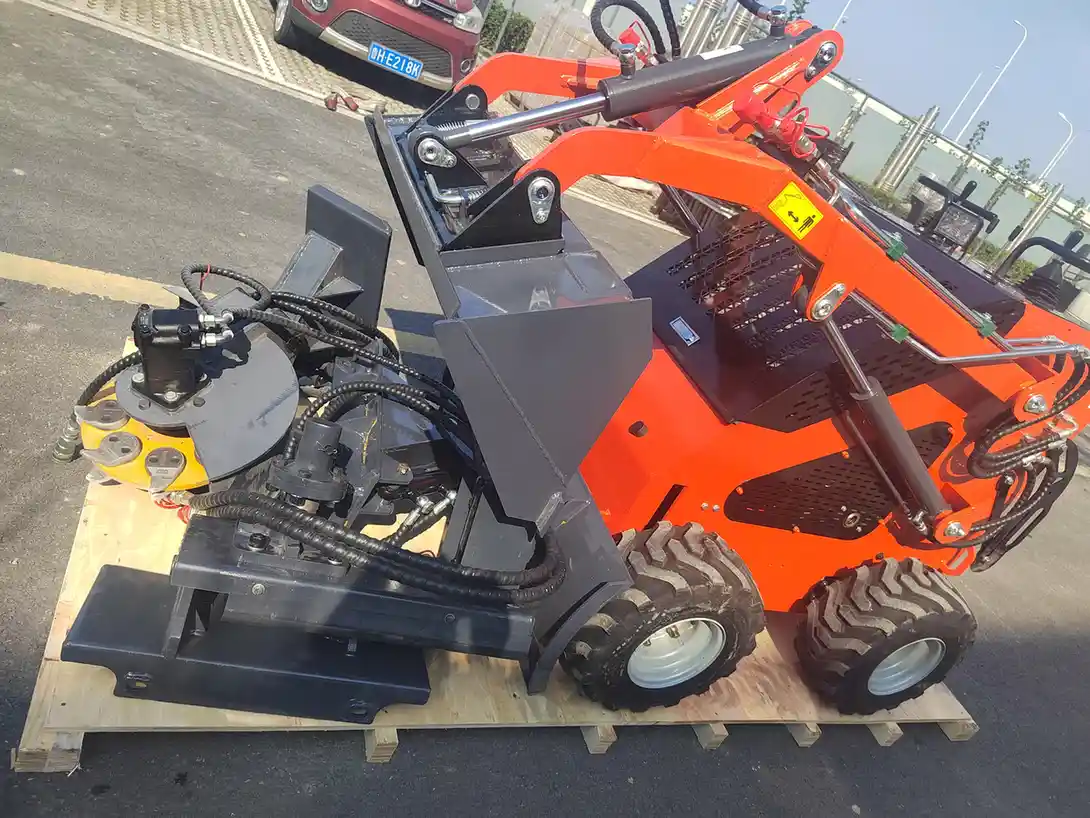
Types of Skid Steer Attachments: Uses and Job-Matching Guide
The main types of skid steer attachments include buckets, pallet forks, grapples, augers, trenchers, grading tools, brush cutters, mulchers, breakers, sweepers and snow tools. Each changes the work the loader performs: carrying material, drilling holes, shaping ground, processing vegetation or cleaning a finished surface.
Choose the required result first, then the attachment family, and finally a model that suits the carrier. A tool that connects to the mounting plate is not automatically suitable for the loader’s lifting capacity or hydraulic system. This guide explains 18 useful attachment types, their applications and the differences that matter on a real job.
Quick Guide: Match the Attachment to the Result
| Required result | Attachment to consider | Important distinction |
|---|---|---|
| Load loose soil, gravel or mulch | General-purpose or material bucket | Bucket volume must suit material density and loader capacity. |
| Separate larger stones from loose soil | Rock or skeleton bucket | Tine spacing determines what stays in the bucket. |
| Move pallets or hold irregular debris | Pallet forks or grapple | Supporting a pallet is different from clamping brush. |
| Make holes or a continuous narrow trench | Auger or trencher | Choose by excavation shape, depth and ground conditions. |
| Excavate a localized area or break hard material | Backhoe attachment or hydraulic breaker | Breaking material does not load or remove the spoil. |
| Level ground or prepare a seedbed | Grading tool, power rake or tiller | Shaping, surface conditioning and soil mixing are separate tasks. |
| Cut vegetation or process woody debris | Brush cutter, mulcher or stump grinder | Match the tool to the material and the required final residue. |
| Clean pavement or remove snow | Broom, snow pusher/plow or snowblower | Decide whether to collect, push aside or discharge material. |
For mounting and hydraulic fundamentals, see what a skid steer attachment is and how compatibility works. The sections below focus on the tools themselves.
Loading and Material-Handling Attachments
1. General-Purpose and Material Buckets
A bucket scoops, carries and dumps loose material. A general-purpose design handles routine loading, while a larger light-material bucket carries bulky products such as mulch or snow. Teeth help penetrate suitable ground; a smooth cutting edge suits scraping and finishing work.
Do not choose only by width or cubic capacity. A bucket full of dense aggregate can impose a very different load from the same volume of dry mulch. Match the bucket and material to the loader’s approved configuration.
2. Rock and Skeleton Buckets
These buckets use spaced tines or openings to retain larger objects while finer loose material falls through. They suit rock picking and cleanup where retaining soil is useful. Choose tine spacing around the material to be retained; wet, cohesive soil may not separate cleanly. A skeleton bucket sorts material rather than crushing it.
3. Grapples and Grapple Buckets
Hydraulic jaws hold brush, branches and irregular debris. Open-bottom root grapples allow some soil to escape, while solid-bottom grapple buckets also retain loose material. Select jaw opening, tine construction and protection for the expected load. A grapple transports vegetation; it does not perform the cutting or mulching stage.
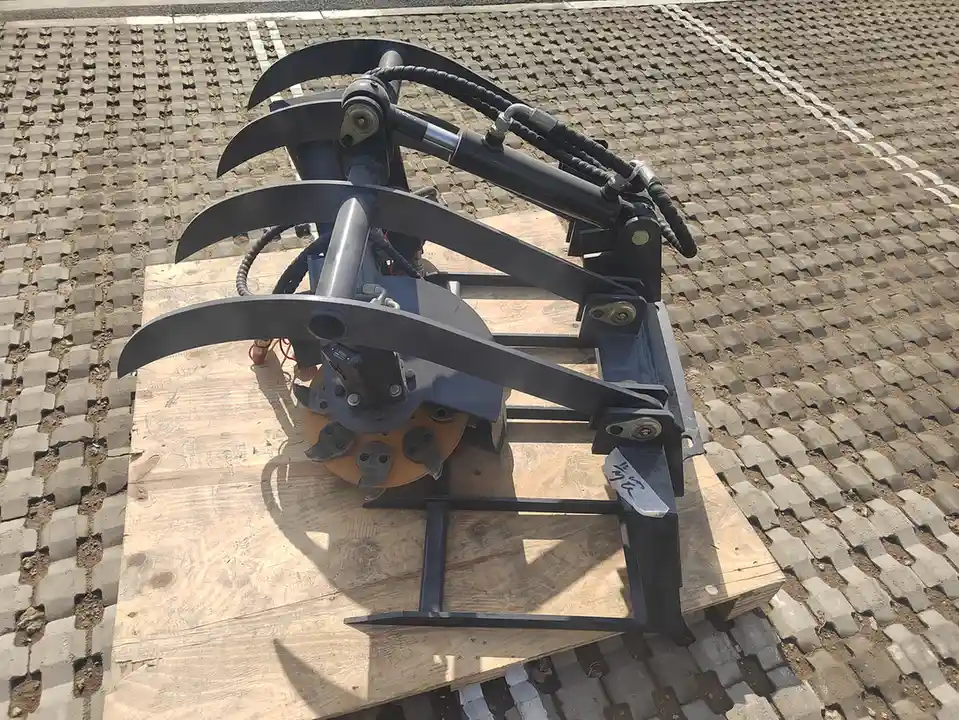
Star Industries’ attachment guide illustrates the differences between root grapples, grapple buckets and skeleton buckets.
4. Pallet Forks
Forks handle palletized goods and suitable supported loads. Tine spacing, length, frame visibility and load restraint affect their usefulness. The fork rating alone does not establish what the loader can lift: the approved machine-and-fork combination and actual load center govern the job. Long loads carried farther forward can reduce the available lifting margin.
5. Concrete Mixers and Placement Buckets
A mixer attachment mixes a batch; a placement bucket carries and directs concrete that is already mixed. They are not interchangeable. Consider batch weight, discharge access, cleaning arrangements and the distance to the pour. A large continuous pour may still be better served by dedicated mixing and delivery equipment. Ask which functions are included in the quoted attachment rather than accepting the broad label “concrete bucket.”
Digging, Trenching and Breaking Attachments
6. Augers
A hydraulic drive rotates a bit to form a hole for posts, planting or an engineered footing. Specify hole diameter and depth, soil or rock conditions, bit type and drive torque. A general earth bit is not a substitute for a rock-drilling setup. Locate buried services before drilling, and keep people away from the rotating assembly.
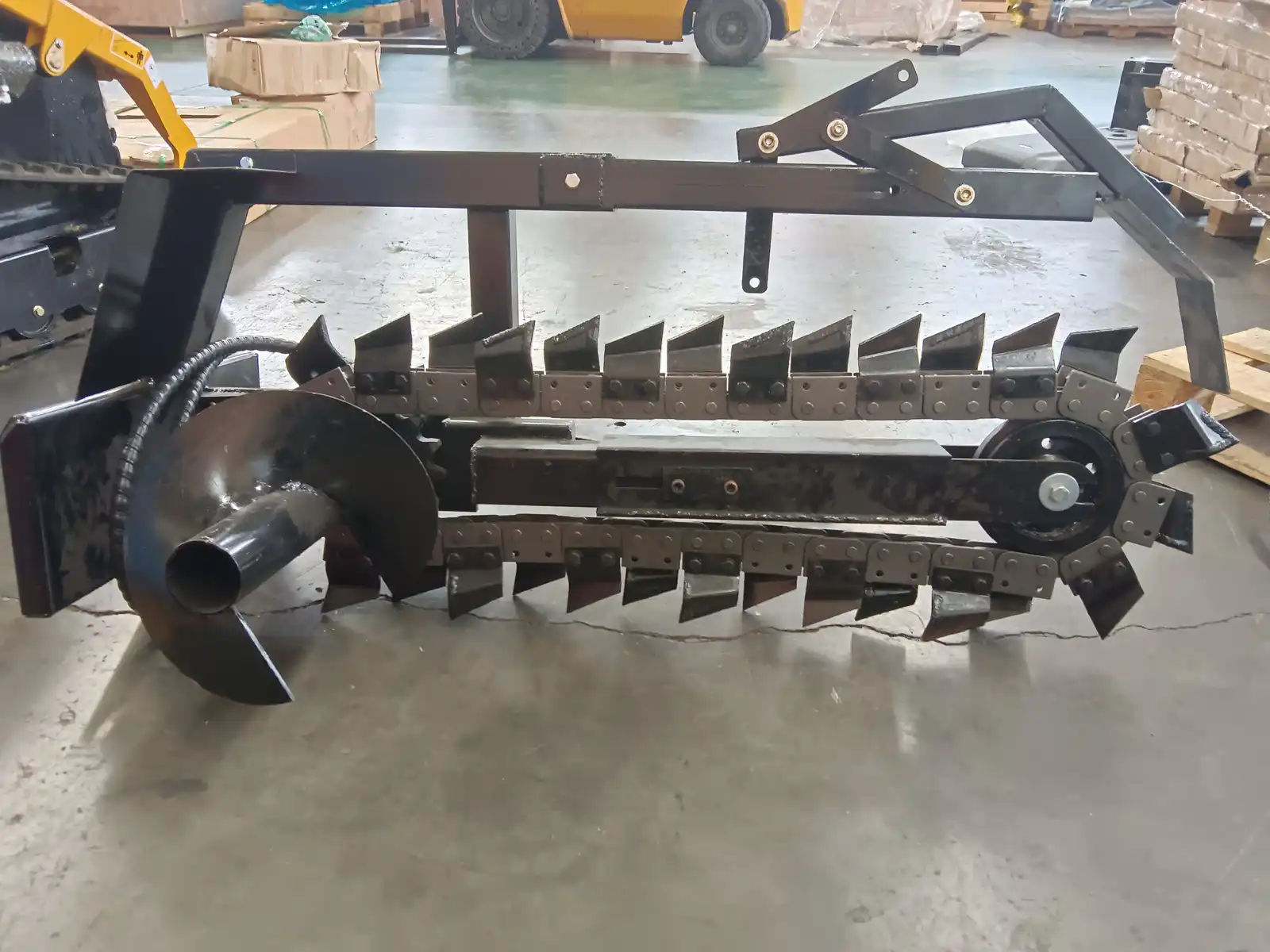
7. Trenchers
A toothed chain excavates a narrow, continuous trench for suitable irrigation, drainage or utility work. The chain, tooth pattern and boom must match the ground and required trench dimensions. A trencher is useful when the route is accessible and the required section suits its cutting geometry; it is less flexible than a digging arm for irregular excavations.
8. Backhoe Attachments
A backhoe arm adds localized digging and bucket positioning for drainage or small excavation tasks. Compare digging depth, reach, swing, stabilizer requirements and control compatibility. It does not give every loader the working envelope or continuous digging productivity of a dedicated excavator. If excavation dominates the schedule, compare the complete workflow in our skid steer versus mini excavator guide.
9. Hydraulic Breakers
A breaker applies repeated impacts to suitable concrete, rock or masonry. Select an approved carrier size, tool and hydraulic operating range. Plan separately for handling the broken material, controlling dust and excluding bystanders. A breaker is not a lifting device or a substitute for a pry bar. Follow its operating limits and lubrication schedule.
H.O. Penn’s guide describes augers, trenchers, backhoes and hammers as distinct work tools; the dimensions and ratings listed there belong to particular product ranges.
Grading, Soil Preparation and Vegetation Attachments
10. Grading Blades, Box Blades and Land Levelers
These tools shape or redistribute material to improve a surface. A blade pushes and redirects it; a box-style tool contains material during grading; a land leveler shaves high spots and spreads loose material into low areas. Select the configuration around the finish, slope and material movement required. Precision grading may call for compatible control equipment, not simply a wider blade.
11. Power Rakes and Landscape Rakes
Powered rakes condition the surface and manage stones or debris during landscape preparation. Designs differ: some windrow unwanted material, while others collect it. State the required result before choosing a rake. Removing debris from the surface is different from cultivating the soil beneath it.
12. Rotary Tillers
A tiller uses rotating tines to loosen and mix the upper soil layer for seedbeds or soil amendments. Choose working width and depth for the preparation task. It should not be treated as a rock crusher or a solution for unknown buried debris. For a cleaner final surface, tilling may need to be followed by raking and grading.
Stowers’ tool guide distinguishes the soil-mixing role of tillers from the conditioning and collection functions of different rakes.
13. Brush Cutters
Brush cutters mow grass, scrub and vegetation within the attachment’s rated cutting capability. Rotary and flail designs produce different cutting behavior and residue. Specify the vegetation, frequency of maintenance and finish required. Never assume that a cutter can process a particular tree diameter from its width or appearance.
14. Forestry Mulchers
Mulchers process woody vegetation into smaller residue rather than merely cutting it down. Rotor design, teeth, hydraulic power and the carrier’s cooling and protective package all affect suitability. A mulcher can be useful where processing in place is the objective, but it may be unnecessary for routine mowing. Use the manufacturer’s approved guarding, exclusion zone and carrier configuration.
15. Stump Grinders
A cutting wheel or rotor grinds a stump to the specified depth. This is different from pulling out the root system. Check access, visibility, sweep movement and underground hazards. For a site that needs structural excavation or complete root removal, grinding alone may not achieve the required result.
Blanchard’s attachment guide provides examples of cutters, mulchers and stump grinders, along with application-based selection considerations.
Cleaning and Snow-Removal Attachments
16. Angle Brooms and Pickup Sweepers
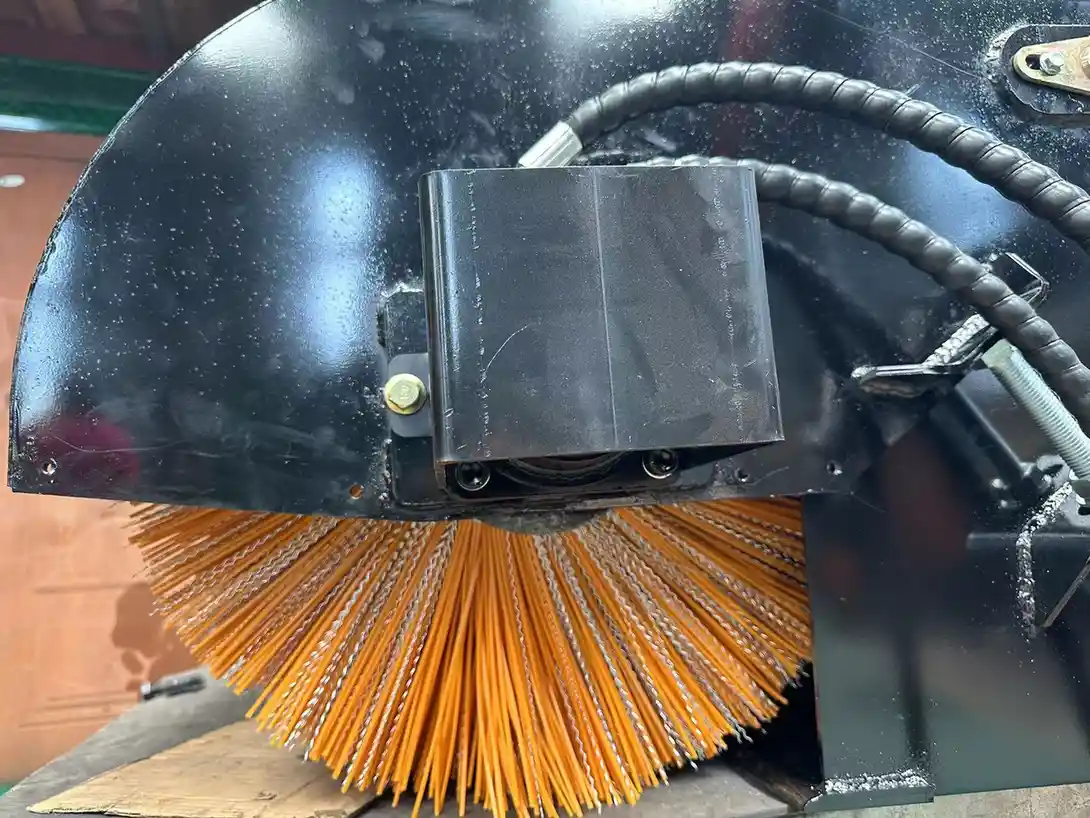
An angle broom moves loose material to one side; a pickup sweeper collects it in a hopper for disposal. Choose according to whether the job permits windrowing or requires removal. Brush type, surface condition, debris size and dust control matter. Neither tool replaces a bucket for moving large piles or heavy rubble.
17. Snow Pushers and Plows
A pusher contains snow and moves it toward a stacking area. A plow redirects it along a route, with blade configuration affecting how snow is managed. Choose working width around access, traction and expected snow conditions. Wider is not automatically more productive if the loader cannot maintain control or push the load.
18. Snowblowers
A snowblower collects snow and discharges it through a chute, helping where pushing space is restricted. Check the approved hydraulic range and chute controls, and plan a safe discharge area. Snow condition and depth influence performance. Keep people clear of discharge and moving parts; isolate the equipment according to the manual before clearing a blockage.
Check the Complete Machine-and-Attachment Combination
After choosing the tool family, compare the exact attachment data sheet with the loader’s installed configuration:
- Mechanical fit: mounting interface, locking engagement, clearance and hose routing throughout the permitted lift and tilt range.
- Load and geometry: attachment mass, payload, forward load center and the manufacturer’s limits for the complete combination.
- Hydraulics: required flow and pressure, return restrictions, case drain when specified, and continuous-duty approval.
- Controls and protection: electrical connectors, control functions, guards and any application-specific operator protection.
- Site conditions: access width, ground support, traction, visibility and safe separation from other people.
Do not assign a single flow requirement to an entire attachment type. Bobcat’s hydraulic matching guidance places different attachments and configurations in standard-, high- and super-flow applications. A trencher or mower may be offered in more than one hydraulic version. Match the numbers and the approved package, not just a “high-flow” label.
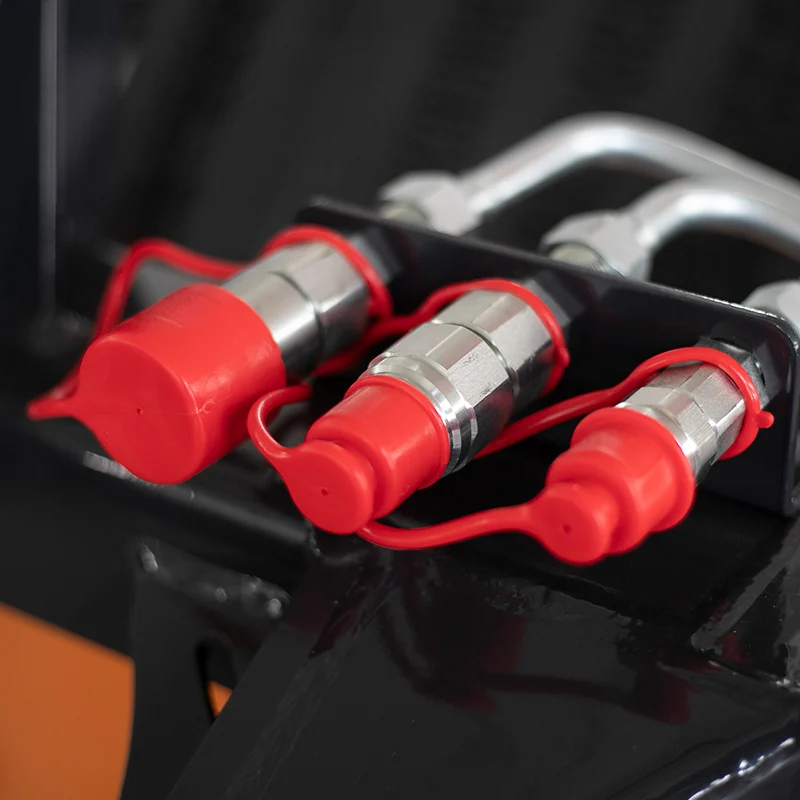
Before changing tools, follow the loader and attachment manuals for safe parking, isolation, pressure release and coupling checks. Do not work under unsupported lift arms or search for a hydraulic leak with your hand. Excavation requires locating underground services; cutting and breaking require the specified guarding and exclusion zones.
Build an Attachment Package Around Recurring Jobs
These examples are starting points for planning, not a claim that every listed tool fits every loader:
- Landscape installation: bucket for material movement, auger for holes, then a rake or tiller selected for the required ground finish.
- Construction support: bucket and forks for daily handling, with a breaker or sweeper when the project requires it.
- Vegetation management: cutter for maintenance mowing, mulcher for suitable processing work, or grapple where cut material must be removed.
- Property maintenance: pickup sweeper for collected debris and a snow tool selected around discharge or stacking space.
Buy around recurring work and compare rental for occasional specialist tasks. Include transport, storage, wear parts, changeover time and maintenance in the decision. A rarely used tool can add cost without removing the need for specialist equipment or trained operators.
Common Questions About Skid Steer Attachment Types
What is the most useful attachment to start with?
A bucket is a practical starting point for regular loose-material handling; forks are useful when pallet movement is frequent. The next purchase should solve a recurring job, such as drilling post holes or collecting site debris, rather than simply expanding the tool count.
Can a skid steer and a compact track loader share attachments?
Many share a common mounting style, but compatibility still depends on capacity, hydraulics, controls, clearance and manufacturer approval. A similar mounting plate does not establish that both carriers can safely perform the same task.
Are mini skid steer attachments the same as full-size attachments?
No. Mounting systems, tool weight and hydraulic requirements can differ. Order against the exact carrier model and attachment specification; do not assume that a smaller tool or an adapter resolves every compatibility issue.
What should a supplier know before quoting?
Provide the loader make and model, mounting details, hydraulic flow and pressure, controls, job description, material conditions, required width or depth, quantity and destination. Request the attachment’s operating limits, included connections, wear-part information and a clear compatibility response.
Planning a loader and attachment package? Send Zentramo your machine details and recurring jobs to discuss suitable options and confirm the configuration before quotation.