DSE vs ComAp Controllers: Which Should You Choose for a Diesel Generator Set?
Choose a DSE controller when the specified model meets your operating requirements and your generator builder or service team already supports that DSE configuration. Choose ComAp when a particular InteliLite or InteliGen configuration fits your control architecture, integration needs and available technical support better. For a new installation with no existing standard, compare complete, tested control systems rather than brand reputations.
Neither brand is automatically the cheaper, simpler or more reliable choice. The decisive questions are whether the controller can operate your exact engine and switchgear, deliver the required communications, and be maintained by the people responsible for the site.
DSE vs ComAp: Compare the Same Controller Class
Deep Sea Electronics (DSE) and ComAp both offer controllers for different duties. Comparing a basic automatic-start module with a paralleling controller mainly reveals a difference in application class, not which manufacturer is better.
The examples below are starting points for a specification review, not interchangeable part numbers. Confirm the current hardware revision, firmware, application configuration and accessories before ordering.
| Decision point | DSE example | ComAp example | Buyer implication |
|---|---|---|---|
| Single-set automatic mains failure (AMF) | DSE7420 MKII | InteliLite 4 AMF 25 | Compare the same mains-failure, start, transfer and return sequence. |
| Ethernet on those AMF models | DSE7420 MKII lists built-in Ethernet. | InteliLite 4 AMF 25 offers Ethernet through a plug-in module. | Include required modules, available slots and configuration in the quotation. |
| Configuration and custom logic | DSE Configuration Suite and PLC functionality on the cited model. | InteliConfig and PLC editing on the cited model. | Ask who develops, documents and supports the actual sequence. |
| Paralleling project examples | A system based on DSE8610 MKII. | A system based on InteliGen 500 G2. | Compare the complete single-line architecture, including mains and bus-tie control where required. |
| Local service and replacement readiness | Project- and supplier-dependent. | Project- and supplier-dependent. | Verify technicians, spare units, configuration backups and response commitments locally. |
Model evidence: DSE7420 MKII, InteliLite 4 AMF 25, DSE8610 MKII and InteliGen 500 G2.
Three Integration Differences That Can Change the Purchase
1. A communications feature may require additional hardware
Suppose a factory needs its building management system to read generator status over Ethernet. On the DSE7420 MKII, Ethernet and Modbus TCP are listed features. The InteliLite 4 AMF 25 lists onboard USB, CAN and RS485, with Ethernet available through a plug-in. Its two plug-in slots must be considered alongside other expansion needs.
The consequence is practical: a quotation for the bare controller may not cover the intended network connection. Request an itemized communications bill of materials and a demonstrated register map. This is a comparison of these two models, not evidence that all DSE controllers include Ethernet or all ComAp controllers require an adapter.
Also distinguish local monitoring from remote control. Internet access, cellular service, gateways, cloud accounts and ongoing charges are separate scope items. Specify whether the remote operator may only view alarms or may issue commands. Require network isolation and an agreed access policy rather than exposing a controller directly to the public internet.
2. Engine compatibility is more specific than a CAN connection
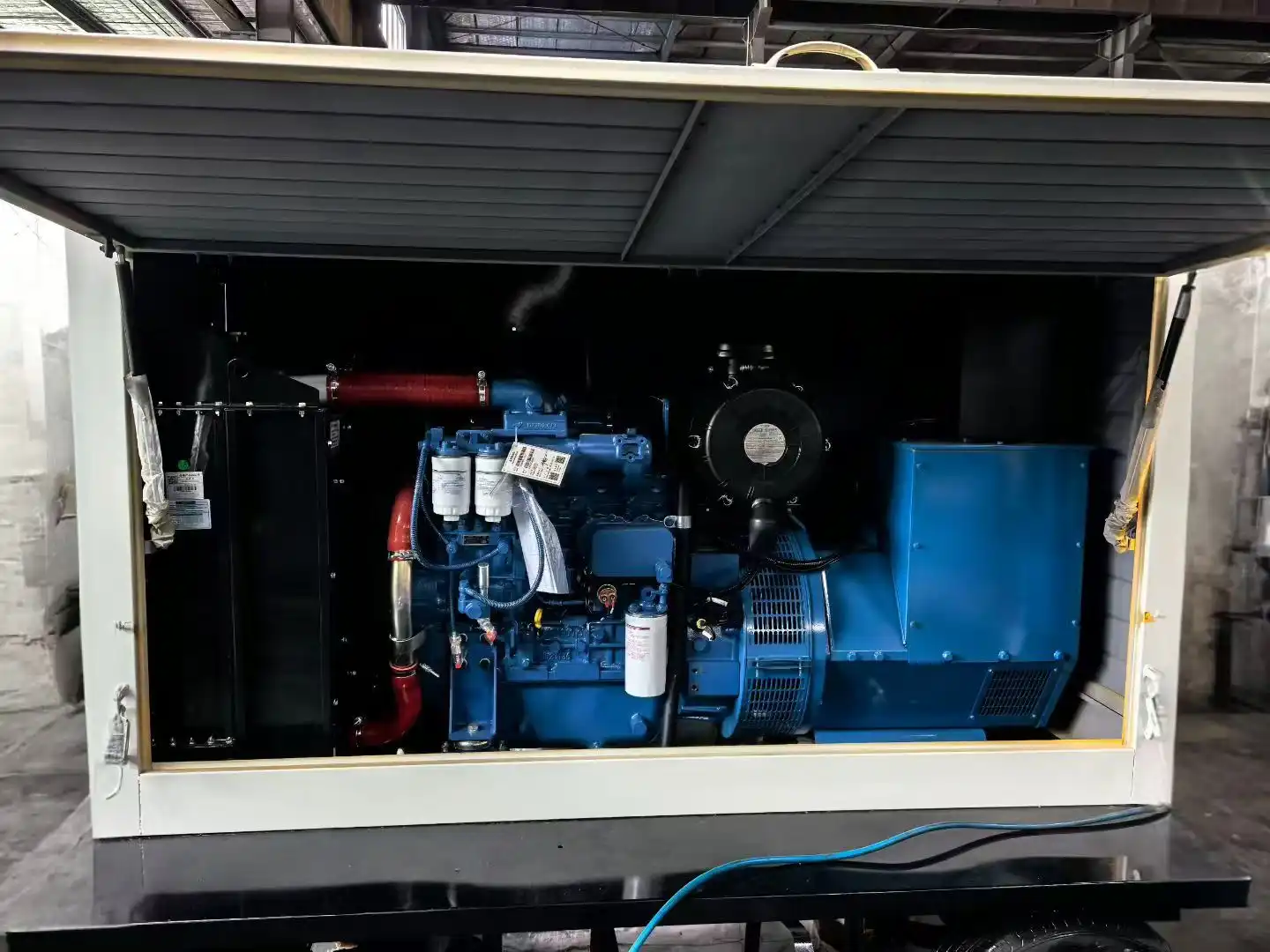
A CAN port is not a guarantee that every engine ECU parameter and command will work. Before comparing brands, obtain the engine model, ECU identification and software version, plus the required start/stop, speed-control and diagnostic functions.
Ask both suppliers to demonstrate the same required signals. For an electronically governed engine, this may include speed commands and fault reporting; a mechanical engine may instead require separate sensors and a different speed-control interface. A missing signal can mean extra hardware or commissioning work even when the controller powers up normally.
For the broader input, output and switchgear checklist, use our diesel generator controller selection guide. Brand choice should follow that compatibility check, not replace it.
3. Paralleling and hybrid capability depend on system architecture
DSE8610 MKII is a synchronising and load-sharing controller; ComAp InteliGen 500 G2 supports paralleling applications. This alone does not establish that two quoted panels handle the same number of mains incomers, bus ties or operating modes.
For example, the InteliGen 500 G2 documentation identifies controller redundancy, signal sharing, Modbus Client and photovoltaic control as software-key options. Its described PV option targets a small application with one generator, grid and PV. It should not be treated as blanket capability for any battery-and-solar microgrid. See the manufacturer’s application and option details.
Request a control responsibility diagram: which device owns each breaker, synchronisation function, load-sharing action and failure response? Neither a brand name nor a larger screen substitutes for an engineered, verified scheme.
Which Should You Choose for Your Application?
| Your situation | Practical selection direction | Condition that could change it |
|---|---|---|
| Existing DSE-standard fleet | Shortlist an appropriate DSE model to retain familiar tools and service procedures. | A required function cannot be delivered economically in the proposed DSE configuration. |
| Existing ComAp-standard fleet | Shortlist the appropriate ComAp model and reuse validated integration practices where applicable. | The available local support or required interfaces differ from previous projects. |
| New single standby generator | Request equivalent AMF quotations from both; prioritize complete integration and local support. | One proposal omits communications hardware, switchgear responsibilities or acceptance testing. |
| Multiple generators or several mains connections | Evaluate each supplier’s complete paralleling design and commissioning capability. | The proposed controller family does not cover the actual bus and breaker arrangement. |
| Solar, battery or complex microgrid expansion | Define the energy-management architecture before choosing controller hardware. | Neither quoted configuration supports the required operating modes or interfaces. |
These recommendations are selection logic, not a claim that one brand has universally better support. Ask for the named service provider, the proposed spare part and the agreed support scope in your destination market.
Can You Replace DSE with ComAp, or Run Them Together?
A replacement is an engineering change, not just a panel swap
A cross-brand replacement may be feasible, but similar functions do not make two controllers drop-in equivalents. Compare mounting dimensions, terminal assignments, supply requirements, sensor characteristics, current-transformer inputs, relay ratings, engine communications and breaker feedback. Retain the original configuration and wiring documentation before planning the change.
The hidden cost is often restoring the complete operating sequence. Remote monitoring, alarm naming, protection coordination and operator training may all need revision. Include outage planning and a rollback method in the work scope. Wiring and commissioning belong to qualified personnel using the relevant equipment instructions.
Mixed-brand load sharing is possible only within a supported design
ComAp’s Inter Controller CAN Convertor provides a documented integration route for certain systems. Its product page lists DSE8610 MKII and DSE8620 MKII configured as a DSE8610 application, alongside supported ComAp families. It describes load/VAr sharing and dead-bus closing functions. See the ICCC compatibility scope.
That is not permission to connect arbitrary DSE and ComAp models. Verify current firmware, converter requirements and the functions that will remain separate. Specify what happens when communications are lost, one set becomes unavailable, or the bus is already energised. Demonstrate those cases before accepting a mixed-fleet solution.
Compare Total Installed Scope, Then Test the Same Requirements
There is no defensible universal price winner without equivalent quotations. Compare controller hardware plus expansion modules, licensed options, panel modifications, software engineering, commissioning, training and required spares. Identify recurring connectivity or service charges separately.
A lower module price can lose its advantage if your team must learn a different platform or rebuild monitoring integration. Conversely, staying with an existing brand is not automatically economical if it requires an unnecessarily complex workaround.
Use the same factory acceptance test requirements for both proposals:
- Operating sequence: demonstrate the specified normal, mains-failure, restoration and manual operating states.
- Fault response: verify agreed alarm, shutdown and breaker-interlock behaviour through approved test methods.
- Interfaces: confirm required ECU values, switchgear feedback and BMS or remote-monitoring data.
- Parallel operation, where applicable: verify the agreed synchronisation, load-sharing and communications-failure responses.
- Handover: provide as-built drawings, configuration backups, firmware identification, authorized access arrangements and operator instructions.
Do not accept a blanket “more reliable” claim in place of this evidence. Controller hardware is only one part of system reliability; wiring quality, configuration, power supply conditions and maintenance also affect the result.
What to Send with Your DSE or ComAp Enquiry
To compare control options for a diesel generator set, provide the engine and ECU details, alternator and AVR models, voltage and frequency, single-line diagram, generator and mains quantities, required operating modes, I/O list and communications specification.
For an upgrade, add the existing controller model, configuration backup, panel photographs and allowed outage window. Ask the quotation to identify every controller, module, software option and commissioning responsibility. Send Zentramo your project requirements so the proposed configuration can be discussed against that scope.
Bottom line: choose the documented DSE or ComAp system that fits your application and can be supported locally. The better purchase is the complete, maintainable solution that passes your acceptance criteria, not the brand with the longest generic feature list.