How Does Generator Remote Start Work?
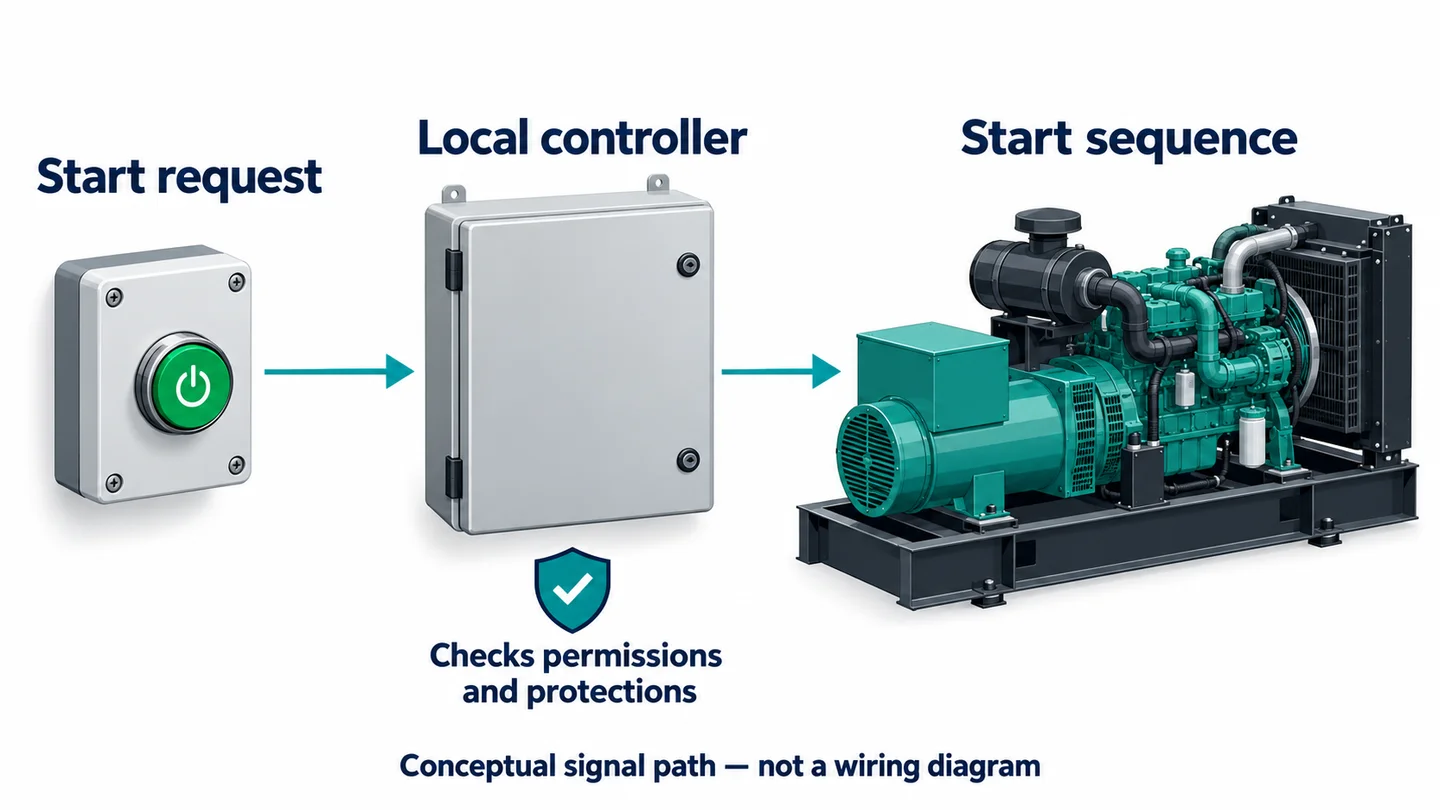
A generator starts remotely when an external switch, automatic transfer switch, energy controller or authorized remote device sends a start request to its local generator controller. The controller checks whether starting is permitted, operates the engine’s starting system and monitors the result. The remote device sends the instruction; the starting battery and starter motor normally supply the energy that turns the engine.
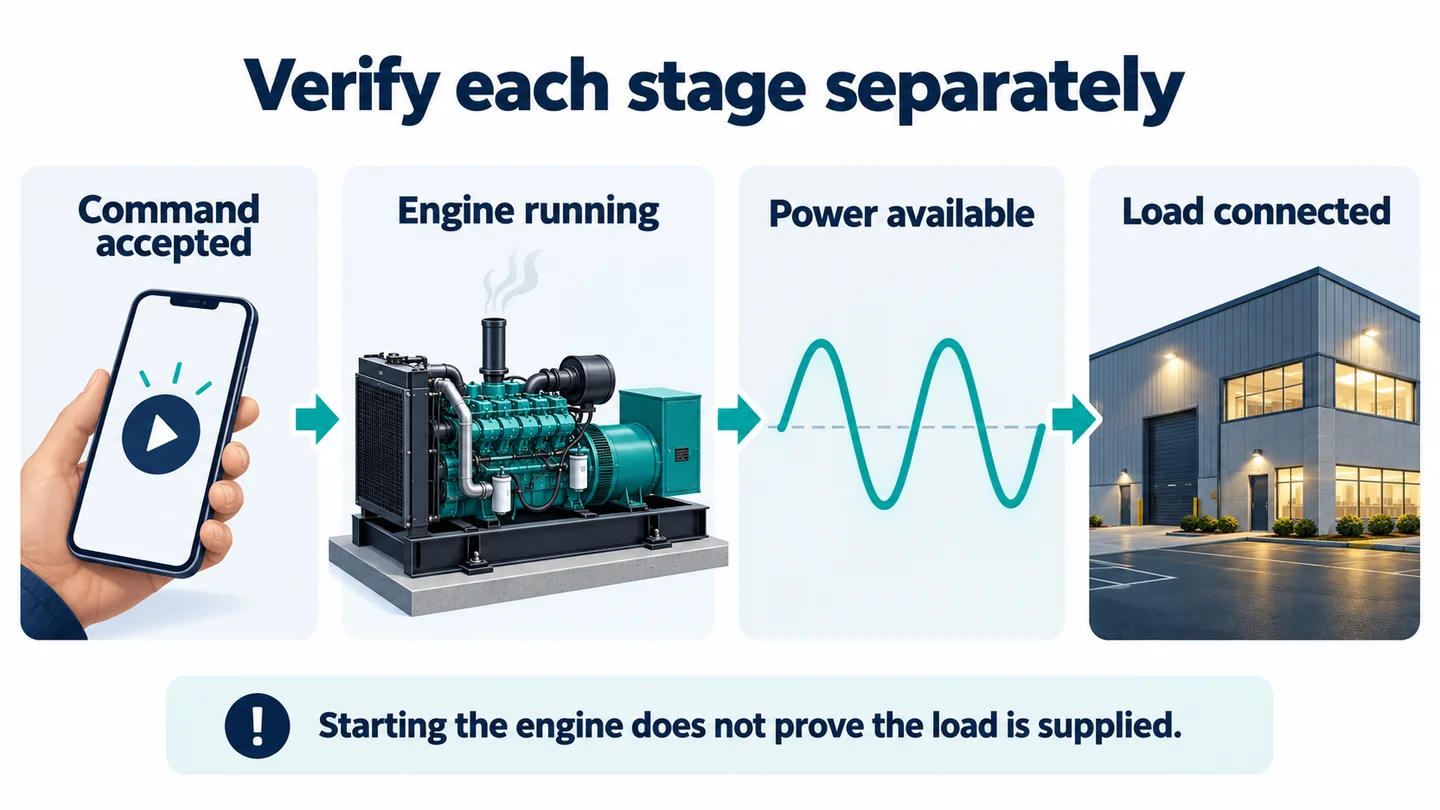
For a diesel generator set, the important distinction is this: a start command is not proof that the engine is running, and a running engine is not proof that the site is receiving power. This guide explains the complete chain, from a two-wire contact to phone-based control, and what buyers should verify before ordering.
The Remote-Start Signal Path
Remote starting moves the operator’s command away from the generator, but the engine-starting decisions remain at the equipment. A gateway or relay is an interface, not a replacement for the generator’s local protection system.
COMMAND PATH
Operator / ATS / energy system
↓
Approved relay, receiver or communications gateway
↓
Generator controller: mode, permissions and protection checks
↓
Engine starting system
FEEDBACK PATH
Engine and electrical measurements → controller → operator / supervisory system
Functional overview only, not a wiring diagram. Power transfer to the load is a separate controlled function.
Three parts deserve separate attention:
- Command source: decides when operation is wanted. This can be a person, a mains-failure function, a timer or an energy-management condition.
- Interface: delivers a compatible contact state or supported digital command to the generator.
- Local controller and starting system: execute the request using the configured engine sequence and return status.
Electric start, remote start and automatic start describe different capabilities. An electric-start generator can still require someone to turn a key locally. A remote-start generator can wait for a human command. Automatic start adds a trigger that acts without that command. AGG’s overview of generator starting methods provides useful background on these overlapping functions.
Two-Wire, Three-Wire and Wireless Control
The interface must match the generator’s actual input requirements. “Remote-start ready” does not identify a universal connector, voltage or communications protocol.
| Arrangement | How it requests operation | What must be confirmed |
|---|---|---|
| Maintained two-wire contact | A contact stays in the requested state while operation is needed. | Contact logic, electrical ratings, controller mode and stop/cooldown behavior. |
| Separate start/stop pulses | One momentary action starts; another stops. | Approved interface or adapter, pulse requirements and feedback. |
| Radio key fob | A paired receiver passes the command to the generator’s starting controls. | Exact model compatibility, usable range, receiver power and cold-start preparation. |
| Network or cellular gateway | A supported communications link or gateway relay delivers a command. | Read/write capability, permissions, connectivity and loss-of-communication behavior. |
What does two-wire remote start mean?
In a common normally-open arrangement, closing the designated contact requests a run and opening it removes that request. The controller can still apply delays, inhibits and cooldown. The contact does not carry starter-motor current. A dry, or potential-free, contact provides switching rather than its own supply voltage; never assume that an input accepts an externally applied voltage.
Other logic arrangements exist. Bernini’s explanation of start-input logic illustrates both normally-open and normally-closed configurations. Consequently, a broken control wire does not have the same consequence in every system. Confirm the documented normal and fault states rather than treating one wiring convention as universally fail-safe.
Why is three-wire starting different?
A system needing separate start and stop pulses cannot automatically be treated as a maintained-contact system. An approved interface may be needed. Victron’s three-wire interface guidance explains this distinction. Terminal assignments and pulse timing must come from the specific equipment documentation, not a generic internet diagram.
How does starting from a phone work?
A phone communicates with a compatible receiver, gateway or remote platform. That system then passes an authorized request to the local controls. Depending on the product, the path may use local wireless communication or an internet/cellular connection. Northern Tool’s remote generator options guide distinguishes remote control, monitoring, telematics and SCADA applications.
Do not buy on the word “connected” alone. Ask the supplier to demonstrate an actual permitted start and stop, not just a dashboard displaying voltage. Remote monitoring can be available without remote-control permission or compatible command support.
What Happens After a Start Request?
A successful request initiates a controlled sequence, not continuous direct operation of the starter. The exact steps and timers depend on the engine, controller and site design.
- Request recognized: the local controller receives the configured input or supported command.
- Start permission checked: the required operating mode is active and no relevant inhibit or shutdown condition blocks starting.
- Engine preparation: the system performs the model’s required pre-start functions, such as preheat where fitted.
- Cranking: the starting system turns the engine and the fuel/engine controls allow it to run.
- Running detected: the controller terminates cranking using its configured engine-running detection and continues protection monitoring. An unsuccessful attempt follows the configured rest/retry or fail-to-start logic.
- Power accepted and load connected: where the installation includes automatic loading, the appropriate controls check generator output and operate the transfer or switching equipment.
On a normal stop request, the system may first remove the load and apply a cooldown period before stopping the engine. A protective shutdown can follow a different sequence. Do not impose one universal delay or number of crank attempts on all machines. MTS’s controller sequence overview is a useful introduction; actual settings belong to the approved equipment configuration.
Basic local control also remains important. For example, DSE documents manual/automatic control and engine monitoring in its DSE3110 control module. The controller model and its configured operating mode matter more than the appearance of a remote start button.
ATS, Off-Grid and Remote-Site Applications
The same generator-start input can serve different applications, but the trigger and load-control responsibilities must be defined for each one.
Building backup through an ATS
In a typical standby installation, a mains-monitoring or ATS control function requests engine operation after detecting an unacceptable utility supply. The transfer equipment connects the load only when the applicable conditions are satisfied. Remote start alone does not isolate a building from the utility or prevent backfeed. See our separate guide to how an ATS works with a generator for the transfer sequence.
Battery charging in an off-grid system
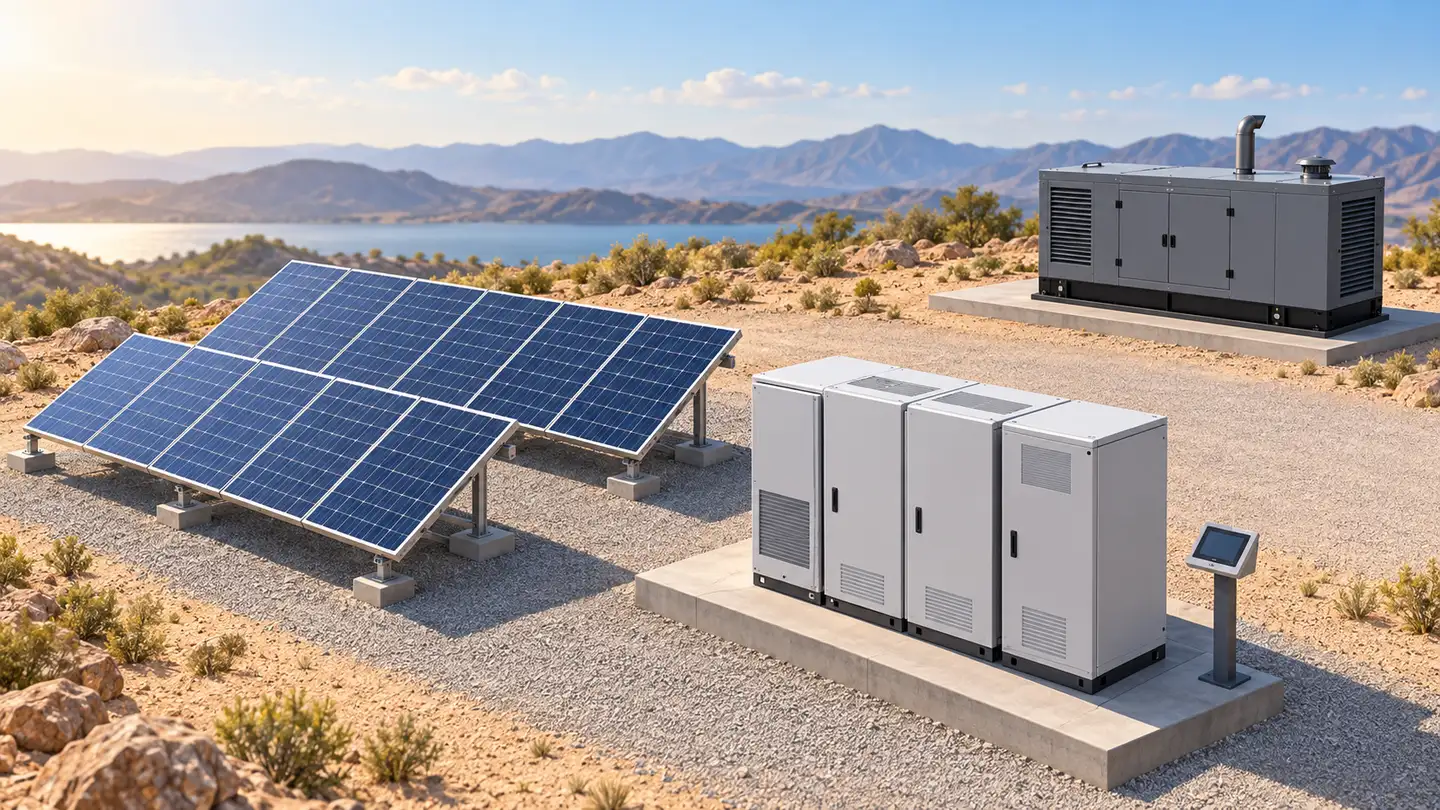
An energy controller can request generator operation when a configured battery or load condition is met, then remove the request when the stop condition is satisfied. Quiet hours and exercise schedules may also be supported. Canadian Energy’s AGS introduction explains these functions. Select thresholds for the actual battery, inverter and operating policy; another installation’s example values are not commissioning defaults.
Unattended or distributed sites
A remote site benefits from feedback as much as from a start command. ControlByWeb’s generator monitoring application separately monitors run status, transfer state and other measurements. That separation is useful: a green command indicator should not be mistaken for confirmation that a pump, workshop or communications load is powered.
Why a Remote Start Can Fail
First identify how far the request progressed. This avoids treating every failure as a phone, Wi-Fi or starter problem.
| Observed state | What it establishes | Next evidence to obtain |
|---|---|---|
| Command sent | The remote interface attempted a request. | Did the local controller actually receive and accept it? |
| Request accepted, no crank | The command path may be working. | Local mode, inhibits, alarm record and starting-system condition. |
| Engine running, no accepted power | Starting succeeded, but electrical readiness is not established. | Measured generator output and any electrical protection indication. |
| Generator available, site still unpowered | Usable output may exist without load connection. | Transfer/switch position, permissions and downstream protection state. |
This is a diagnostic framework, not an instruction to open energized equipment. Record timestamps, the first alarm and displayed operating mode; have a qualified technician investigate the relevant stage. Do not repeatedly reset faults or bypass protection to force a remote start.
What happens if the internet disconnects?
Loss of phone/cloud access is not necessarily loss of local automatic control. A separately operating local ATS or controller may continue its approved sequence, while remote commands and status updates become unavailable. Conversely, if the start decision depends on unavailable network data, its behavior needs explicit design and testing.
Victron’s GX generator manual documents selectable behavior for loss of communication with the inverter/charger when start/stop conditions depend on that data. That specific setting should not be confused with a universal response to internet failure. Ask what happens after each failure: cloud outage, local communication loss, gateway power failure and control-wire break.
What to Specify and Test Before Purchase
Specify the required behavior, not simply “with remote start.” A supplier should be able to identify which components perform each function and how successful operation will be verified.
- Equipment identity: generator, engine and controller models, relevant firmware and existing drawings.
- Requested function: local remote switch, ATS start, off-grid automatic charging, phone control or supervisory integration.
- Interface scope: documented contact or protocol requirements, required gateway/adapters and who supplies them.
- Feedback: command acceptance, engine run, electrical availability, load connection and faults as separate indicators where needed.
- Failure policy: behavior on lost communications, restart after restored power and conflicting start/stop requests.
- Access and support: authorized operators, secure remote access, event records, ongoing connectivity costs and responsibility for configuration.
- Acceptance test: demonstrate normal start/stop, blocked start, lost communications and controlled return to normal operation under an approved site test plan.
Illustrative acceptance scenario: a buyer wants remote exercise of an unloaded standby generator. A useful demonstration shows the command being accepted, the engine running, the intended no-load state, and the normal shutdown sequence. If the commercial requirement is instead to restore site power, the test must also prove the approved transfer and load-supply stages. These are different acceptance criteria, even if both demonstrations begin with the same Start button.
Safety boundary: remote-start capability creates an unexpected-start hazard during service. Use the applicable site isolation and lockout procedure; a software Stop button is not a substitute for verified energy isolation. OSHA’s hazardous-energy guidance explains the principle. Portable generators must also be used outdoors away from openings that could admit exhaust, as described in OSHA’s portable-generator safety guidance. Fixed installations require their own approved ventilation, exhaust and electrical design.
Common Questions
Can any generator be converted to remote start?
No. Compatibility depends on the starting system, controller inputs and engine preparation requirements. A manual-start machine or a portable model requiring manual fuel/choke operation may need more than a receiver. Obtain a manufacturer-approved solution; do not assume a universal kit makes it suitable for unattended operation.
Does remote start need the internet?
Not necessarily. A wired switch or compatible local radio system can operate without internet access. An internet-based service needs its specified communications path for remote interaction. Check both the command path and the local fallback behavior.
Does remote start automatically power the building?
No. Starting the engine and transferring electrical loads are separate functions. Building supply requires correctly designed switching, protection and interlocking equipment. Never connect a generator to building wiring through an improvised backfeed arrangement.
What should I send when requesting a generator quotation?
Send the required load, voltage, frequency, duty and destination, plus the desired remote-start method and any existing ATS or energy-controller model. For a retrofit, include the generator/controller nameplates and available documentation. Explore Zentramo generator sets or contact our team to review the required configuration. Remote-control compatibility and supply scope should be confirmed for the specific project before ordering.
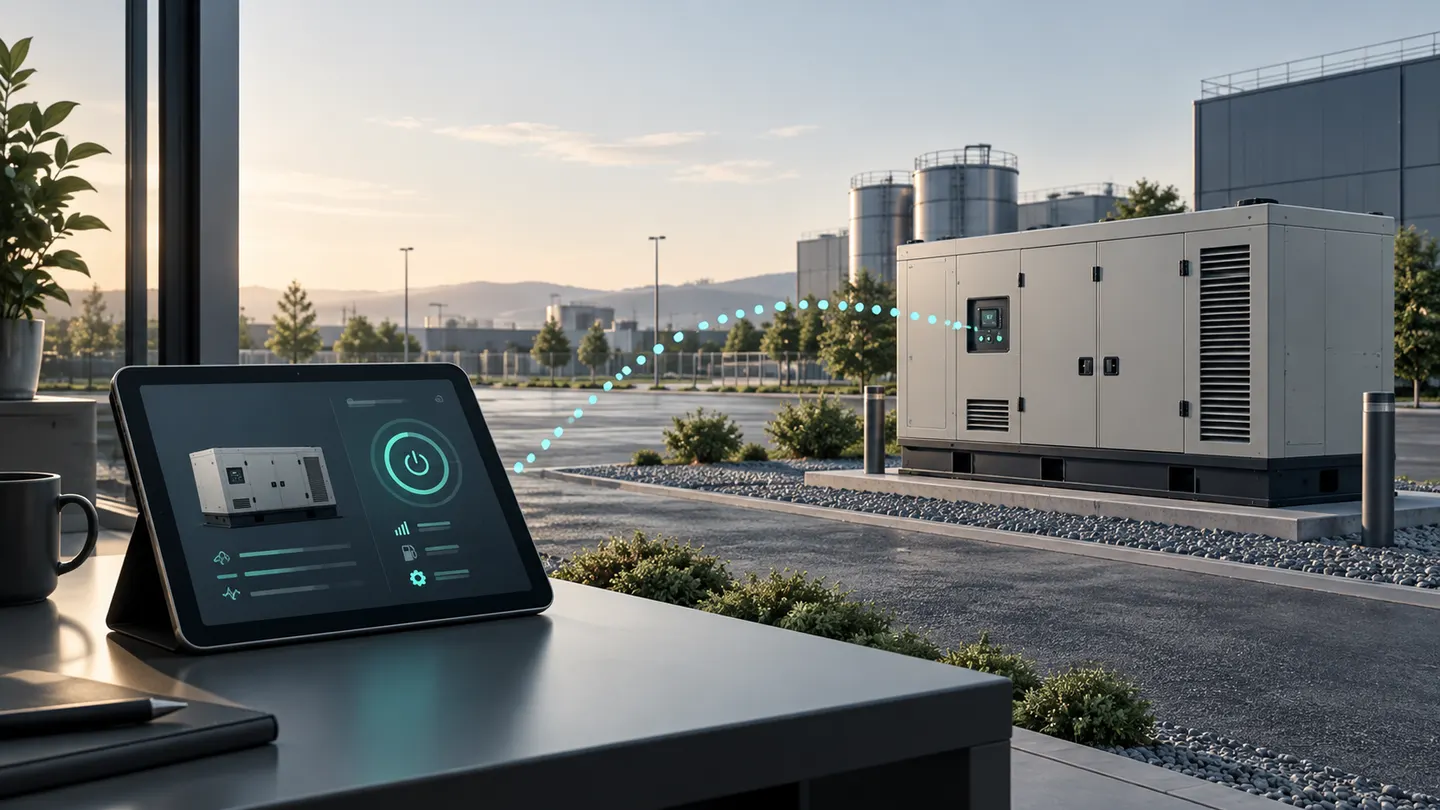
Illustration note: the cover and three body images are AI-generated conceptual illustrations, not photographs of Zentramo equipment or customer installations.