
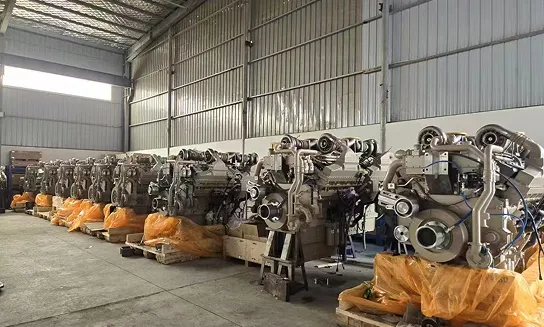
How to Choose the Right Engine for BelAZ 7555 Mining Trucks
Choose a replacement engine for a BelAZ 7555 by identifying the exact truck modification and installed engine, then matching the approved rating, torque-speed behaviour, mechanical interfaces, cooling and controls. Compare candidates against a written compatibility schedule before price. A model-family name or similar horsepower does not establish a direct replacement.
This guide is for fleet buyers and engineering teams handling replacement or repower decisions. Original configurations, production changes and previous repowers can differ; the truck’s records and installed equipment are the starting point.
1. Confirm the Truck Variant and Installed Engine
Record the full truck model/suffix, chassis serial number, engine model/serial number, configuration or CPL where applicable, rating and transmission/drive details. Photograph the nameplates and relevant connections. Check service history for previous engine or drivetrain changes.
For a Cummins engine, QuickServe’s engine-specific records help establish the original build. Use truck documentation as well: an engine service listing does not approve its installation in a different truck. Avoid a single engine recommendation for the entire 7555 family.
2. Match Performance to the Haul Duty
Compare the approved power and torque curves at their stated speeds, not peak horsepower alone. The drive system depends on the engine’s usable speed range and response. Review gross/net rating basis, accessory loads, operating limits and how the rating applies at site altitude and temperature.
Describe haul routes, grades, payload practice, cycle time and expected hours. These inputs help evaluate cooling and sustained duty. More power can exceed other system capabilities or create new heat rejection and control requirements. A repower should be approved as a system change.
3. Compare the Physical and Control Interfaces
| Interface | Evidence to compare | Why it matters |
|---|---|---|
| Envelope and mounting | Dimensions, mounts, sump and clearances | A block can fit while accessories collide |
| Drive connection | Housing, flywheel/coupling and approved alignment | Incorrect fit loads connected components |
| Cooling | Heat rejection, connections and airflow design | Catalogue power is unusable if the system overheats |
| Intake/exhaust | Routing, restriction and back-pressure requirements | Affects performance and installation life |
| Controls/electrical | ECU, harness, sensors, start/stop and protection | Matching connectors do not prove correct functions |
| Accessories | Starter, charging and driven equipment scope | A bare engine may omit essential equipment |
Use a line-by-line yes/no/exception schedule signed by the responsible parties. Resolve adapters, replacement accessories and control changes before accepting a complete-engine quotation.
4. Worked Example: Like-for-Like Supply or Repower
Assume an illustrative fleet buyer has an identified 7555 truck and a serviceable original installation. Candidate A is offered with matching documented build and accessories. Candidate B shares a power class but needs housing, cooling and ECU changes.
- Verify A against serial/build records; a seller’s direct-fit phrase is not sufficient.
- For B, obtain the engineered change list, approval responsibilities and commissioning requirements.
- Include conversion components, labour, downtime and tests in B’s total cost.
- Reject either proposal when unresolved interface details prevent a defensible installation plan.
A like-for-like candidate may reduce integration work, while an approved repower may have a sound project reason. The comparison should expose the actual work rather than imply that higher advertised output is always better.
5. Compare New, Rebuilt and Used Supply on Evidence
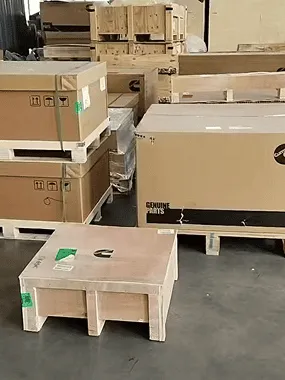
For a new engine, confirm build, preservation, included accessories and documents. For a rebuilt engine, request the measured inspection, replaced/reused parts, machining and test scope. For used supply, obtain identity, history where available and condition evidence. A fresh paint finish or a no-load video cannot establish remaining service life.
State what is included: complete assembly, long block or another scope. Agree on accessory transfer, compatibility, test conditions and warranty boundaries. Keep core-return or exchange obligations separate from the headline price.
6. Evaluate Serviceability and Total Replacement Cost
Check routine consumables, critical parts, diagnostic access and practical service support at the mine. Plan packing, lifting, storage, destination transport and the installation window. Confirm lead time and warranty terms in the actual quotation, not as a standard industry promise.
Compare engine cost plus freight, adapters, controls, cooling, installation, testing and anticipated downtime. Coordinate receiving inspection before dismantling the old engine. Use the BelAZ installation checklist to define hold points.
BelAZ 7555 Engine Selection Questions
Can I order from the truck model alone? It is insufficient for final fit confirmation. Include the full variant, installed engine/build and interface information.
Can higher horsepower improve productivity? Only within an approved system design considering drivetrain, cooling, controls and duty. A rating increase alone does not establish suitability.
Should all accessories transfer from the old engine? Only when their identity, condition and compatibility are confirmed in the replacement plan.
Send a Compatibility-Based Engine Enquiry
Send truck and engine nameplates, build/configuration details, drive connection, interface photographs, site duty, desired condition and included scope. Ask for the offered engine identity, curve/rating basis, compatibility exceptions, test records and installation responsibilities.
Send the BelAZ 7555 requirement to Zentramo. Compare written fit and scope before approving the order.