
Self Loading Mixer Trucks for Larger Batches and Continuous Pours
Combine material loading, weighing, mixing, site travel and discharge in one diesel-powered machine for infrastructure, industrial foundations and remote projects that need more concrete at the workfront.
What Is a Large-Capacity Self Loading Mixer Truck?
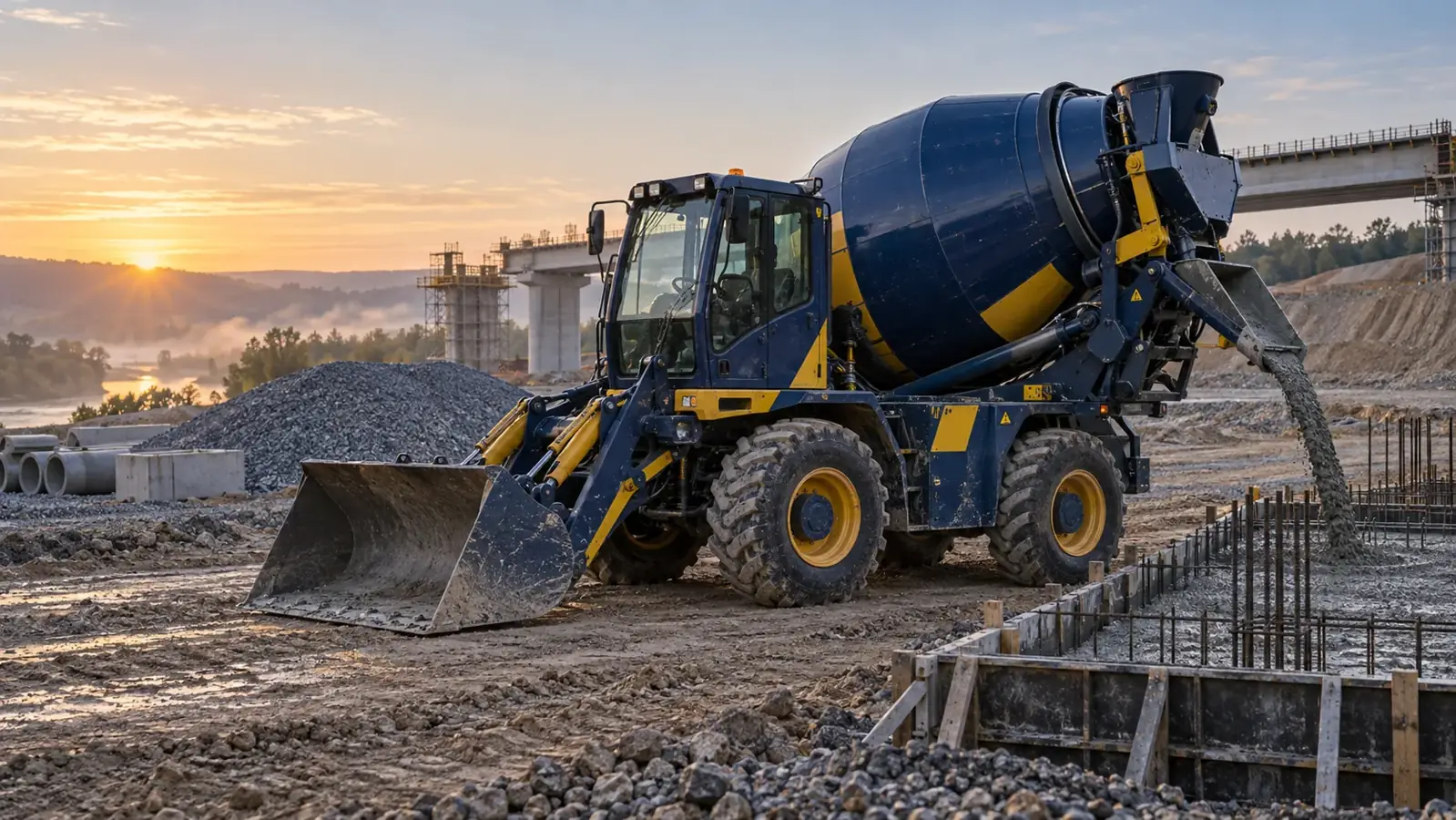
A self loading mixer truck combines a loading bucket, onboard weighing and water systems, a rotating mixing drum, a mobile 4WD chassis and controlled discharge in one machine. The operator can collect raw materials near the workfront, prepare a batch, move it a short distance and place concrete without depending on a separate wheel loader and stationary mixer for every cycle.
The 4.0–6.5 m³ range is intended for projects where each batch and the continuity of the pour matter. It is different from a road-going transit mixer, which normally receives ready-mixed concrete from a batching plant and transports it to the site.
Compare plant-to-site transit mixer trucksLoading Bucket
Self-loads aggregates and cement directly from site piles.
Onboard Weighing & Water
Controls the mix ratio without external batching plants.
Rotating Mixing Drum
Homogenizes the batch during transit to the pour point.
4WD Chassis
Navigates uneven terrain and muddy site conditions.
Controlled Discharge
Places concrete exactly where needed via slewing drum and chutes.
Choose the Capacity Direction Around the Pour Plan
Zentramo's published range includes 4.0, 5.5 and 6.5 m³ capacity directions. Final dimensions, power package, operating weight, discharge arrangement and destination configuration are defined by the confirmed quotation.
4.0 m³ Self Loading Mixer Truck
A practical starting point when the project needs larger batches but still values maneuverability between material piles, narrow work zones and multiple pour points. Zentramo's published representative specification lists 92 kW for the 4.0 m³ model direction.
Selection Cues:
- Access width and turning area
- Required batches per shift
- Ground bearing condition
- Discharge position
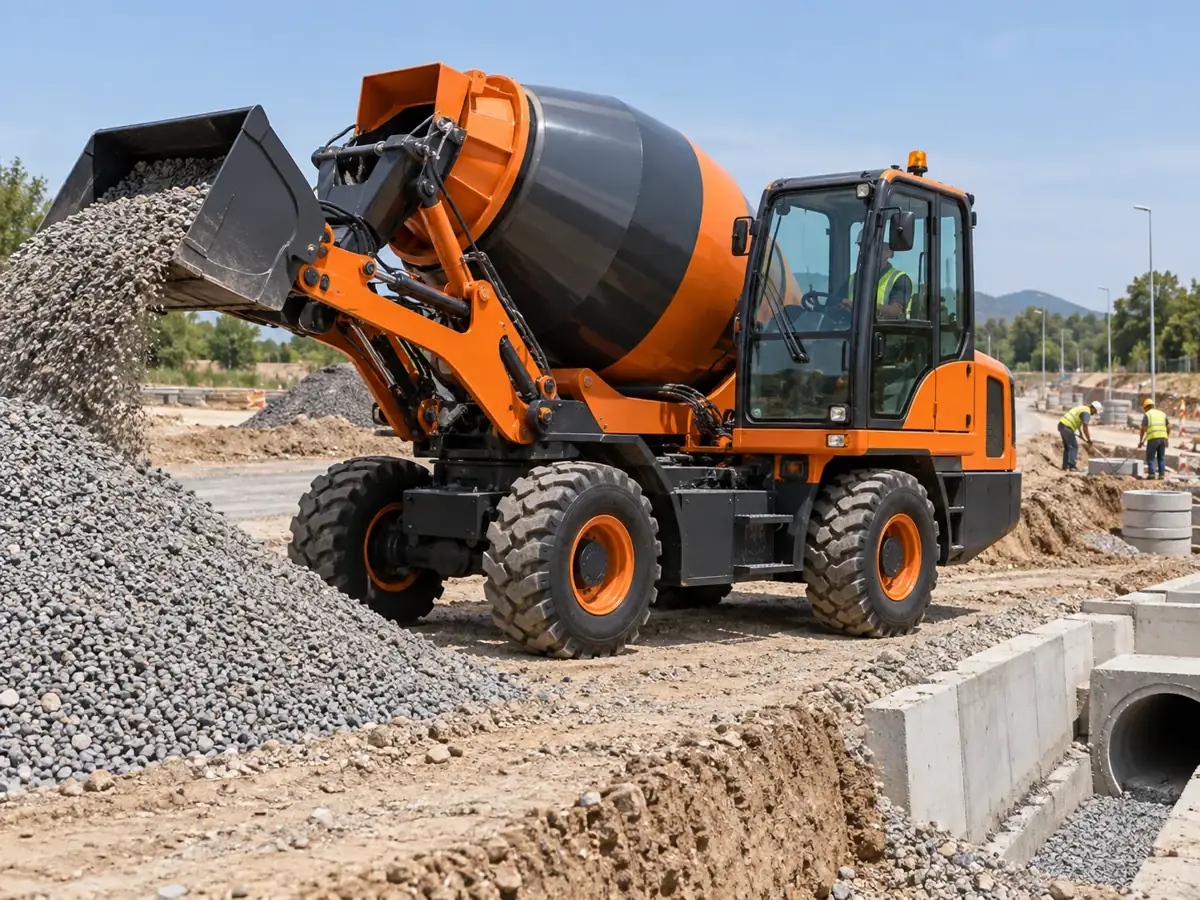
5.5 m³ Self Loading Mixer Truck
Suited to projects that need a higher volume per cycle and have enough material staging, water supply, operating space and ground support for a larger machine.
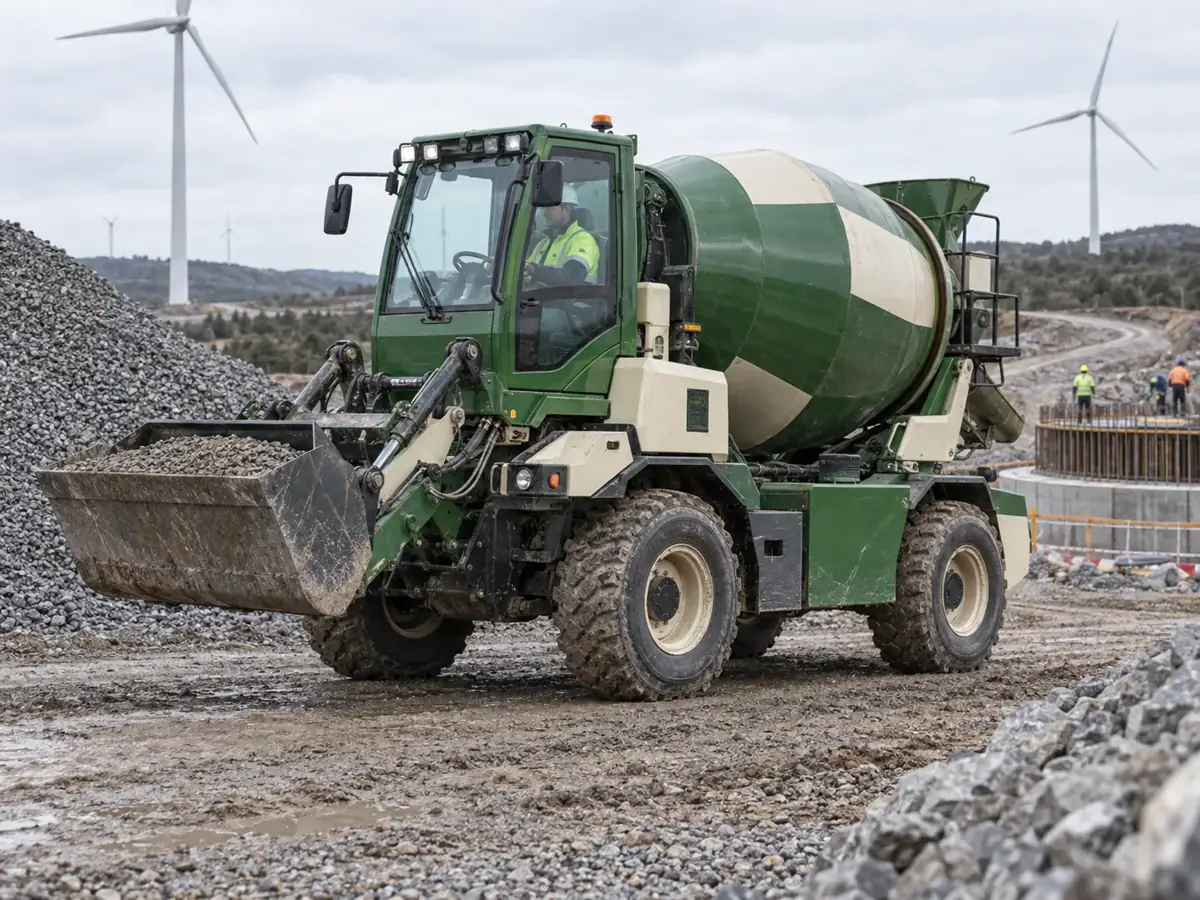
Selection Cues:
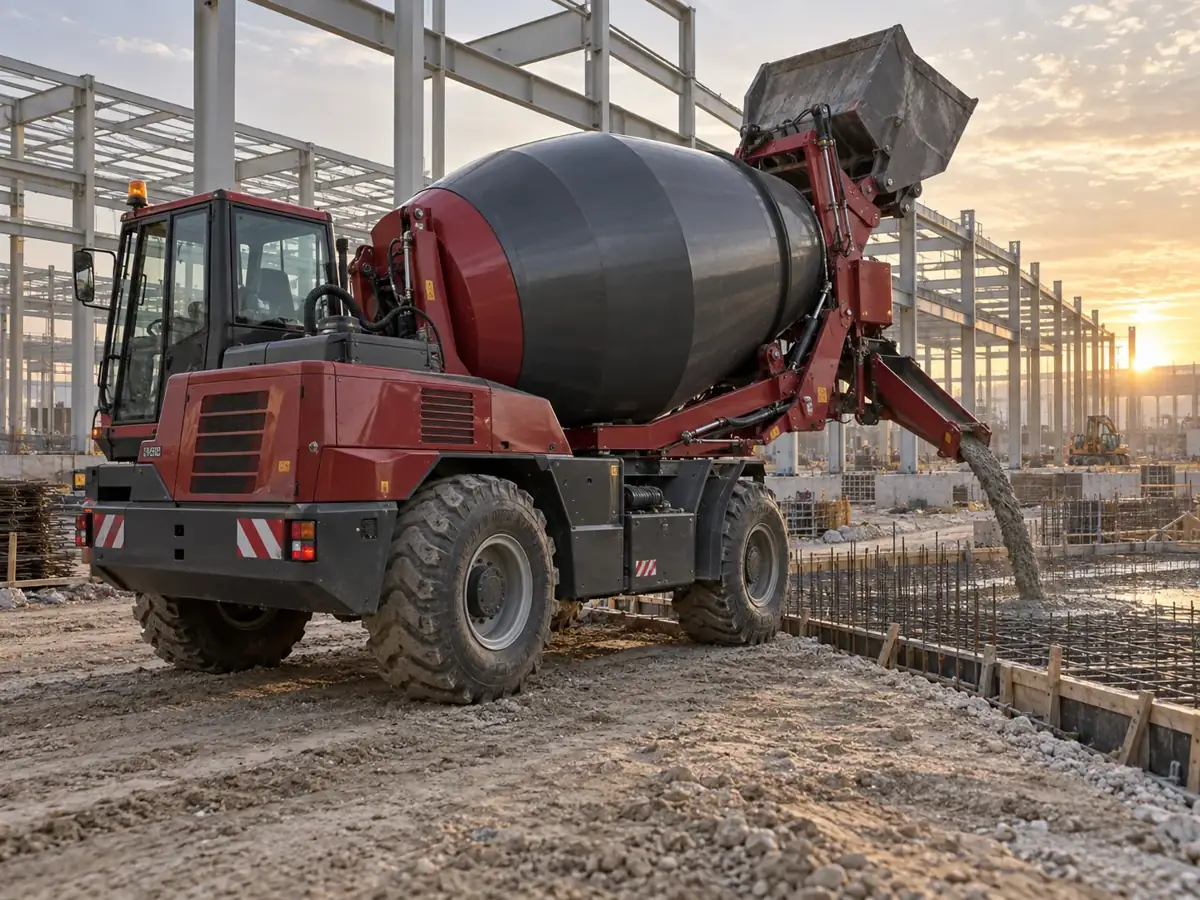
6.5 m³ Self Loading Mixer Truck
The largest capacity direction in Zentramo's published range, intended for open sites where high batch demand is matched by adequate access, stable ground, organized material supply and a pour front that can receive the output.
Selection Cues:
- Jobsite layout
- Ground and slope assessment
- Batch receiving rate
- Transport and shipping envelope
Capacity Range Tip: Capacity alone does not determine daily output. The complete loading, weighing, mixing, travel, discharge, wash-down and return cycle controls how many batches the site can complete.
Compare 4.0, 5.5 and 6.5 m³ by Site Fit
| Decision factor | 4.0 m³ | 5.5 m³ | 6.5 m³ | What to verify |
|---|---|---|---|---|
| Batch-volume direction | Base large batch | Higher volume | Maximum batch | Usable concrete yield per cycle vs. drum volume |
| Work-zone space | Standard | Expanded | Wide open | Turning radius and overall operating dimensions |
| Material staging | Moderate piles | Large staging | Continuous heavy supply | Bucket path and loader clearance |
| Water replenishment | Standard tank | Higher demand | Maximum demand | Onboard capacity and site refill speed |
| Ground bearing and slope | Firm ground | Stable subgrade | Engineered haul road | Fully loaded operating weight and gradeability |
| Pour-front receiving rate | Steady | Fast | Very fast | Formwork and finishing crew capacity |
| Transport and destination | Standard flatbed/container | Check dimensions | Specialized transport often needed | Shipping envelope and local road rules |
| Published power information | representative published value 92 kW | defined by quoted configuration | defined by quoted configuration | Emissions tier and engine brand |
Choose the smallest capacity that can meet the required pour rhythm with safe access, reliable material supply and realistic cycle time. A larger drum creates value only when the rest of the site can keep it working.
Solve the Bottlenecks Around the Machine
Problem: Aggregates and cement are not staged for the next cycle
Result: the mixer waits even though drum capacity is available → organize material piles and loading order around the bucket path.
Problem: Water supply is too slow or too far away
Result: batch rhythm breaks and cleaning is delayed → plan replenishment and wash-down before sizing daily production.
Problem: Travel lanes are soft, steep or congested
Result: cycle time grows and a larger machine may lose its advantage → assess ground, turning, slope and crossing points for the selected configuration.
Problem: The pour front cannot receive the batch fast enough
Result: concrete waits in the drum while crews reposition → coordinate formwork, labor, discharge access and finishing capacity with the batch plan.
Diesel Power Keeps the Work Cycle Independent of Grid Electricity
A diesel-powered self loading mixer can load, mix, travel and discharge where grid electricity is unavailable or unreliable. This makes the equipment useful for remote roads, bridge approaches, industrial foundations, mining support areas and regions affected by frequent power cuts.
Attention
Off-grid capability does not remove site planning. Confirm destination fuel quality, emissions requirements, altitude, climate, daily fuel supply, service access and the exact engine package in the quotation.
Diesel Engine Integration
How Does a Self Loading Mixer Truck Operate on Site?
Stage Materials
Place aggregates, cement and water where the loading bucket can work without crossing the pour crew.
Load & Weigh
Collect materials and use the onboard system according to the approved mix procedure.
Add Water & Mix
Follow the specified sequence and mixing time for the concrete design and machine manual.
Travel to the Pour
Use the 4WD chassis within the permitted ground, slope and load limits.
Position & Discharge
Align the drum and chute with the prepared receiving area and control placement safely.
Wash & Inspect
Clean the drum, bucket and discharge system before residue hardens, then inspect wear points before the next cycle.
Safety Note: Actual operating sequence, load limits, drum speed, slope limits and cleaning procedures must follow the supplied manual, the approved concrete mix procedure and local site rules.
Convert Daily Demand Into a Realistic Batch Plan
Possible cycles must meet or exceed required batches; otherwise, revise the plan before allowance for breaks, refueling, cleaning, traffic and site variability.
Methodology Example:
A project targeting 120 m³/day would begin with 30 batches at 4.0 m³, about 22 batches at 5.5 m³, or about 19 batches at 6.5 m³. These are simple volume divisions, not guaranteed daily output. The measured full cycle and usable batch volume must confirm the plan.
Where a Large Self Loading Mixer Can Create Value
Fewer equipment handoffs
Loading, mixing, short-distance travel and discharge are coordinated through one machine and operator workflow.
More concrete per planned cycle
The 4.0–6.5 m³ range can reduce the number of batches required for a defined daily volume when the site can support the larger machine.
On-site production control
Material staging and batch timing stay close to the pour instead of depending entirely on ready-mix delivery traffic.
Diesel continuity
Production can continue without grid electricity when fuel, maintenance and site conditions are properly planned.
Model the Labor, Efficiency and Payback Before You Buy
Labor reduction
Possible where one trained operator replaces separate manual loading, mixing and short-distance handling tasks. Baseline crew, site layout and local work practices determine the result.
Efficiency improvement
Possible when materials, water, travel path and pour front are organized for repeated cycles. Delays outside the machine can remove the gain.
Payback potential
A high-utilization scenario, not a guaranteed return. Model purchase, fuel, operator, maintenance, finance, import, idle time and alternative concrete-supply costs with local figures.
Annual avoided cost + added project contribution − annual ownership and operating cost = project-specific economic benefit
How to Choose the Right Large-Capacity Model
| Selection question | Favor 4.0 m³ | Favor 5.5 m³ | Favor 6.5 m³ | Verify before quotation |
|---|---|---|---|---|
| Daily concrete demand | Moderate large | High volume | Maximum daily | Target volume vs. working hours |
| Available cycle time | Shorter trips | Standard cycle | Longer haul acceptable | Measured travel and loading minutes |
| Site access and turning | Restricted areas | Standard access | Open sites only | Clearance width and turning radius |
| Ground and slope | Normal bearing | Firm subgrade | Engineered base | Loaded weight limits and gradeability |
| Material and water supply | Standard staging | Large staging | Continuous heavy supply | Refill rate matches batch cycle |
| Pour-front capacity | Steady | Fast | Very fast | Crew ability to place and finish |
| Transport and rules | Standard logistics | Check limits | Specialized transport | Shipping dimensions and road laws |
| Service and spare parts | Standard | Critical | Highly critical | Maintenance plan and parts stock |
If the site cannot stage materials, replenish water and receive each batch at the planned rhythm, improve the workflow before moving to the next capacity.
Avoid These Self Loading Mixer Truck Buying Mistakes
Warning
- Choosing only by drum capacity
- Using theoretical batches as guaranteed daily output
- Ignoring ground bearing and turning space
- Assuming all diesel packages meet destination rules
- Accepting an incomplete component list
- Comparing machine price without import, fuel, maintenance and downtime
- Trusting a "top-rated" list without verification
Better Check
- Usable batch basis
- Measured full-cycle study
- Site layout and slope review
- Engine and emissions documents
- Hydraulic, weighing, water and discharge configuration
- Landed-cost model
- Legal supplier identity, current product media tied to the quotation, inspection scope, manuals, planned spares and contract terms
Build the Order Around a Checkable Configuration
A large self loading mixer should be quoted as a complete operating configuration rather than a capacity label. Zentramo reviews the requested capacity direction, worksite and destination as an export equipment inquiry; the confirmed quotation and contract define the supplied machine.
Quotation Package Checklist
Self Loading Mixer Truck Buyer Guide
Which model is best for a construction project?
What are the main advantages of a self-loading concrete mixer?
- Integrated material loading and mixing
- Fewer equipment handoffs
- Short-distance movement between material and pour zones
- Diesel operation without grid electricity
- Batch timing controlled close to the workfront
The value depends on utilization and site organization; it is not created by drum size alone.
How does it operate on a construction site?
Where can I buy a self loading mixer truck near me?
How should I assess a top-rated truck or supplier?
Continue Your Mixer Selection
- Full Self Loading Concrete Mixer Range — Compare the broader 1.2–6.5 m³ family.
- Compact Self Loader Mixers — Review 1.2–2.0 m³ options for restricted access and scattered small pours.
- General-Purpose Mobile Cement Mixers — Review 2.6–3.5 m³ options for medium-volume municipal and building work.
- Cement Mixer Lorry Selection — Compare on-site production and concrete transport workflows.
- Discuss Your Project — Send destination and worksite requirements.
Request a 4.0–6.5 m³ Self Loading Mixer Configuration
Share the daily concrete target, material and water plan, measured cycle distance, ground and slope conditions, pour method, destination and preferred capacity direction. These details allow the configuration and quotation scope to be discussed against the real work cycle.