What Is a Skid Steer Attachment?
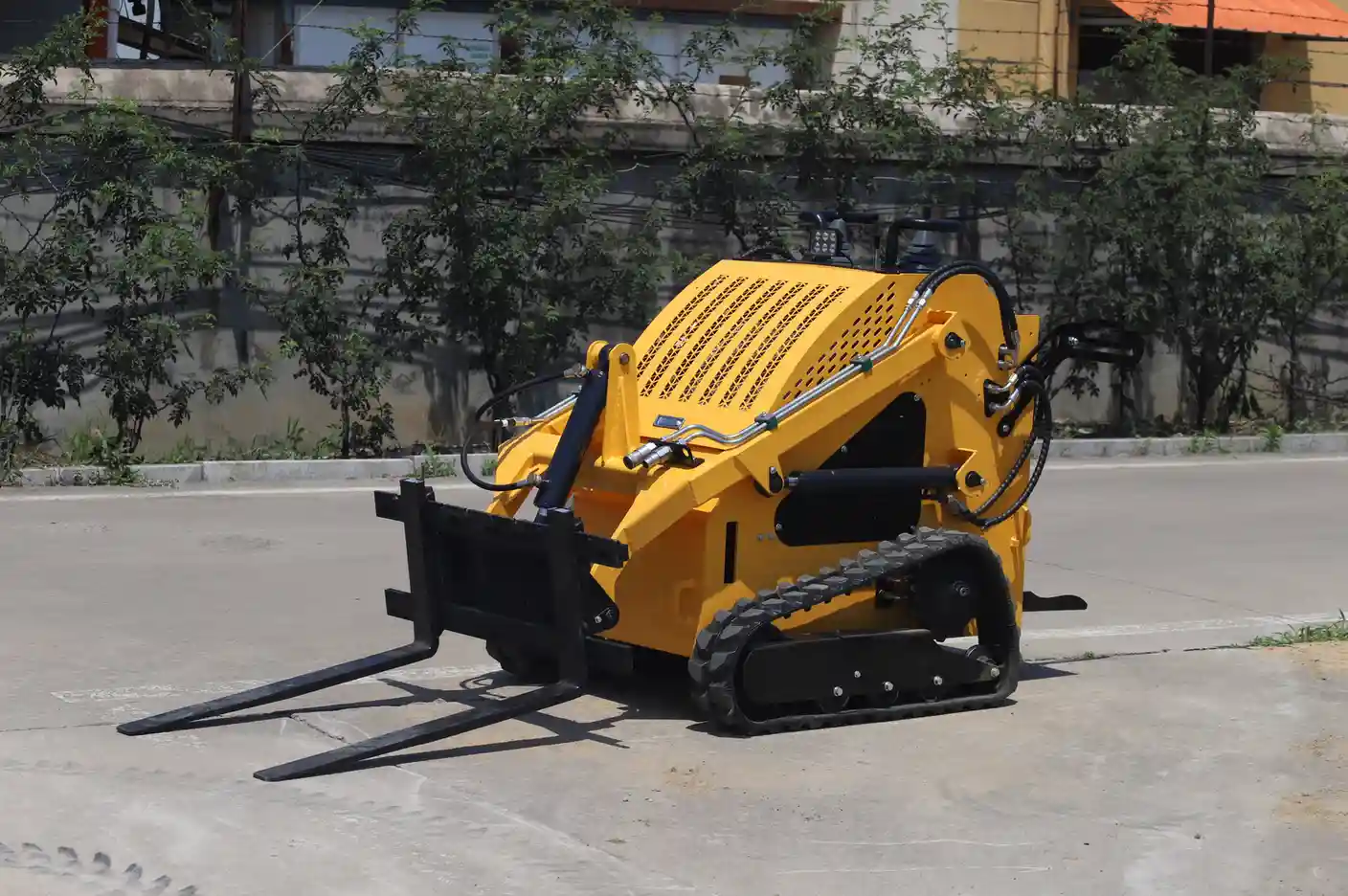
A skid steer attachment is an interchangeable work tool connected to a skid steer loader to perform a specific job. A bucket moves loose material, pallet forks carry palletized goods, and an auger drills holes. The loader supplies movement and lifting force; powered attachments also use its auxiliary hydraulic system.
Changing the attachment changes what the machine can do. However, a tool that fits the mounting plate is not automatically safe or productive on that loader. Its weight, hydraulic requirements and controls must also match.
Attachment, Accessory or Replacement Part?
In equipment purchasing, these terms sometimes overlap. A useful distinction is whether the item changes the machine’s working function.
- Attachment: a complete working tool, such as a grapple, sweeper or trencher.
- Accessory: an additional feature, such as a camera or work light, that supports operation.
- Replacement or wear part: an item that restores an existing tool, such as a bucket cutting edge, auger tooth or hydraulic hose.
A bucket supplied with a new loader still counts as an attachment. Ordering a replacement bucket and ordering replacement bucket teeth are therefore different requests. For background on the carrier itself, see how a skid steer works.
How Do Skid Steer Attachments Work?
The mounting system holds the tool
The front coupler joins the tool to the loader arms. On many full-size machines, a skid steer quick-attach interface, often called SSQA, uses an upper engagement surface and lower locking pins. Manual and powered locking mechanisms are available. A powered coupler operates the lock; it does not necessarily connect the attachment’s hydraulic hoses automatically.
Loader hydraulics lift; auxiliary hydraulics power
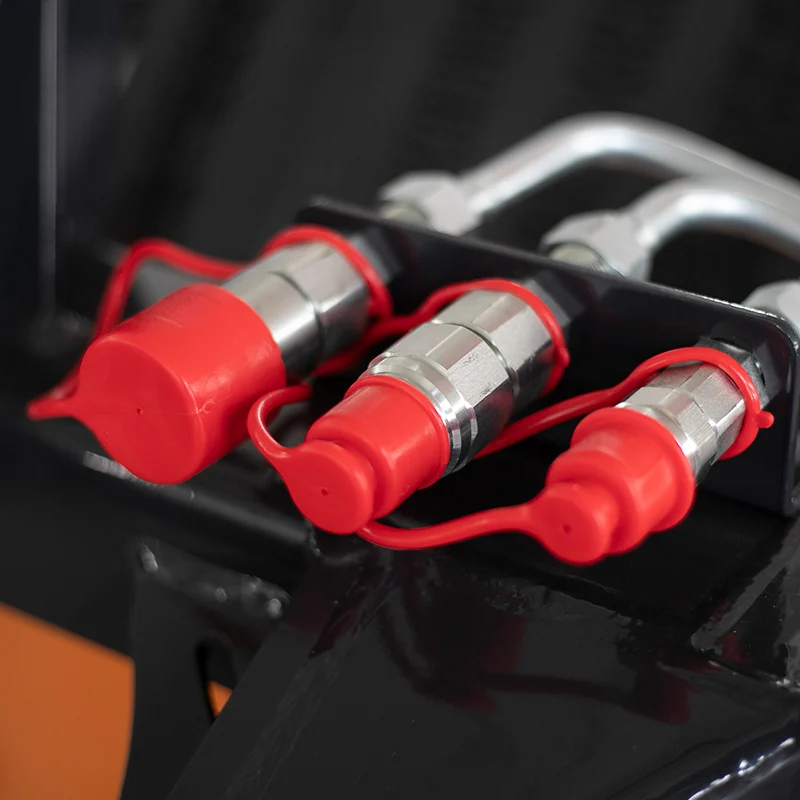
A conventional bucket or manually adjusted pallet fork needs no separate hydraulic supply to the tool. The loader’s own lift and tilt cylinders position it. By contrast, a grapple uses auxiliary oil to move its clamp, while an auger or sweeper uses oil to drive a motor. Some powered tools also need an electrical control connection.
Bobcat’s hydraulic overview makes this distinction between non-hydraulic tools and attachments requiring hydraulic or control connections. Always confirm the arrangement for the exact model.
Common Skid Steer Attachments and What They Do
| Attachment | Typical job | Key selection check |
|---|---|---|
| General-purpose bucket | Load soil, gravel or mulch | Bucket volume, material density and approved capacity |
| Pallet forks | Move pallets and stacked supplies | Fork rating, load center and loader lifting limits |
| Grapple | Hold brush or irregular debris | Jaw opening, tool weight and auxiliary connections |
| Auger | Drill holes for posts or planting | Bit type, hole size, ground conditions and drive compatibility |
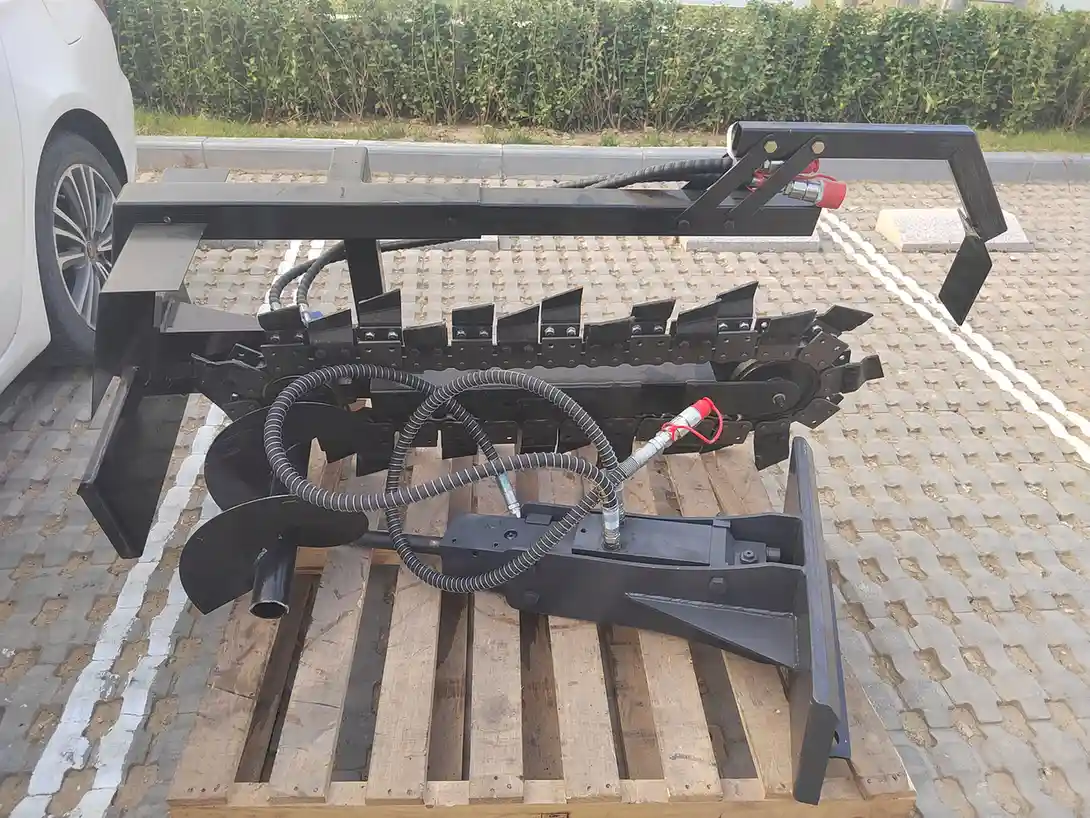
| Trencher | Cut narrow utility or drainage trenches | Depth, chain specification and hydraulic demand |
| Broom or sweeper | Move or collect surface debris | Working width, collection method and flow requirement |
| Hydraulic breaker | Break suitable concrete or rock | Approved carrier size and operating flow/pressure |
| Brush cutter or mulcher | Cut or process vegetation | Material rating, hydraulics and required protective equipment |
These are tool families, not universal specifications. A compact landscaping trencher and a larger production trencher can have very different requirements. Dealer guides from Stowers CAT and H.O. Penn illustrate the range of work tools and applications.
Are Skid Steer Attachments Universal?
Many full-size skid steers and compact track loaders share a common quick-attach interface. That makes cross-brand use possible, but not guaranteed. Mini skid steers, older machines and specialized couplers may use a different interface. Even matching plates do not prove that the complete machine-and-tool combination is approved.
Use five checks before buying or renting:
- Mechanical fit: confirm coupler dimensions, locking engagement and clearance throughout the permitted lift and tilt movement.
- Capacity and balance: check attachment weight, load position and the manufacturer’s limits for that configuration. A fork’s capacity label is not the loader’s capacity.
- Hydraulic match: compare the tool’s allowed flow and pressure with the machine’s available auxiliary output.
- Connections and controls: confirm hose couplers, any required case-drain connection and compatible electrical controls.
- Application approval: check required guarding, cooling capability and restrictions for the intended material and duty.
An adapter can change the interface, but it does not increase hydraulic output or lifting capacity. Its additional weight and forward offset also need evaluation. Skid Steer Solutions’ compatibility guide similarly separates mounting compatibility from size, weight and hydraulic requirements.
Does Every Attachment Need High-Flow Hydraulics?
No. Ordinary buckets and manually adjusted forks do not require auxiliary flow. Many hydraulic attachments have standard-flow versions. More demanding tools may require a high-flow package, but attachment names alone are insufficient: different versions of a trencher, cutter or snowblower can have different requirements.
Compare the actual specifications, not just the labels. Flow is measured in GPM or L/min; pressure is measured in psi or bar. Neither figure substitutes for the other. More flow is not automatically better if it exceeds the attachment’s permitted range. Bobcat’s attachment-matching guidance explains why the hydraulic package must follow the intended work tool.
A Practical Example: Forks Versus a Powered Auger
Suppose a contractor needs to unload fencing materials and then drill post holes. Pallet forks address the first task; an auger addresses the second. This is an illustrative planning example, not a claim that any particular loader supports both tools.
For the forks, start with pallet weight, load center, fork specification and the approved lifting configuration. For the auger, add drive-head flow and pressure requirements, bit diameter and ground conditions. A successful fork match says little about auger compatibility because the two attachments place different demands on the same machine.
What Should You Send an Attachment Supplier?
Provide the loader make, model, serial-number range and installed hydraulic package, together with the intended material and task. Include mounting-interface photos, auxiliary flow and pressure, available connections, required working width or depth, and the proposed attachment model.
Ask for written compatibility confirmation and the relevant operating manual. For repeat-use tools, also check wear-part availability, hose protection, service access and transport dimensions. These details make competing quotations comparable without assuming that a heavier or more expensive tool is automatically the right one.
Safe Attachment Changes and Care
Follow both manuals for parking, lowering the tool, shutdown, pressure relief, locking and connection checks. Keep people outside the work area. Never work beneath unsupported raised loader arms, and never use your hands to search for a hydraulic leak.
Keep coupling faces clean, protect disconnected lines and inspect hoses and locking components before use. Use the specified lubrication intervals rather than a generic schedule. Caterpillar’s quick-attach guidance emphasizes secure connections, clean couplings and model-specific manual instructions. Excavation also requires locating underground services before work begins.
The Main Point
A skid steer attachment gives one loader a different working function. The right choice starts with the job, then checks the mounting system, capacity, hydraulics and controls as a complete combination. Tell Zentramo which loader and task you are planning so the machine and attachment requirements can be reviewed together before you order.