
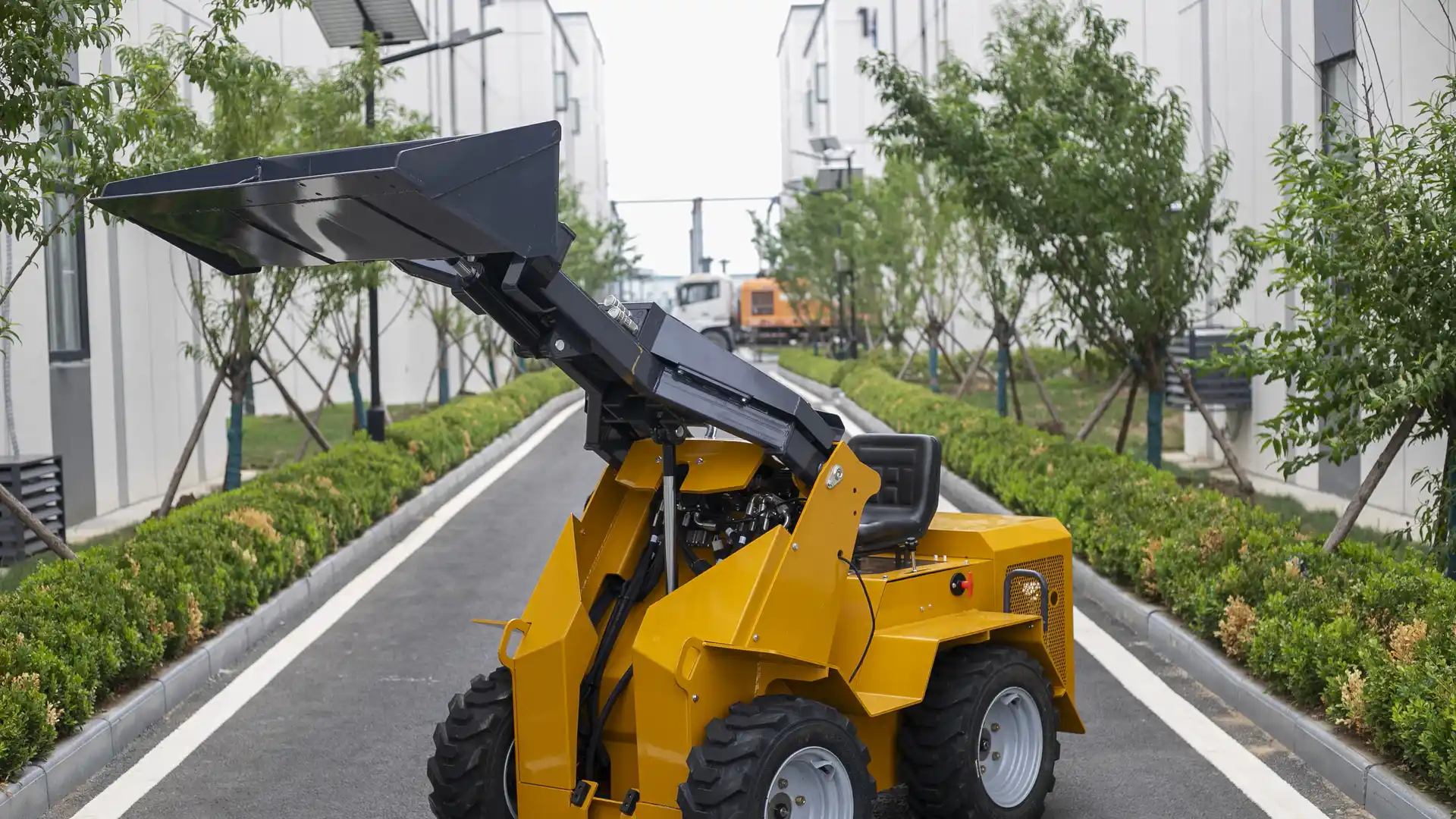
What Is a Skid Steer Loader?
A skid steer loader is a compact, rigid-frame machine that uses independently driven wheels on its left and right sides to turn. Instead of steering by angling the wheels, it changes the speed or direction of each side. This makes the tires skid across the surface and allows the machine to pivot within a very small area.
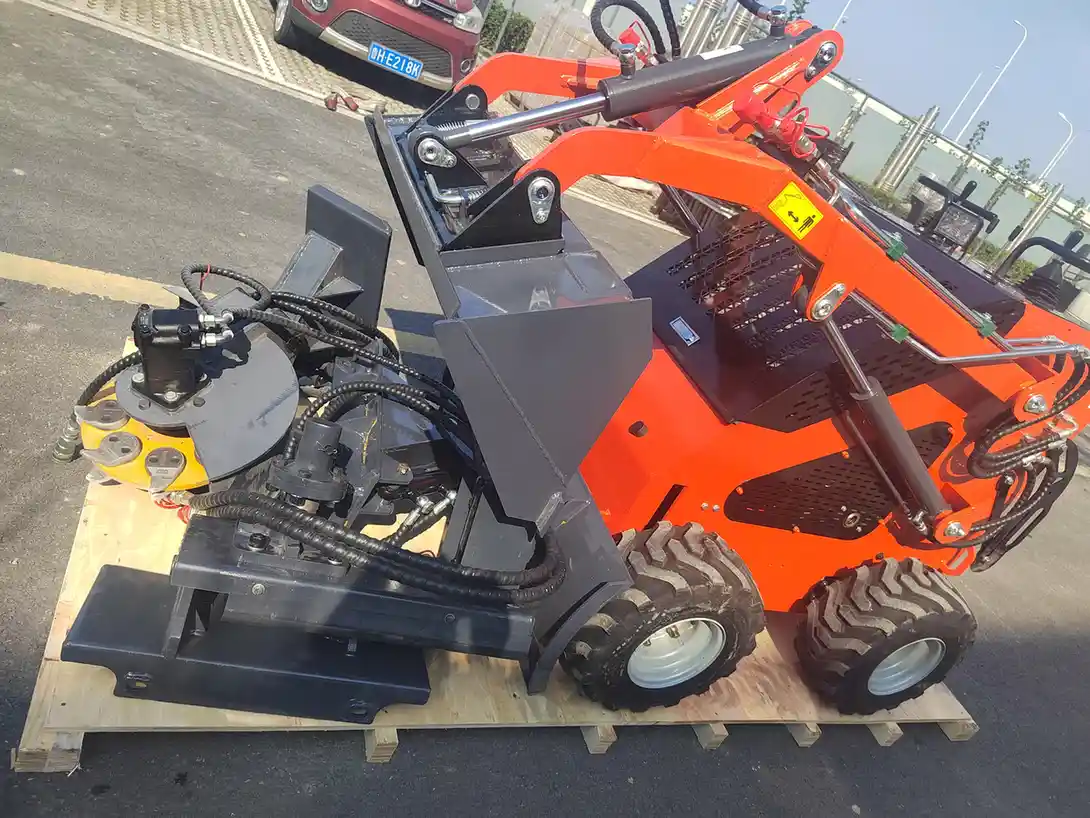
Lift arms carry a bucket or another attachment at the front. With the correct attachment and hydraulic configuration, the same machine can load soil, move pallets, drill holes, sweep roads, clear snow, grade surfaces, handle brush and support demolition work. Its combination of maneuverability and attachment flexibility explains why skid steer loaders are common in construction, landscaping, agriculture, municipal maintenance and industrial yards.
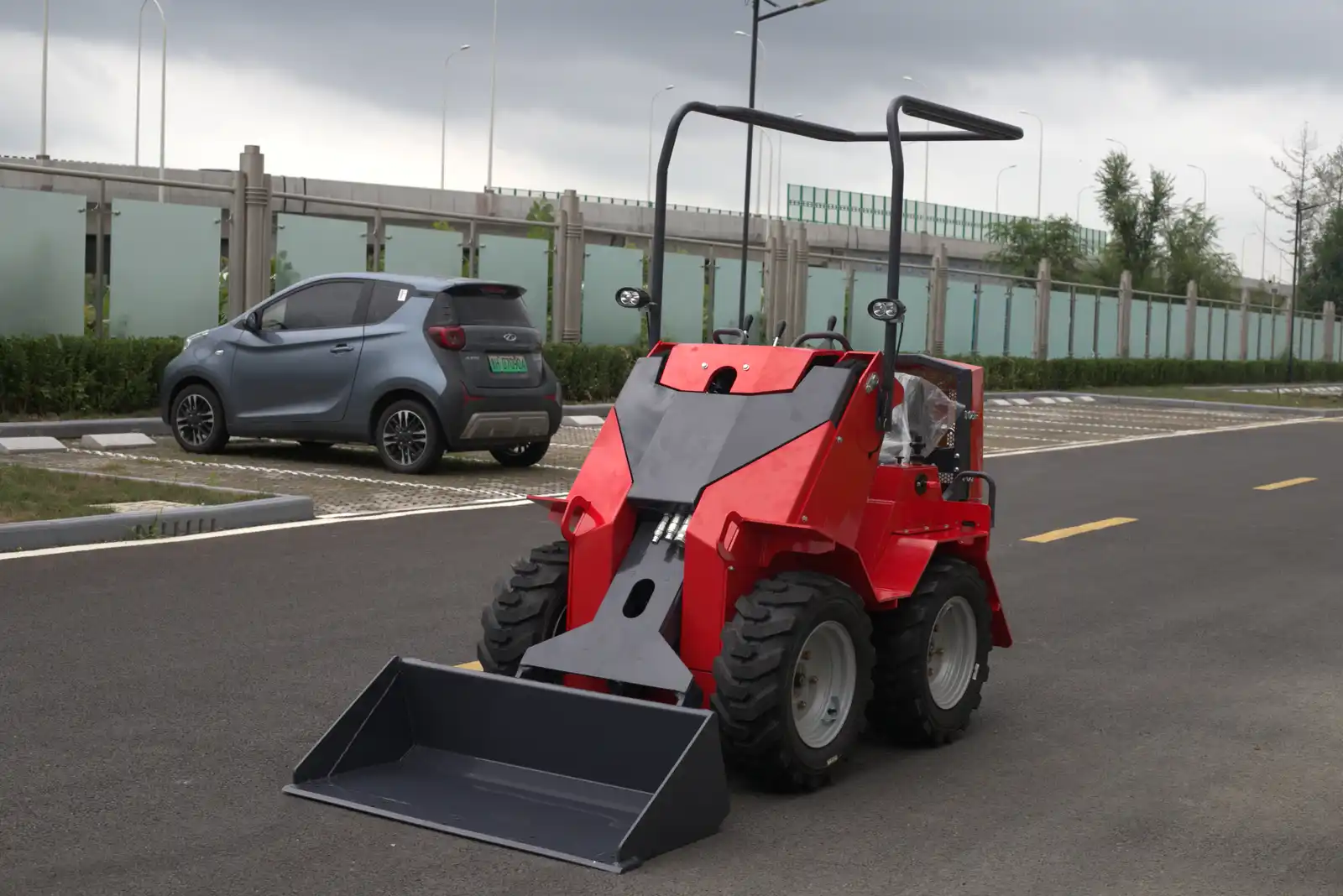
Why Is It Called a Skid Steer?
The name describes how the machine turns. A wheeled skid steer normally has four wheels held in a fixed, straight alignment. The wheels on each side are driven together, while the left and right sides can operate at different speeds.
- If both sides move forward at the same speed, the loader travels straight.
- If one side moves faster than the other, the loader turns.
- If one side moves forward while the other reverses, the loader can counter-rotate within its own footprint.
During a tight turn, the tires slide or “skid” across the ground. This differential steering system eliminates a conventional steering axle and gives the loader its characteristic agility.
How Does a Skid Steer Loader Work?
The engine supplies power to the drive system and the hydraulic pumps. The drive system moves the wheels, while the hydraulic system raises, lowers and tilts the lift arms and powers compatible attachments.
The operator uses hand controls, foot controls or a combination of both, depending on the machine. Modern loaders frequently use joysticks to control travel, lift-arm movement and attachment functions.
Drive system
Each side of the loader can be controlled independently. Varying the speed and direction of the two sides produces straight travel, gradual turns or zero-radius turns. The rigid chassis remains in one piece; it does not articulate in the middle like a conventional wheel loader.
Lift system
Hydraulic cylinders move the lift arms and tilt the attachment. Two common lift paths are radial lift and vertical lift. Radial-lift machines are often selected for digging and work performed near ground level. Vertical-lift machines generally provide more forward reach near full lift height, which can help when loading trucks or placing material over a high sidewall.
Auxiliary hydraulics
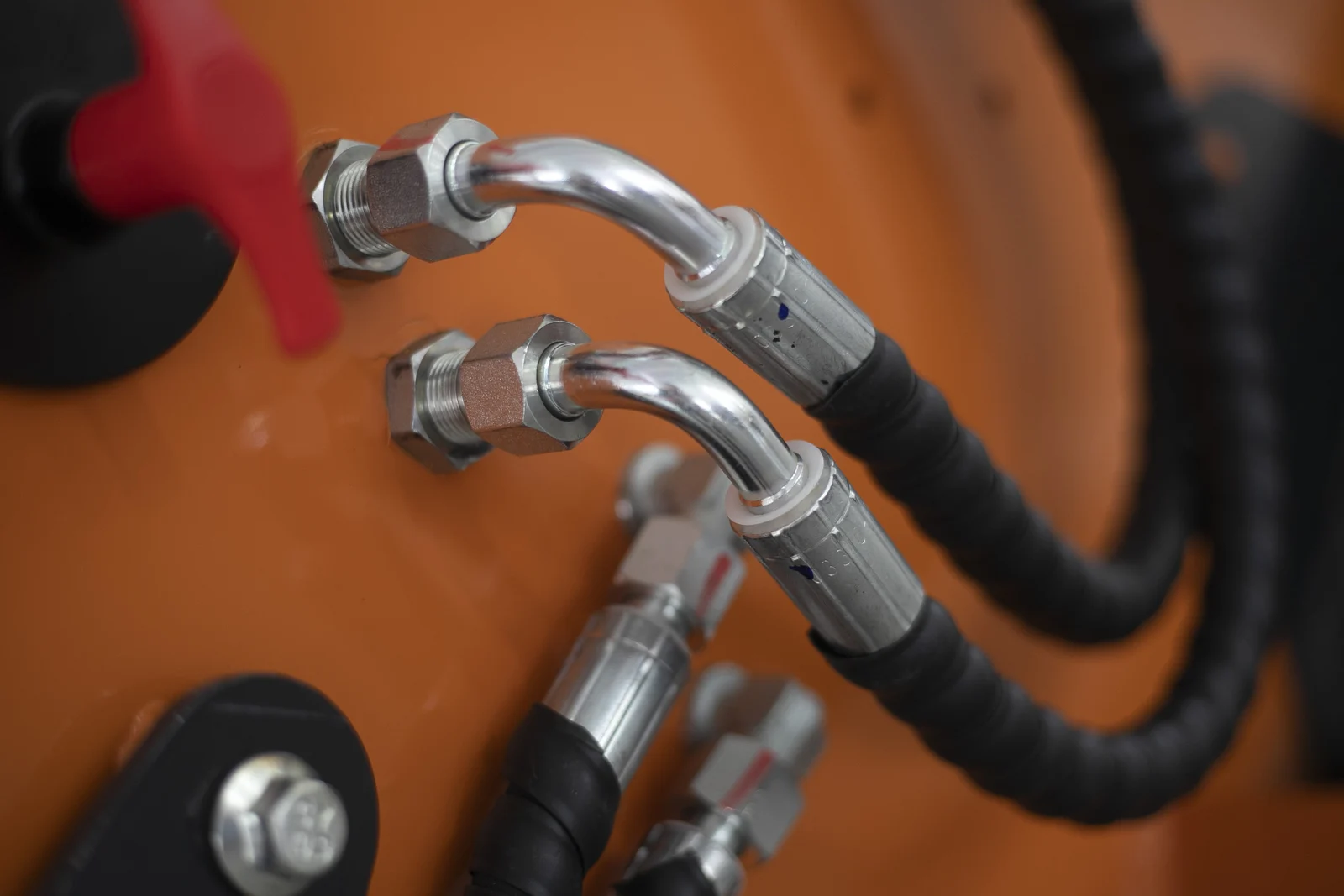
Auxiliary hydraulic lines send pressurized oil to powered attachments such as augers, breakers, trenchers, sweepers and brush cutters. Attachment compatibility depends on more than the mounting plate: hydraulic flow, pressure, coupler type, return-line requirements and electrical controls must also match.
Main Parts of a Skid Steer Loader
Although designs vary by manufacturer and size, most skid steer loaders contain the following systems.
| Component | Function | What buyers should check |
|---|---|---|
| Rigid chassis | Supports the powertrain, operator station and lift structure | Overall width, ground clearance, protection and service access |
| Engine | Supplies power for travel and hydraulics | Fuel type, rated power, emissions configuration and local parts support |
| Drive system | Controls the wheels on the left and right sides | Travel speed, control type and cooling requirements |
| Lift arms | Raise and position the attachment | Lift path, rated operating capacity, dump clearance and forward reach |
| Hydraulic system | Moves the loader arms and powers hydraulic tools | Standard or high-flow output, pressure and coupler specification |
| Quick-attach interface | Connects buckets and other tools | Mounting standard, locking method and attachment compatibility |
| Operator station | Houses the seat or standing platform and controls | Visibility, access, restraint system and control layout |
| Safety structure | Protects the operator during normal use and foreseeable incidents | ROPS/FOPS configuration, interlocks, restraint bar and seat belt |
Skid Steer Loader Types
Wheeled skid steer loader
A wheeled skid steer is the conventional form of the machine. Tires work efficiently on concrete, asphalt, compacted gravel and other firm surfaces. Wheeled models generally travel faster and have a simpler undercarriage than tracked machines.
Because tight turning makes the tires scrub across the surface, tire wear and surface marking should be considered when the loader performs frequent zero-radius turns.
Compact track loader
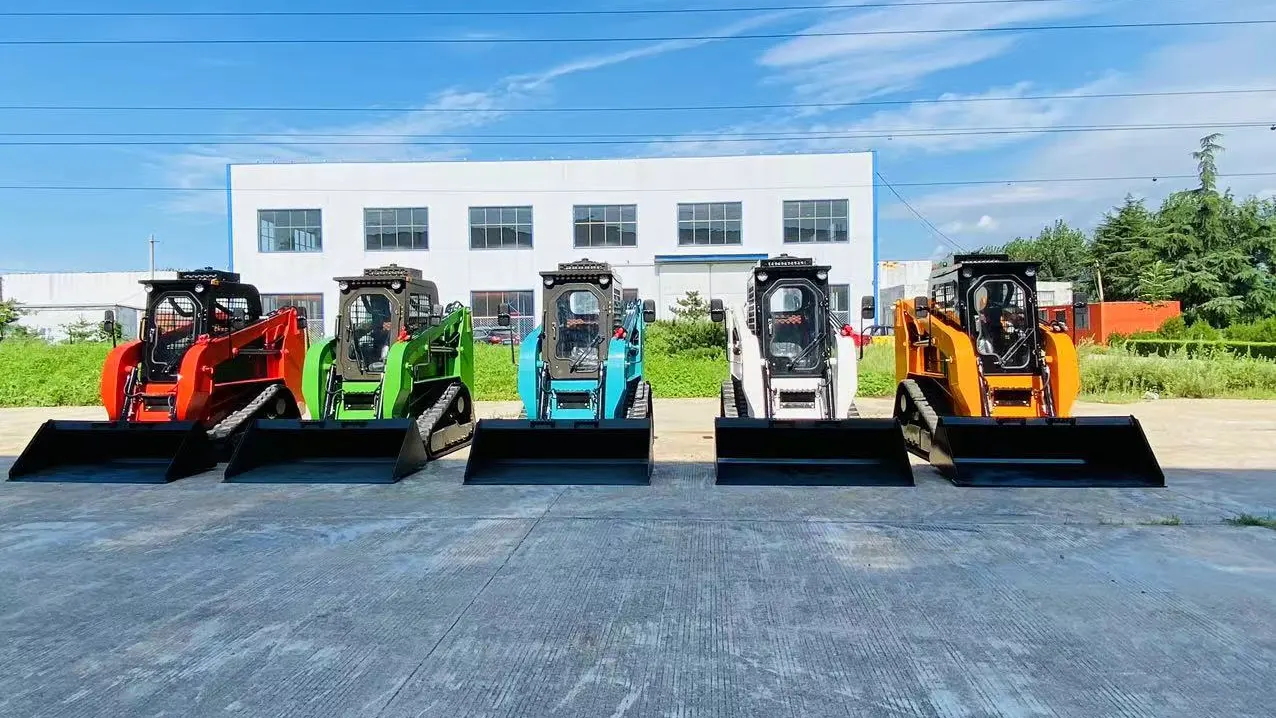
A compact track loader uses rubber tracks instead of four tires. The basic body, lift arms and attachment concept are similar, but the tracks distribute the machine’s weight over a larger contact area. This normally improves traction and flotation on soft soil, mud, sand and uneven ground.
Tracks add undercarriage components that require cleaning and wear inspection. On hard or abrasive surfaces, a wheeled loader may be more economical. Bobcat’s current comparison likewise distinguishes wheeled skid steers for hard, stable surfaces from compact track loaders for soft, rough or slippery terrain.
Stand-on mini skid steer loader
A stand-on mini skid steer, sometimes called a compact utility loader, places the operator on a rear platform. Its narrow body can suit gates, garden paths, greenhouses and restricted renovation sites. These machines are useful when the operator frequently steps off to perform ground-level work, but their load capacity and operating layout differ from full-size seated loaders.
Seated compact skid steer loader
Seated compact loaders bridge the gap between stand-on units and larger enclosed-cab machines. Buyers can choose wheeled or tracked undercarriages and compare machine width, rated load and attachment requirements. Zentramo’s compact skid loader range, for example, includes 300 kg and 500 kg classes for narrow-access and material-handling applications.
What Is a Skid Steer Loader Used For?
Construction and demolition
Skid steers move soil, gravel, debris and building materials where larger loaders have limited access. With suitable attachments, they can also grade surfaces, break concrete, drill holes, mill pavement and support light demolition.
Landscaping
Landscapers use compact loaders to move soil and mulch, prepare planting areas, grade yards, drill post holes, handle pallets and clear vegetation. Machine width, tire or track choice and ground pressure matter when the route crosses gates, finished paving or sensitive turf.
Agriculture
On farms, skid steer loaders can move feed, manure, bedding, fertilizer and baled material. Buckets, forks, grapples and augers allow one carrier to support several seasonal tasks. Engine service and attachment availability should match the equipment already maintained by the farm.
Municipal and property maintenance
Sweepers, snow blades, snow blowers, buckets and forks turn the loader into a year-round maintenance platform. Compact dimensions are useful on sidewalks, alleys, parking areas and service yards, subject to local operating and transport rules.
Warehouses and industrial yards
On firm surfaces, a wheeled machine can handle bulk material, clean work areas and move compatible pallet loads. Before using forks, verify the rated capacity at the specified load center rather than relying on the bucket rating.
Common Skid Steer Attachments
- General-purpose bucket: loading soil, sand, gravel and loose material.
- Pallet forks: handling palletized materials within the confirmed load rating.
- Auger: drilling holes for posts, trees and foundations.
- Trencher: cutting narrow trenches for utilities or irrigation.
- Hydraulic breaker: breaking concrete, rock and hard surfaces.
- Sweeper: collecting debris from yards, roads and industrial areas.
- Grapple: handling brush, logs, demolition waste and irregular material.
- Brush cutter or mower: controlling vegetation when hydraulic requirements match.
- Snow blade or blower: clearing roads, yards and pedestrian areas.
An attachment that physically connects to the loader is not automatically safe or productive. Confirm its weight, mounting interface, hydraulic demand, control requirements and effect on rated capacity.
Skid Steer Loader vs. Compact Track Loader
| Factor | Wheeled skid steer | Compact track loader |
|---|---|---|
| Best surface | Concrete, asphalt and compacted ground | Soil, mud, sand and uneven terrain |
| Traction | Good on firm surfaces | Better on soft or slippery ground |
| Travel speed | Often faster | Usually selected for traction rather than speed |
| Ground pressure | Concentrated through the tires | Distributed across the tracks |
| Undercarriage care | Tire inspection and replacement | Track, roller and undercarriage cleaning and inspection |
| Typical buying priority | Mobility and economy on hard ground | Flotation and stability on difficult terrain |
Skid Steer Loader vs. Mini Excavator
A skid steer loader is normally the better starting point for repeated loading, carrying, grading, sweeping and frequent attachment changes. A mini excavator is generally better for digging below ground level, trench depth and work requiring boom reach.
The two machines often complement rather than replace one another. On a utility project, the excavator may dig the trench while the skid steer handles spoil, bedding material and site cleanup.
Advantages and Limitations
Main advantages
- Very small turning area
- Compact dimensions for restricted sites
- Fast attachment changes
- Useful across several industries
- Wheeled and tracked configurations
- Efficient short-distance material handling
Important limitations
- Tight turns can wear tires and mark finished surfaces.
- Lift capacity changes with attachment weight and load position.
- A loader does not provide the digging depth or reach of an excavator.
- Tracks improve soft-ground performance but add undercarriage cost and maintenance.
- Visibility around the attachment and rear of the machine can be restricted.
- Improper operation near raised lift arms or suspended loads creates serious hazards.
Basic Safety Principles
Only trained and authorized personnel should operate a skid steer loader. Follow the exact machine and attachment manuals, inspect the equipment before work and remain within the manufacturer’s operating limits.
NIOSH-supported construction safety guidance emphasizes using the manufacturer’s interlocks, backup alarms, seat belt and rollover protective structure. Operate from the designated operator position, keep bystanders away from raised loads and never exceed the recommended capacity. Never enter the lift-arm area unless the approved lift-arm support device is correctly installed.
Site-specific risks—including slopes, overhead hazards, underground utilities, unstable edges, traffic and confined spaces—must be assessed before operation.
How to Describe Your Requirements to a Supplier
A useful skid steer inquiry should contain more than an engine-power target. Provide:
- The primary task and material being handled
- The maximum material or pallet weight
- The narrowest gate, doorway, aisle and turning point
- Surface and slope conditions
- Required lift height and dump clearance
- Wheeled, tracked, seated or stand-on preference
- Every planned attachment
- Hydraulic flow and pressure requirements
- Preferred fuel and destination-market emission standard
- Quantity, destination and required spare-parts package
For a reviewable configuration, the quotation should identify the loader model, engine, undercarriage, controls, rated operating capacity, attachment interface, auxiliary hydraulics and included tools.
Frequently Asked Questions
Is a skid steer the same as a Bobcat?
No. Bobcat is a manufacturer and brand. “Skid steer loader” is the general machine category produced by Bobcat and many other manufacturers.
Can a skid steer dig?
Yes. A bucket can perform shallow digging and grading, while augers, trenchers and backhoe attachments extend the machine’s capabilities. For deep excavation and long reach, a mini excavator is generally more suitable.
Can a skid steer use tracks?
A purpose-built machine running on tracks is normally classified as a compact track loader. Some wheeled skid steers can also use over-the-tire track systems, but compatibility and operating limitations depend on the model.
What size skid steer loader do I need?
Start with access width, rated operating capacity, lift geometry, ground conditions and attachment requirements. Engine power alone does not determine whether a machine can safely handle the job.
What is the main benefit of a skid steer loader?
Its main benefit is the ability to combine tight maneuverability with many compatible attachments, allowing one compact carrier to perform several tasks.
Configure a Skid Steer Loader for Your Application
Jining Hongrui Heavy Industry Machinery Co., Ltd. supplies wheeled, tracked, seated and stand-on skid steer loader configurations for landscaping, agriculture, construction and material handling. Send Zentramo your access dimensions, surface conditions, maximum load, working height, planned attachments and destination to discuss a machine-and-tool package that can be stated clearly in the quotation.
Contact Zentramo to request a skid steer loader configuration and quotation.