How to Choose a Home Backup Generator
To choose a home backup generator, first decide which circuits must keep running during an outage, then size the system for both continuous demand and the largest starting load. After that, compare generator type, fuel availability, runtime, transfer equipment, installation space, noise, maintenance, and the complete installed scope. A reliable choice is not simply the model with the highest kilowatt rating. It is the system that can safely power your priority loads under the conditions at your home.
For a short outage, that may mean a portable or inverter generator feeding selected loads through an approved connection. For frequent outages, an automatic standby generator may be more practical. Homes that need central air conditioning, pumps, electric heating, medical equipment, or near-normal operation require a more detailed load assessment than homes that only need refrigeration, lighting, communications, and a few receptacles.
1. Choose the Level of Backup You Actually Need
Start with the outcome you want during a blackout. “Power the house” can mean three very different things:
| Backup level | Typical loads | System direction |
|---|---|---|
| Emergency essentials | Refrigerator, freezer, a few lights, internet equipment, phone charging, and possibly a sump pump | Portable or inverter generator, or a smaller standby unit serving selected circuits |
| Managed home comfort | Essential loads plus a furnace blower, well pump, microwave, garage door, or one air-conditioning load | Standby or larger portable system with transfer equipment and deliberate load management |
| Near-whole-home operation | Most household circuits, HVAC, pumps, cooking equipment, and other high-demand loads | Permanently installed standby system sized from a professional load assessment |
Essential-circuit backup is often the most cost-effective approach because it limits the number of loads that can operate together. Whole-home backup offers more convenience, but it increases generator capacity, fuel demand, transfer-switch requirements, installation work, and maintenance responsibility.
2. Decide Between Portable, Inverter, and Standby Designs
A portable generator is moved into a safe outdoor operating position when needed. It normally requires manual starting, refueling, weather protection that does not restrict ventilation, and either correctly rated extension cords or an approved transfer connection. It can be economical for occasional outages, but someone must be available to deploy and operate it safely.
An inverter generator is a portable format that is often selected when lower noise, lighter loads, and more stable power for electronics are priorities. Its output may be insufficient for multiple large household loads, so check both running and surge ratings rather than assuming the word “inverter” means whole-home capability.
A home standby generator is installed permanently outdoors and paired with transfer equipment. It can start automatically when utility power fails and stop after normal power returns. This arrangement suits frequent outages, unattended operation, medical or security needs, and homes where manual setup would be impractical. It also requires site planning, permits where applicable, electrical work, and a suitable fuel supply.
3. Build a Household Load List
Do not size a generator only from floor area or service-panel amperage. List the equipment that must operate during an outage. Record each item’s running watts and, for motor-driven equipment, its additional starting watts. Use nameplates and manufacturer data where available.
Common loads to review include:
- Refrigerators and freezers
- Well pumps, sump pumps, sewage pumps, and booster pumps
- Furnace blowers, heat pumps, central or window air conditioners
- Medical devices and accessibility equipment
- Lighting, internet equipment, security systems, and garage doors
- Microwaves, electric kettles, induction cooking, water heaters, and laundry equipment
- Home-office computers, servers, and other sensitive electronics
- Generator auxiliaries, battery chargers, and fuel-system equipment
Identify which loads can run together and which can wait. A water heater, electric dryer, range, and central air conditioner may each be acceptable individually but impractical to operate simultaneously on a moderate-capacity backup system.
4. Calculate Running and Starting Power
A useful preliminary calculation is total simultaneous running watts plus the largest additional starting-watt requirement. The official Generac wattage worksheet uses this approach to demonstrate why motor starting must be considered separately from continuous demand. It is a shortlisting method, not a substitute for a site-specific electrical assessment.
| Load | Running watts | Additional starting watts | Operate together? |
|---|---|---|---|
| Refrigerator | Use nameplate or manufacturer data | Record compressor starting demand | Usually yes |
| Well or sump pump | Use motor data | Record pump starting demand | Usually yes when required |
| HVAC equipment | Use equipment data | Check compressor or blower start | May require load management |
| Lighting and electronics | Add intended simultaneous loads | Often low, but verify UPS and power-supply behavior | Usually yes |
Do not add every appliance in the building if you will never run them together. Conversely, do not ignore the starting event of the largest pump or compressor. An undersized unit may trip, stall, or produce unacceptable voltage and frequency changes. A greatly oversized generator can add cost and may spend long periods at an inefficiently low load.
For central air conditioning, heat pumps, large wells, elevators, or several motor loads, ask a qualified electrician or generator specialist to verify the starting method, voltage dip, load sequence, and any load-shedding controls.
5. Match Voltage, Phase, Frequency, and Connection
The generator must match the home’s electrical system and the circuits it will supply. Confirm voltage, frequency, phase, neutral and grounding arrangement, breaker rating, and connection method. In markets where homes use split-phase service, check whether the generator provides the required 120/240 V output and enough capacity on each leg. Other countries may use different single-phase or three-phase standards.
If the generator will feed the home’s wiring, use approved transfer equipment installed for that purpose. Never connect a generator to a wall outlet to energize a house. This can bypass normal protection and backfeed utility lines.
6. Choose the Fuel Around Local Availability
Fuel choice affects convenience, storage, runtime, maintenance, and resilience during a regional emergency. Compare the fuel you can reliably obtain, not only the fuel named in a product brochure.
| Fuel option | Potential advantage | Questions before buying |
|---|---|---|
| Natural gas | No on-site refueling when the utility gas supply remains available | Can the gas service provide the required pressure and flow during full generator load? Is gas interruption part of the local risk? |
| Propane/LPG | Stored on site and suitable for long-term standby planning | What tank size and vaporization capacity are needed in the coldest expected weather? |
| Diesel | Common for larger standby and industrial-duty systems | How will fuel be stored, rotated, filtered, and replenished? Are local emissions and noise rules satisfied? |
| Gasoline | Widely used for portable generators | How much can be stored legally and safely, how will it be stabilized or rotated, and can it be obtained during an outage? |
| Dual- or tri-fuel | Provides fuel flexibility | What is the rated output on each fuel? Are changeover procedures and connectors suitable for your plan? |
Ask for fuel consumption at several load levels, then calculate the storage or supply required for the outage duration you are planning for. A large tank does not guarantee the expected runtime if the generator is heavily loaded, and a pipeline connection is only useful if the available pressure and flow meet the equipment requirement.
7. Plan Transfer Equipment and Load Management
A transfer switch separates the home from the utility supply before the generator energizes selected circuits or the main distribution system. Manual transfer equipment suits attended operation. An automatic transfer switch can monitor the utility, signal a standby generator to start, transfer the load, and return the home to utility power after the supply stabilizes.
The controller and the transfer switch are not the same component. Confirm which equipment is included in the quotation, its current rating, pole arrangement, enclosure rating, and compatibility with the generator and service panel. If the generator cannot carry all loads simultaneously, specify priority circuits or load-management modules for items such as air conditioning, water heating, or EV charging.
8. Check the Installation Location
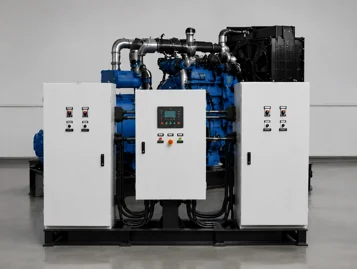
A permanently installed generator needs a stable base, adequate cooling airflow, safe exhaust discharge, service clearance, cable and fuel access, and protection from flooding or physical damage. Check manufacturer clearances together with local electrical, fire, building, fuel-storage, emissions, and noise rules. Do not assume a space is suitable because the enclosure physically fits.
For flood-prone property, evaluate the required equipment elevation and access before choosing the final position. For a unit near a bedroom, boundary, or neighboring property, request noise data with a stated test distance and operating condition. A silent or weatherproof enclosure can reduce environmental exposure and sound, but it must still allow cooling air and maintenance access.
9. Treat Portable Generator Safety as a Purchase Criterion
Portable generators introduce carbon-monoxide, fire, shock, and backfeed hazards when they are positioned or connected incorrectly. OSHA’s portable generator safety guidance says not to use a portable generator indoors and not to connect one directly to a structure unless a qualified electrician has installed a proper transfer switch. It also calls for dry operating conditions, correctly rated grounded cords, and shutting the generator down before refueling.
Choose equipment and accessories that support a safe operating plan. The plan should cover outdoor placement away from doors, windows, and ventilation openings; carbon-monoxide alarms; weather protection without creating an enclosure hazard; fuel handling; cord ratings; grounding requirements; and a transfer connection where household wiring will be supplied. Manufacturer instructions and local requirements take priority over generic advice.
10. Compare Reliability, Maintenance, and Local Support
A standby generator may run only occasionally, but it still needs periodic inspection, battery care, fluid and filter service, exercise cycles, and test operation. Ask what maintenance is required by elapsed time and by running hours. Confirm who can perform warranty work locally and how quickly routine parts can be obtained.
Before selecting a model, request:
- The exact engine, alternator, controller, and transfer-equipment models
- The applicable standby rating on the intended fuel
- Fuel-consumption data at relevant loads
- Installation and maintenance manuals
- A recommended service schedule and spare-parts list
- Warranty coverage, exclusions, start date, and claim procedure
- Factory test documentation for the supplied configuration
For more detail on evaluating the complete generator package, see How to Choose and Buy a Generator. That guide covers industrial duty ratings, electrical specifications, testing, and quotation scope in greater depth.
11. Budget for the Complete Installed System
The generator is only one part of the project. Include transfer equipment, breakers or distribution changes, cables, fuel piping or tanks, concrete pad or mounting, delivery, lifting, permits, site preparation, electrical and fuel work, commissioning, and initial maintenance supplies. A lower equipment price can produce a higher installed cost if essential components are excluded.
If budget is a major decision factor, use How Much Does a Home Generator Cost? to organize cost categories, then obtain local installation quotations based on the same scope. Installation labor, code requirements, and fuel-system work are location-specific.
12. Compare Quotations Line by Line
| Quotation item | What should be stated |
|---|---|
| Power | Standby output, voltage, frequency, phase, power factor where relevant, and output on the selected fuel |
| Loads | Essential or whole-home circuits, largest starting load, sequencing, and load-management assumptions |
| Equipment | Exact generator, engine, alternator, controller, breaker, charger, battery, enclosure, and accessories |
| Transfer system | Manual or automatic transfer switch, rating, poles, enclosure, controls, and installation responsibility |
| Fuel system | Fuel type, required pressure or storage, piping or tank scope, regulators, and expected runtime basis |
| Site work | Pad, clearances, cabling, trenching, lifting, exhaust, weather and flood protection, permits, and inspection |
| Acceptance | Factory test, commissioning checks, load test where required, manuals, drawings, and owner training |
| Support | Warranty, local service responsibility, maintenance plan, spare parts, and response process |
Home Backup Generator Buying Checklist
Before placing an order, confirm that you have:
- Defined essential-circuit, managed, or near-whole-home coverage
- Recorded running and starting requirements for all priority loads
- Verified voltage, phase, frequency, grounding, and connection requirements
- Selected portable, inverter, or permanent standby operation
- Checked fuel availability, pressure or storage, consumption, and expected runtime
- Specified manual or automatic transfer equipment and load management
- Confirmed outdoor placement, airflow, exhaust, noise, weather, flood, and service access
- Reviewed permits and installation with qualified local professionals
- Compared complete installed scopes rather than generator prices alone
- Obtained warranty, maintenance, parts, test, and commissioning information
Request a Generator Configuration Review
Zentramo supplies open, silent, mobile, diesel, and gas generator-set configurations for professional projects. For a residential, estate, apartment, dealer, or installer inquiry, send the priority-load list, voltage and frequency, preferred fuel, site conditions, transfer requirements, destination country, and required delivery scope. The team can review whether a suitable configuration is available and identify the technical details that still need confirmation. Visit the generator set page or use the contact page to request a proposal. Final household installation and connection should be completed by qualified local professionals in accordance with applicable rules.