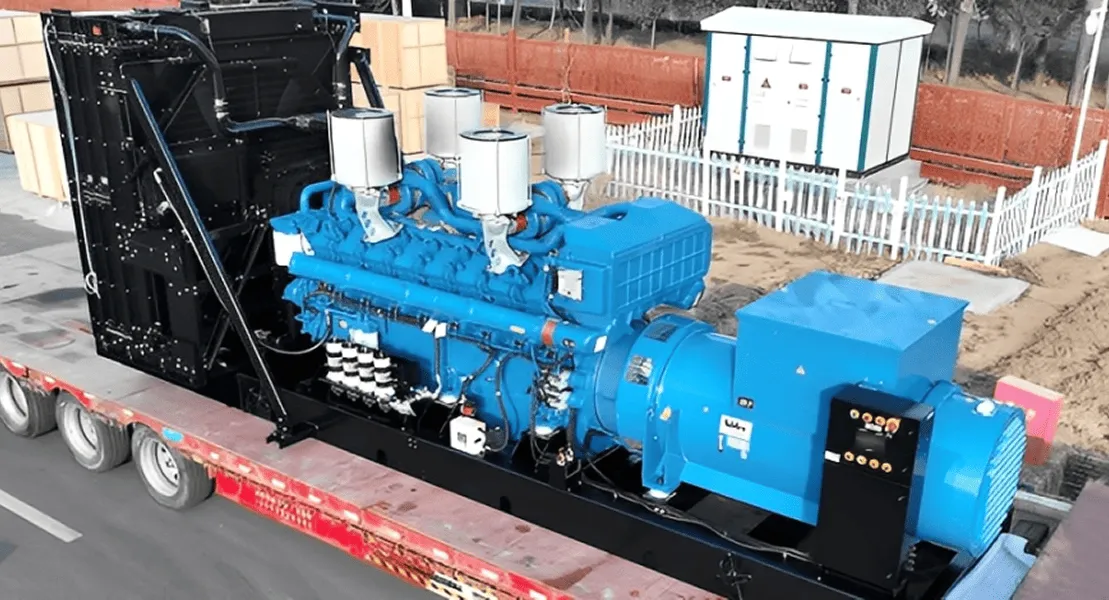
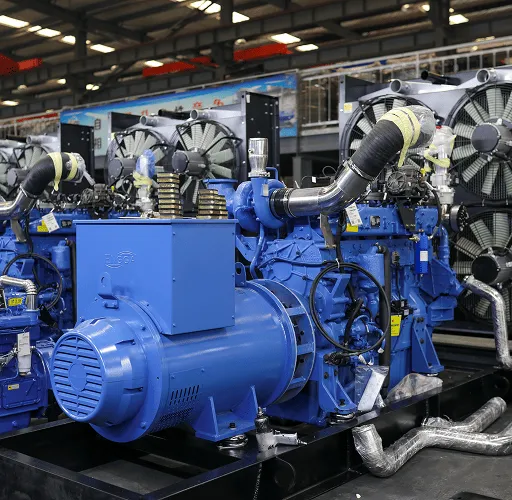
A genset is a complete power-generation package that combines an engine, an alternator, a controller, and the supporting systems needed to produce electricity. The word is short for generator set. You may also see “gen set,” “gen-set,” “generating set,” or “engine-generator set”; in industrial power projects, these terms normally describe the same type of packaged equipment.
The engine converts fuel energy into shaft rotation. The alternator converts that mechanical rotation into electrical energy. Fuel delivery, cooling, lubrication, exhaust, starting, charging, control, protection, and the structural base allow the two main machines to operate as one usable power source.
What Does “Genset” Mean?
“Genset” is industry shorthand for “generator set.” The word set matters because the equipment is more than the electrical generator alone. A working genset brings together a prime mover and an electrical machine with the auxiliary systems required to start, regulate, protect, cool, and stop the unit.
In everyday conversation, people often use “generator” and “genset” interchangeably. That is usually understandable, but the distinction becomes important when reviewing quotations, replacement parts, and technical specifications. A bare alternator, a replacement engine, and a complete generator set are different procurement items.
Genset vs Generator vs Alternator
The terms describe different scopes of equipment:
| Term | Technical meaning | What is normally included |
|---|---|---|
| Alternator or generator end | The electrical machine that converts mechanical rotation into AC electricity | Rotor, stator, windings, excitation system, bearings, and terminals |
| Electric generator | A general term for a machine that converts mechanical energy into electrical energy | The generating machine itself; the prime mover may be separate |
| Genset or generator set | A packaged power unit that can produce electricity from fuel | Engine, alternator, controller, base, cooling, fuel, starting, exhaust, and protection systems |
If you need a deeper explanation of the electrical machine rather than the complete package, see What Is an Electric Generator?. This article focuses on the integrated generator set used for standby, prime, and continuous-duty applications.
How Does a Genset Work?
A genset follows a controlled energy-conversion sequence:
- A start command is received. The command may come from an operator, a remote controller, or an automatic transfer switch in a standby power system.
- The starting system cranks the engine. The battery and starter motor rotate the engine until combustion is established.
- The engine produces mechanical power. Diesel, natural gas, gasoline, LPG, or another suitable fuel is converted into torque at the crankshaft.
- The engine drives the alternator. The rotating magnetic field induces voltage in the stator windings through electromagnetic induction.
- The governor and voltage regulator stabilize the output. The engine governor controls speed and therefore helps control frequency. The automatic voltage regulator adjusts excitation to maintain the required voltage.
- The breaker connects the load. Once voltage and frequency are acceptable, the output circuit supplies the connected electrical system.
- The controller monitors operation. It tracks values such as voltage, current, frequency, engine speed, oil pressure, coolant temperature, and fault status.
- The set unloads and cools down before stopping. A controlled shutdown reduces thermal stress and prepares the unit for the next start.
The central physics is the same as other rotating power-generation equipment: the prime mover supplies mechanical rotation, and the alternator converts that rotation into electricity. The U.S. Energy Information Administration provides a useful overview of this conversion principle.
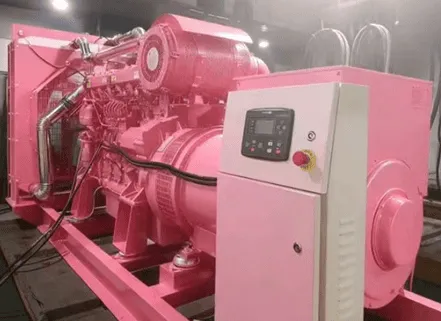
What Are the Main Components of a Generator Set?
Engine
The engine is the prime mover. It converts the chemical energy in fuel into mechanical rotation. Its design, fuel system, governing response, cooling capacity, and duty rating all affect how the genset performs under steady and changing loads.
Alternator
The alternator converts shaft power into AC electrical output. Its winding arrangement, excitation method, insulation, temperature-rise capability, and reactance influence voltage regulation, motor starting, waveform quality, and fault response.
Controller
The controller manages starting, stopping, measurement, alarms, and protective shutdowns. More advanced controls can communicate with transfer switches, paralleling equipment, remote monitoring platforms, and building-management systems.
Governor and automatic voltage regulator
The governor adjusts engine input to maintain speed as electrical load changes. The automatic voltage regulator, or AVR, adjusts alternator excitation to maintain output voltage. They perform different but complementary control functions.
Fuel system
The fuel system stores, filters, and delivers fuel at the required pressure and flow. Its layout depends on fuel type and installation. A diesel system may include a base tank, day tank, transfer pump, filtration, and return lines. A gas system may require pressure regulation, shutoff valves, and fuel-quality controls.
Cooling, lubrication, intake, and exhaust
The cooling system removes engine and alternator heat. The lubrication system protects moving engine parts. The air-intake system supplies combustion air, while the exhaust system routes hot gases away from the installation. Indoor and enclosed installations require careful airflow, heat rejection, and exhaust design.
Starting and charging system
Starting batteries, a starter motor, cables, and a charger provide reliable cranking power. Standby units normally use a charger to keep batteries ready while the genset is idle.
Base, enclosure, breaker, and protection
A steel base aligns and supports the engine and alternator. An enclosure may provide weather protection and sound attenuation. The output breaker provides switching and overcurrent protection, while sensors and relays protect the machine against damaging operating conditions.
Is an Automatic Transfer Switch Part of the Genset?
An automatic transfer switch, or ATS, is usually part of the standby power system, not part of the engine-alternator package itself. It monitors the normal utility source, sends a start signal when that source fails, transfers the load to generator power after acceptable voltage and frequency are available, and transfers the load back when the utility returns.
Some projects purchase the ATS and genset as one coordinated package, so commercial descriptions may refer to an “ATS generator system.” The equipment can still be physically separate. Confirm the quotation scope, switching rating, number of poles, transfer method, controller interface, enclosure, and installation responsibility. Cummins’ technical overview of transfer switch operation explains how the ATS coordinates utility and generator sources.
What Types of Gensets Are Common?
By fuel
- Diesel gensets are common in industrial standby, prime-power, construction, mining, and remote applications.
- Natural-gas and biogas gensets are used where gaseous fuel is available and the project favors pipeline supply, on-site gas utilization, or longer operating schedules.
- Gasoline and LPG gensets are common in smaller portable or light-duty applications.
- Dual-fuel and hybrid systems combine multiple energy sources or integrate a genset with batteries and renewable generation.
By physical configuration
- Open genset: engine and alternator mounted on a base for installation in a prepared generator room or protected area.
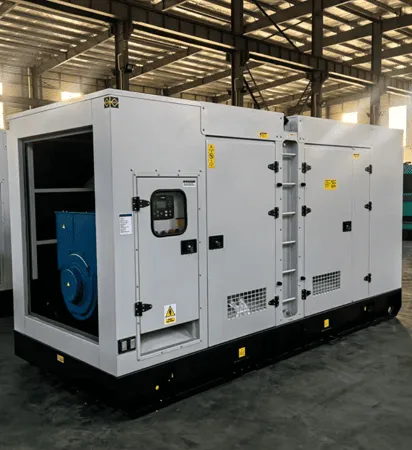
- Silent or weatherproof genset: enclosed package designed to reduce noise and protect equipment from outdoor exposure.
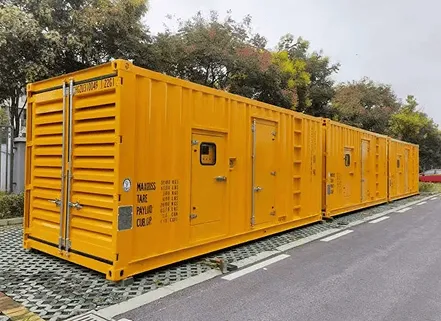
- Containerized genset: larger packaged system installed in a container-type enclosure with project-specific ventilation, exhaust, access, and auxiliary equipment.
- Trailer-mounted genset: transportable unit for temporary power, construction, rental, emergency response, or mobile projects.
By operating duty
- Standby power: backup supply during failure of the normal source.
- Prime power: the main source for variable loads where utility power is unavailable or unsuitable.
- Continuous power: designed for sustained operation at a defined continuous load.
Rating names and permitted operating conditions are not interchangeable. Run hours, average load, overload allowance, ambient conditions, and the manufacturer’s rating definition all matter. Caterpillar’s guide to generator set ratings explains why the same basic machine can carry different ratings for different applications.
How Is a Genset Rated?
A useful genset specification includes more than one power number:
- kW describes real electrical power available to do useful work.
- kVA describes apparent power and depends on the rated power factor.
- Voltage, phase, and frequency must match the destination electrical system and connected equipment.
- Standby, prime, or continuous rating defines the permitted duty rather than a simple product label.
- Ambient temperature and altitude can reduce available engine, cooling, or alternator capacity.
- Transient performance describes how the set responds when large loads start or change suddenly.
Professional sizing starts with a load list. Motors, pumps, compressors, welders, UPS systems, variable-frequency drives, and other nonlinear or high-starting-current loads can require a different alternator or a larger set than a simple sum of running kilowatts suggests. Cummins’ guide on how to size a genset highlights the need to analyze load type, power factor, and starting requirements.
Where Are Generator Sets Used?
- Emergency and standby power for hospitals, data centers, hotels, offices, and public facilities
- Prime power for construction sites, mines, telecom networks, oil and gas projects, and remote communities
- Continuous or baseload generation for industrial plants and sites with suitable fuel resources
- Temporary power for maintenance shutdowns, events, disaster response, and rental fleets
- Marine and offshore auxiliary power
- Parallel power plants in which several gensets share load and provide redundancy
The same word “genset” can therefore describe a small portable machine or a multi-megawatt industrial package. The application, rating, electrical system, controls, and site conditions define the actual product.
What Should a B2B Buyer Confirm?
Before requesting a quotation, define the project inputs that control the configuration:
- Required running load and the largest starting or step load
- Standby, prime, or continuous operating duty
- Voltage, frequency, phase, wiring arrangement, and power factor
- Fuel type, fuel quality, storage method, and expected running hours
- Ambient temperature, altitude, humidity, dust, coastal exposure, and indoor or outdoor location
- Open, silent, containerized, trailer-mounted, or custom configuration
- Noise, emissions, local code, and permitting requirements
- Manual control, ATS operation, remote monitoring, or paralleling requirements
- Required accessories, documentation, testing, spare parts, and service support
Ask suppliers to state exactly what the quotation includes. A complete technical offer should identify the engine, alternator, controller, breaker, radiator or heat exchanger, base or enclosure, starting batteries, charger, fuel arrangement, silencer, documentation, and optional equipment. This prevents a low-priced partial package from being compared with a complete project-ready scope.
Frequently Asked Questions
Is a genset the same as a generator?
In everyday use, often yes. Technically, a genset is the complete engine-driven power package, while “generator” can also mean only the electrical generating machine or alternator.
Does a genset store electricity?
No. A conventional genset produces electricity while its engine is running. Batteries or other energy-storage systems store energy. A hybrid system may combine both.
Can a genset run continuously?
Only when its rating and installation support that duty. A standby rating should not be treated as a continuous rating. Confirm permitted operating hours, load factor, maintenance schedule, cooling capacity, and the manufacturer’s rating definition.
What fuel does a genset use?
Common fuels include diesel, natural gas, gasoline, LPG, and biogas. The right option depends on availability, storage, operating hours, load response, emissions requirements, maintenance, and project economics.
Does every standby genset include an ATS?
No. The ATS is often ordered as separate equipment, although it may be supplied as part of a coordinated standby power package. Confirm whether it is included in the supplier’s scope.
Discuss Your Generator Set Requirements
A genset is a coordinated power system, so the correct specification starts with the load, duty, electrical standard, fuel, environment, and control requirements. Review Zentramo’s generator set configurations, or send your project details through the contact page to discuss a suitable industrial configuration.