An electric generator is a machine that converts mechanical energy into electrical energy. In most practical generators, an engine or turbine rotates a magnetic field relative to copper windings. This changing magnetic field induces voltage, and the connected electrical circuit carries current to the load.
The generator does not create energy from nothing. It changes energy from one form to another. The mechanical input may come from a diesel or gas engine, a steam turbine, moving water, wind, or another prime mover. For backup and industrial power, the generator is usually part of a complete generator set that also includes an engine, control system, cooling system, fuel system, protection, and supporting equipment.
How Does an Electric Generator Work?
Most rotating electric generators work through electromagnetic induction. When a conductor experiences a changing magnetic field, a voltage is induced across that conductor. In a typical alternator, a rotor turns inside a stationary stator. The rotor produces a rotating magnetic field, while the stator contains insulated windings in which the output voltage is generated.
The energy-conversion chain in an engine-driven generator set is straightforward:
- Fuel releases chemical energy inside the engine.
- The engine converts that energy into shaft rotation.
- The shaft turns the alternator rotor.
- The rotating magnetic field induces voltage in the stator windings.
- The breaker and output terminals deliver controlled electrical power to the connected system.
The U.S. Energy Information Administration explains the same principle across power plants, wind turbines, hydroelectric systems, and internal-combustion-engine generators. The prime mover changes, but the central task remains the conversion of mechanical rotation into electrical output.
What Are the Main Parts of an Electric Generator?
Rotor and stator
The rotor is the rotating part of the electrical machine. The stator is the stationary part surrounding it. Together they form the magnetic and electrical system that produces voltage. Winding arrangement, insulation, pole count, rotor speed, and excitation design all affect the output characteristics.
Excitation system and automatic voltage regulator
The excitation system supplies the magnetic field required for generation. The automatic voltage regulator, commonly called the AVR, adjusts excitation so the terminal voltage remains within the intended range as operating conditions and electrical load change.
Prime mover
The prime mover supplies mechanical rotation. In power stations it may be a steam, gas, water, or wind turbine. In a commercial generator set it is commonly a diesel, natural-gas, gasoline, or LPG engine. The prime mover must provide enough torque and maintain the speed required for the target electrical frequency.
Controller and protection
A generator-set controller manages starting, stopping, measurement, alarms, and shutdown protection. Depending on the system, it may also communicate with an automatic transfer switch, synchronizing equipment, remote monitoring platform, or building-management system. Breakers and protection devices isolate faults and provide a controlled connection to the load.
Supporting systems
An engine-driven generator set also needs fuel delivery, lubrication, cooling, combustion air, exhaust, starting batteries, a charger, mounting, and often an enclosure or silencer. These systems do not generate electricity directly, but the set cannot deliver reliable power without them.
Electric Generator vs Generator Set
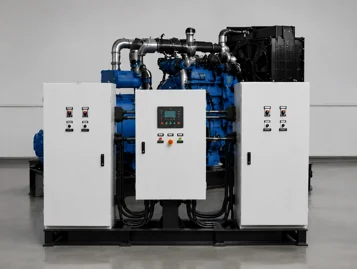
The terms are related but not identical. An electric generator is the electrical machine that converts mechanical energy into electrical energy. In engine-driven equipment, this component is often called the alternator. A generator set, or genset, combines the alternator with an engine and the supporting systems required to operate as a packaged power source.
| Term | What it usually means | Typical scope |
|---|---|---|
| Electric generator | The electromechanical conversion machine | Rotor, stator, windings, excitation, bearings, and terminals |
| Alternator | An AC generator | Produces alternating-current output |
| Generator set or genset | A complete packaged power unit | Engine, alternator, controller, base, cooling, fuel, starting, exhaust, and protection systems |
This distinction matters when comparing quotations. A quotation for an alternator alone is not equivalent to a quotation for a complete generator set with enclosure, fuel tank, breaker, batteries, charger, silencer, and transfer equipment.
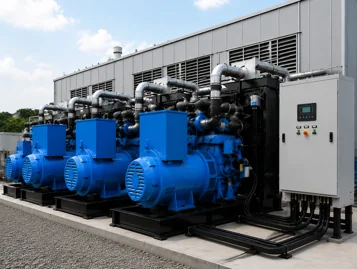
What Does an Electric Generator Look Like?
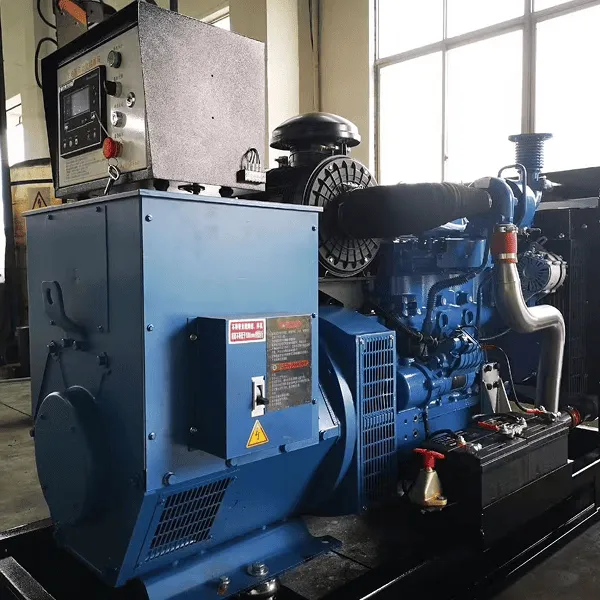
The appearance depends on the application. A small portable generator typically has an exposed engine and alternator mounted inside a tubular frame, with a fuel tank and outlet panel. A residential standby generator is often enclosed in a weather-resistant cabinet installed near a building. An industrial generator set may be open-mounted on a steel base, fitted with a sound-attenuated canopy, or installed inside a container.
On an open industrial set, the engine is usually the larger block with intake, exhaust, cooling, and fuel connections. The alternator is the cylindrical electrical machine coupled to the engine. A radiator and fan are commonly positioned at one end, while the controller and output breaker are mounted in accessible panels. Layouts vary, so buyers should use the general arrangement drawing rather than a product photo to confirm dimensions, connection points, airflow, service clearances, and lifting provisions.
What Types of Electric Generators Are Common?
AC and DC generators
Alternating-current generators produce AC output and dominate power generation and generator-set applications. Direct-current generators use a commutator to provide DC output, although many modern systems produce AC and then convert it electronically when DC is required. Three-phase AC machines are standard for many commercial and industrial systems because they suit motors, larger distribution loads, and efficient power transmission.
Portable generators
Portable units provide temporary power for tools, small equipment, outdoor work, and limited emergency loads. They are commonly gasoline-fueled, although diesel, LPG, and multi-fuel models are available. They require safe outdoor operation, suitable extension and connection equipment, and careful attention to running and starting wattage.
Standby generators
A standby generator is installed as a backup source for a building or facility. It normally works with an automatic transfer switch that detects a utility failure, starts the generator, transfers the load, and returns the system to the utility when normal power is restored. System design must address fuel supply, site ventilation, exhaust, noise, electrical protection, grounding, and local installation requirements.
Prime and industrial generator sets
Industrial generator sets serve factories, construction sites, mines, telecom facilities, data infrastructure, commercial buildings, utilities, and remote projects. They may provide emergency standby power, prime power where utility supply is limited, or continuous power in a designed operating system. Larger projects can require parallel operation, synchronizing, load sharing, remote control, and medium-voltage equipment.
How Are Generator Voltage and Frequency Controlled?
Output voltage depends mainly on the alternator design and excitation. The AVR senses generator voltage and changes excitation to keep the output near its set point. Frequency is linked to rotor speed and pole count. In an engine-driven set, the governor controls fuel or air input so the engine holds the required speed as load changes.
For this reason, rated power alone is not enough to define a generator. A buyer should also confirm voltage, frequency, phase, power factor, speed, duty rating, ambient conditions, altitude, enclosure, and load characteristics. A unit configured for one electrical system may not be suitable for another destination market without the correct alternator winding and controls.
Where Are Electric Generators Used?
- Emergency power for hospitals, data centers, offices, hotels, and public facilities
- Prime power for remote industrial, mining, telecom, and infrastructure projects
- Temporary power for construction, maintenance, events, and disaster response
- Marine and offshore auxiliary or main electrical systems
- Power stations driven by steam, gas, water, wind, or internal-combustion engines
- Combined systems that operate with the grid, energy storage, or renewable generation
What Information Identifies a Generator Correctly?
For professional purchasing, start with the equipment nameplate and technical data sheet. Record the manufacturer, model, serial number, rated kW and kVA, standby or prime rating, voltage, frequency, phase, current, power factor, speed, insulation class, and applicable reference conditions. For a complete genset, also identify the engine, alternator, controller, breaker, enclosure, fuel system, cooling arrangement, and included accessories.
The application should define the machine, not the other way around. Motor starting, nonlinear loads, step loading, altitude, high ambient temperature, dust, humidity, coastal exposure, noise targets, emissions requirements, and expected running hours can all affect the final configuration.
Frequently Asked Questions
Does a generator store electricity?
No. A conventional rotating generator converts mechanical energy into electrical energy while it is operating. A battery stores energy. A generator and battery system can work together, but they perform different functions.
Is an alternator the same as a generator?
An alternator is a type of electric generator that produces alternating current. In generator-set discussions, “alternator” often refers specifically to the electrical machine coupled to the engine.
Can an electric motor work as a generator?
Many electrical machines can operate in either direction in principle. A motor converts electrical energy into mechanical motion, while a generator converts mechanical motion into electrical output. Practical use depends on machine design, excitation, controls, speed, and the connected electrical system.
Does a generator produce power when no load is connected?
A running generator can establish terminal voltage with no external load, but current and real power output rise when a circuit is connected and equipment draws energy. The prime mover then supplies the additional mechanical input required by the load.
Discuss an Industrial Generator Set Application
If your project needs standby, prime, or industrial power, review Zentramo’s generator set solutions. To request a configuration, send the required power, voltage, frequency, phase, duty, fuel preference, operating environment, quantity, and destination through the contact page.