
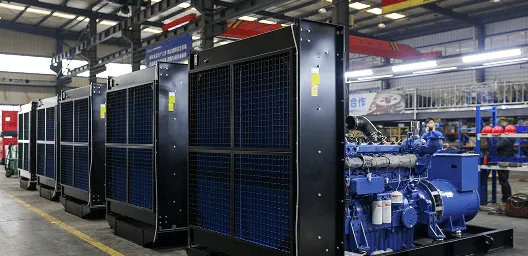
Diesel generator sets are typically more durable, efficient, and suitable for long-term use, especially in remote or off-grid locations. Gas generator sets, on the other hand, are cleaner, quieter, and often more cost-effective to operate in areas where gas is readily available. The choice depends on fuel costs, environmental concerns, and usage needs.
What is a Diesel Generator Set?
A diesel generator set is a power generation system that uses a diesel engine to produce electricity. Diesel engines are known for their durability, fuel efficiency, and ability to handle heavy loads over extended periods. These generators are commonly used in industrial, commercial, and remote settings where reliability is critical.
Core Technology: Diesel engines use compression ignition, which delivers higher efficiency compared to spark ignition systems.
Construction: Diesel generators typically consist of a diesel engine, an alternator, and a control system mounted on a sturdy frame.
Applications: Ideal for backup power in hospitals, data centers, and remote locations.
What is a Gas Generator Set?
A gas generator set is a power generation system that uses natural gas or propane as fuel to produce electricity. These generators are appreciated for their cleaner emissions, quieter operation, and lower operational costs in areas where gas is readily available. They are often employed in residential, commercial, and environmentally-sensitive applications.
Core Technology: Operates on spark ignition, utilizing natural gas or propane as fuel.
Construction: Typically composed of a gas engine, alternator, and control system, often housed in a noise-dampening enclosure.
Applications: Commonly used in urban areas, green energy projects, and residential backup power.
Key Differences: Diesel Generator Set vs. Gas Generator Set
| Feature | Diesel Generator Set | Gas Generator Set |
|---|---|---|
| Fuel Efficiency | Highly fuel-efficient | Lower efficiency compared to diesel |
| Emissions | Produces higher emissions | Cleaner and environmentally friendly |
| Durability | Built for long-term, heavy-duty use | Suitable for light to moderate usage |
| Noise Levels | Louder in operation | Quieter during operation |
| Fuel Availability | Dependable in remote areas | Limited to locations with gas infrastructure |
Zentramo Pro Tip: If you prioritize long-term durability and are in a remote area, a diesel generator is the better choice. However, for eco-friendly and quieter operations in urban settings, a gas generator is ideal.
Pros & Cons Comparison
| Feature | Diesel Generator Set | Gas Generator Set |
|---|---|---|
| Fuel Cost | Depends on diesel prices | Lower if gas is affordable |
| Maintenance | Requires regular servicing | Lower maintenance costs |
| Longevity | Longer lifespan | Shorter lifespan |
| Environmental Impact | Higher emissions | Cleaner emissions |
Conclusion
Both diesel and gas generator sets have unique advantages. Diesel generators excel in durability and heavy-duty applications, while gas generators offer cleaner and quieter operation. The right choice depends on your specific requirements, local fuel availability, and environmental priorities.
FAQ
1. Which generator is more cost-effective?
Diesel generators are more cost-effective for long-term heavy use, while gas generators are better for areas with affordable gas access.
2. Are gas generators quieter than diesel generators?
Yes, gas generators generally produce less noise compared to diesel generators.
3. Can diesel generators be converted to run on gas?
Yes, conversion is possible, but it requires professional modification and may involve significant costs.