
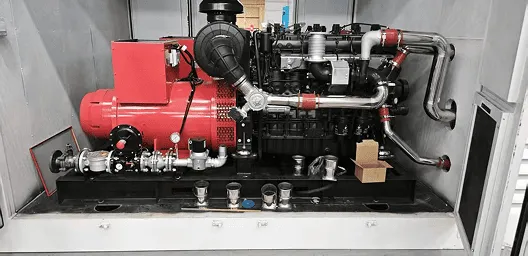
A 2000KW gas generator set can be achieved through two main configurations: 2*1000KW or 8*250KW. While 2*1000KW offers simplicity and high output per unit, 8*250KW provides better load balancing, flexible operation, lower fuel consumption during fluctuations, easier maintenance, and improved lifespan. Overall, 8*250KW is the more efficient, durable, and cost-effective solution.
What is 2*1000KW Gas Generator Set?
A 2*1000KW gas generator set is a configuration where two large engines, each capable of generating 1000KW, are used to achieve a combined power output of 2000KW. This design is ideal for consistent, high-load applications, offering streamlined operation and centralized control.
Core Technology: Large-capacity engines typically powered by imported brands like Cummins.
Construction: Fewer units, meaning simpler installation and reduced physical footprint.
What is 8*250KW Gas Generator Set?
An 8*250KW gas generator set consists of eight smaller engines, each generating 250KW, working together to deliver a total output of 2000KW. This configuration is designed for flexibility, offering modular operation, better adaptability to load fluctuations, and enhanced reliability.
Core Technology: Small-capacity engines, typically manufactured by domestic brands like Weichai, Yuchai, and Shangchai.
Construction: Multi-unit setup enabling load distribution, redundancy, and rotational usage for better longevity.
Key Differences: 2*1000KW vs. 8*250KW
| Feature | 2*1000KW Generator Set | 8*250KW Generator Set |
|---|---|---|
| Load Management | Single unit handling full load. | Multi-unit rotational usage ensures balance. |
| Fuel Efficiency | Less efficient under small loads. | Optimized for fluctuating loads; lower fuel consumption. |
| Maintenance | Complex and costly repairs for large units. | Easier, faster, and cheaper maintenance for smaller units. |
| Reliability | Single point of failure risk. | Modular setup provides redundancy and improved safety. |
| Cost Considerations | High upfront and repair costs. | Cheaper initial investment and lifecycle costs. |
Zentramo Pro Tip: Opt for the 8*250KW configuration if your application involves variable loads, requires quick maintenance, or prioritizes cost-effectiveness over time.
Pros & Cons Comparison
| Feature | 2*1000KW | 8*250KW |
|---|---|---|
| Simplicity | ✅ Simple setup. | ❌ Complex multi-unit management. |
| Fuel Efficiency | ❌ Less efficient under small loads. | ✅ Superior fuel efficiency. |
| Maintenance | ❌ High repair costs. | ✅ Faster, cheaper repairs. |
| Reliability | ❌ Single point of failure. | ✅ Redundant for better uptime. |
Conclusion
Both configurations have their strengths, but the 8*250KW gas generator set emerges as the superior choice for scenarios requiring adaptable operation, lower fuel consumption, and cost-effective maintenance. While 21000KW may suit consistent high-load applications, the modular nature of 8250KW ensures better performance, reliability, and lifecycle value.
FAQ
1. Why is 8*250KW more fuel-efficient than 2*1000KW?
Smaller engines in the 8*250KW setup can operate efficiently under variable loads, reducing fuel wastage during low-demand periods.
2. Can 8*250KW handle the same workload as 2*1000KW?
Yes, it can achieve the same total output while offering better load distribution and operational flexibility.
3. Which option is easier to maintain?
8*250KW, as the smaller engines are based on widely available domestic platforms, making parts and service more accessible.